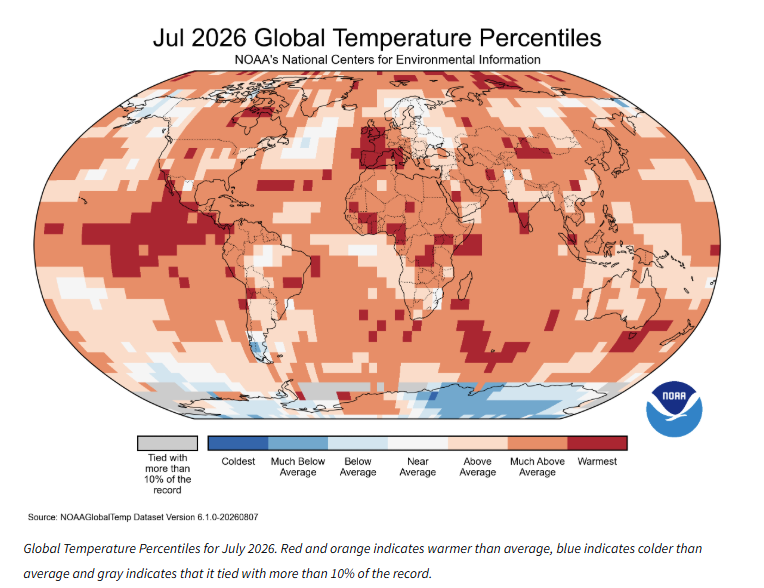

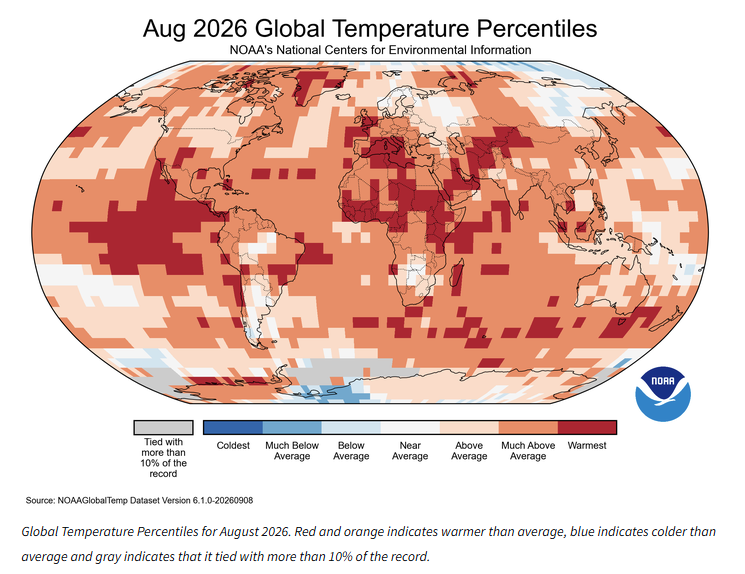
August 2026 was the warmest August on record globally, with surface temperatures +1.32°C (+2.38°F) above the 20th-century average and global ocean temperatures reaching an all-time high, extending record warmth across the June–August season.
-
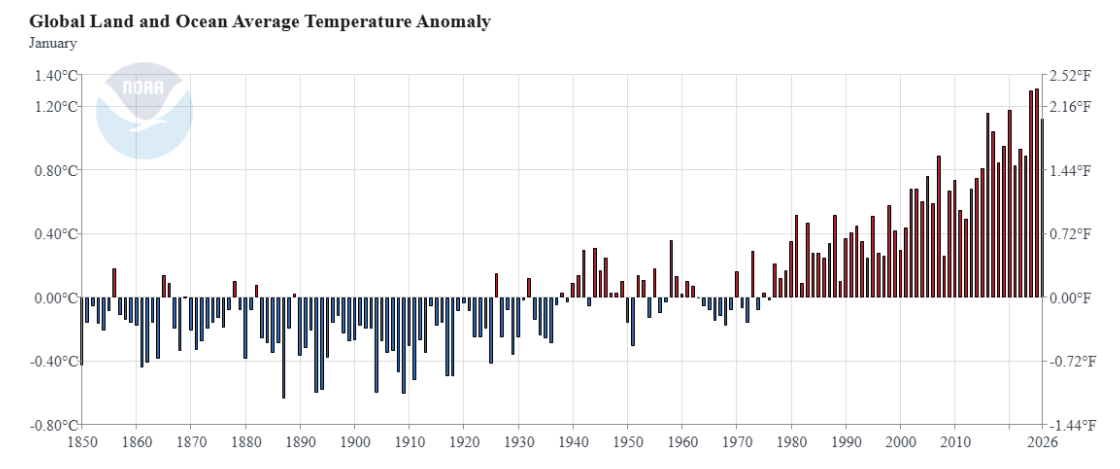
Global surface temperatures were +1.32°C (+2.38°F) above the 20th-century average, making August the warmest in the 1850–2026 record and exceeding the previous records from 2023 and 2024 by +0.08°C (+0.14°F).
-
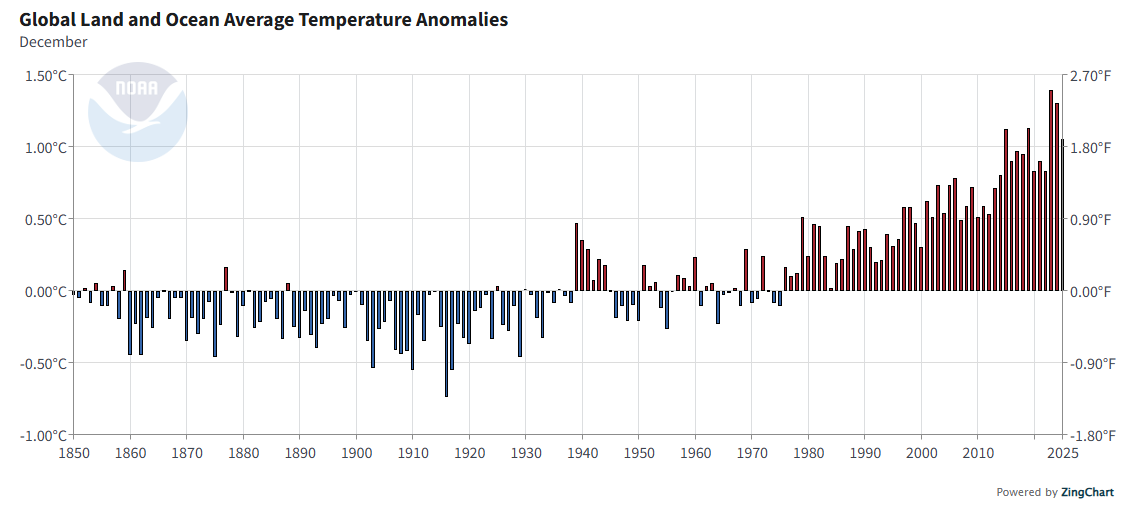
August marked the 48th consecutive August with temperatures above the 20th-century average, while all 10 of the warmest Augusts have occurred since 2016. Global ocean temperatures reached an all-time high, while global land temperatures were near-record warm.
-
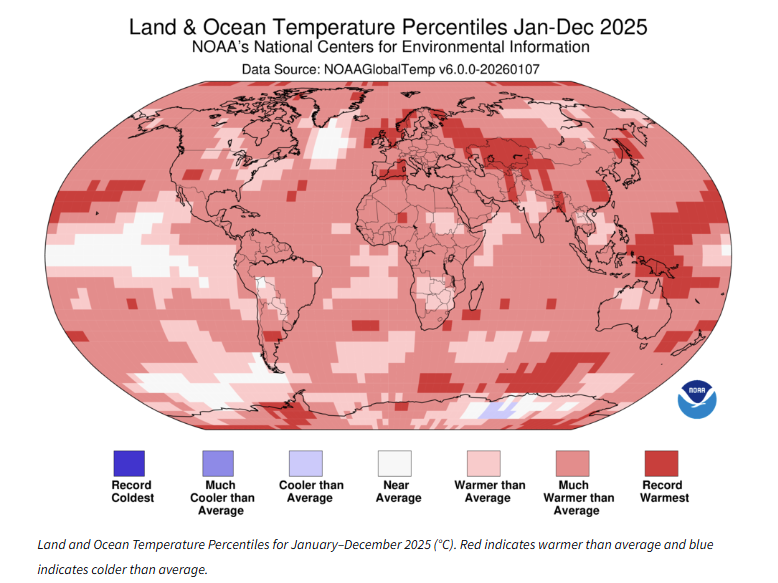
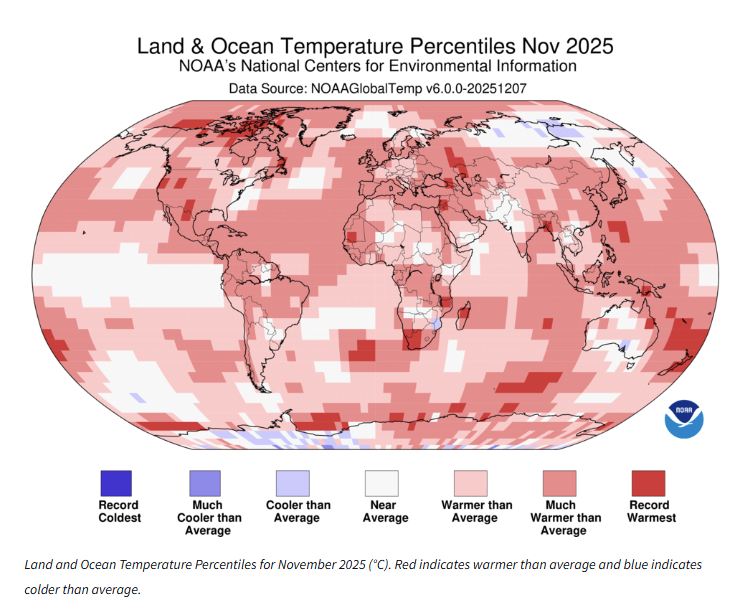
Above-average temperatures covered most global land and ocean surfaces, with departures of at least +2.0°C (+3.6°F) across parts of Europe, Africa, Asia, Antarctica, the Americas, and the Pacific. Ongoing El Niño conditions coincided with record warmth across extensive areas of the central and eastern tropical Pacific.
-
North America and Africa each recorded their warmest August, while Asia had its second warmest, the Arctic its third warmest, South America and Europe their fourth warmest, and Oceania its eighth warmest. No land or ocean areas experienced record-cold August temperatures.
-
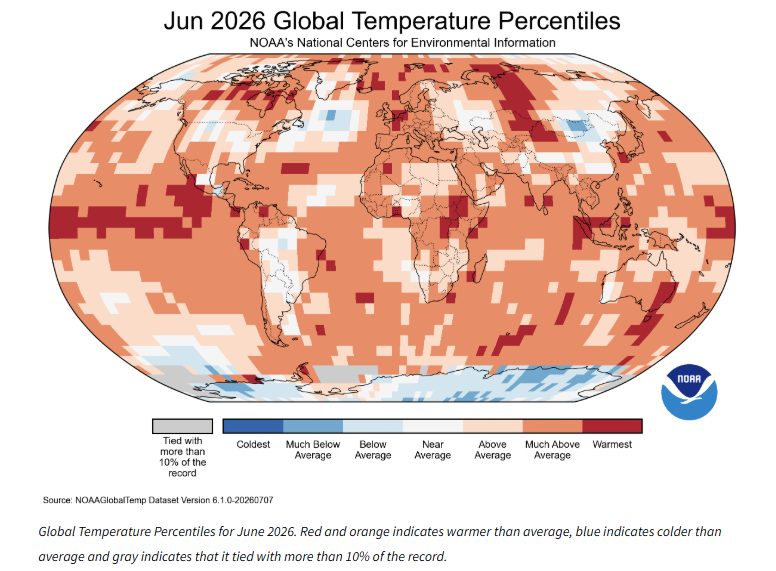
The June–August global surface temperature was +1.21°C (+2.18°F) above average, the warmest such three-month period in the 177-year record. The Northern Hemisphere recorded its warmest meteorological summer, while the Southern Hemisphere experienced its second-warmest meteorological winter.
-
January–August global surface temperatures ranked as the second warmest on record. NOAA said 2026 is very likely to finish among the five warmest years, with the highest probabilities favoring the second-warmest year on record.
-
Global sea ice extent totaled 8.50 million square miles, 870,000 square miles below the 1991–2020 average and the fourth-smallest August extent in the 48-year record. Arctic extent ranked 11th lowest at 340,000 square miles below average, while Antarctic extent was 530,000 square miles below average and ranked third lowest.
-
Global tropical cyclone activity was above average with 19 tropical storms, including five reaching hurricane or typhoon strength and four becoming major cyclones. The Eastern North Pacific produced eight named storms and the West Pacific nine, while the Atlantic was unusually quiet with just two weak, short-lived storms.
-
Assessing the Global Temperature and Precipitation Analysis in August 2026