


NFIB Small Business Optimism: December 2025
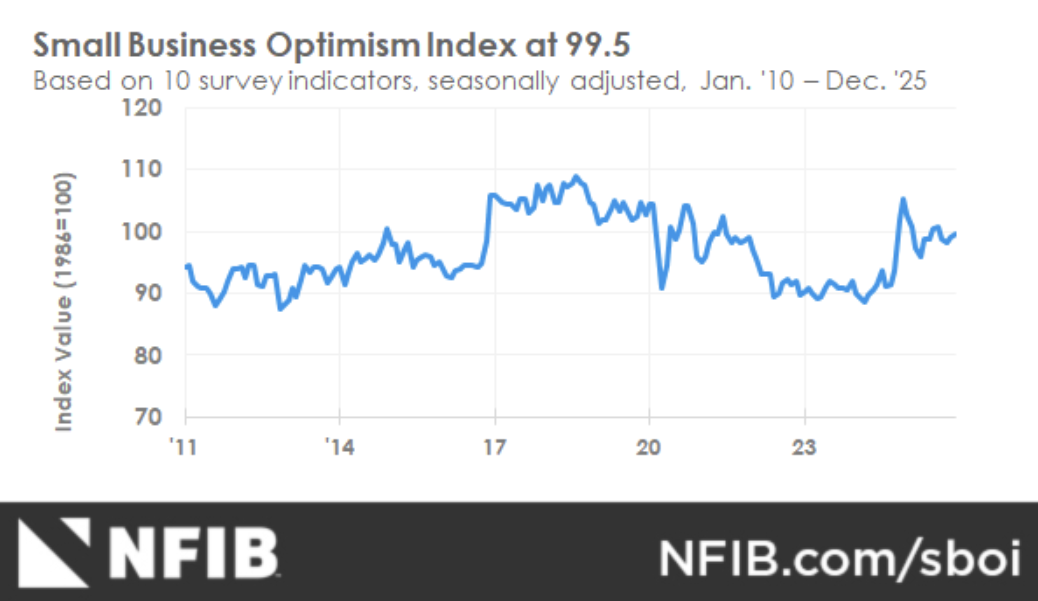
The NFIB Small Business Optimism Index rose +0.5 pts to 99.5 in December, remaining above its 52-year average of 98, driven primarily by strengthened expectations for business conditions while the Uncertainty Index fell to its lowest level since June 2024.
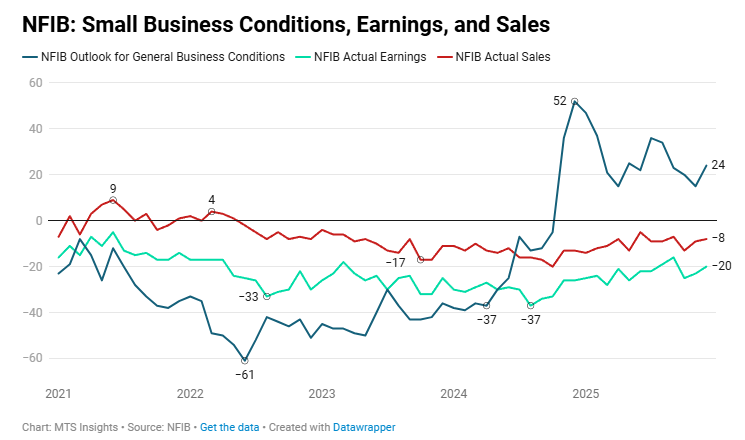
- Business condition expectations surged, with the net share expecting better conditions rising +9 pts to 24 percent (seasonally adjusted), marking the first increase since July and contributing the most to the headline gain, suggesting improved near-term confidence.
- Tax concerns intensified sharply, with 20 percent of owners citing taxes as their top problem (+6 pts from November), the highest reading since May 2021 and now ranking as the single most important issue facing small businesses.
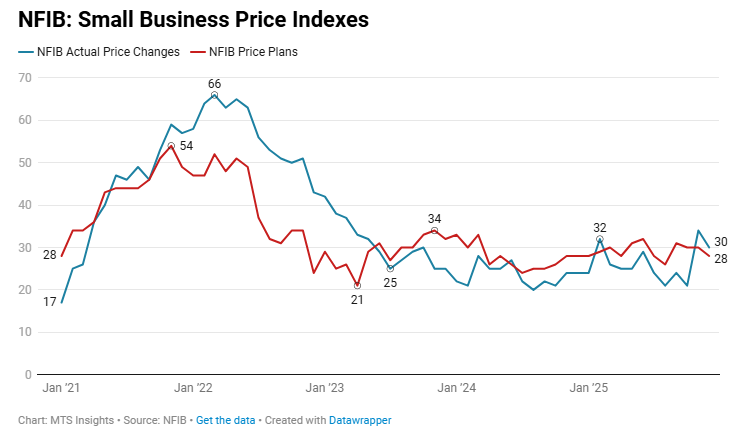
- Price pressures moderated, as the net share raising average selling prices fell -4 pts to 30 percent (seasonally adjusted) and planned price increases declined -2 pts to 28 percent, though both remain well above the historical average of 13 percent, indicating persistent inflationary pressures despite recent easing.
- Credit conditions improved notably, with a net -3 percent reporting higher interest rates on their most recent loan (-5 pts from November), the lowest reading since January 2021, though the average short-term loan rate edged up +0.5 pts to 8.4 percent.
- Compensation pressures increased, with a net 31 percent raising pay (+5 pts from November, seasonally adjusted), while planned compensation increases held steady at 24 percent, reflecting continued upward wage pressure despite moderating labor market tightness.
- Capital spending activity strengthened, with 56 percent reporting outlays in the past six months (+4 pts), driven by vehicle acquisitions at 27 percent (+8 pts) and facility improvements at 19 percent (+5 pts), though forward-looking capital plans at 19 percent (-1 pt) remain historically weak.
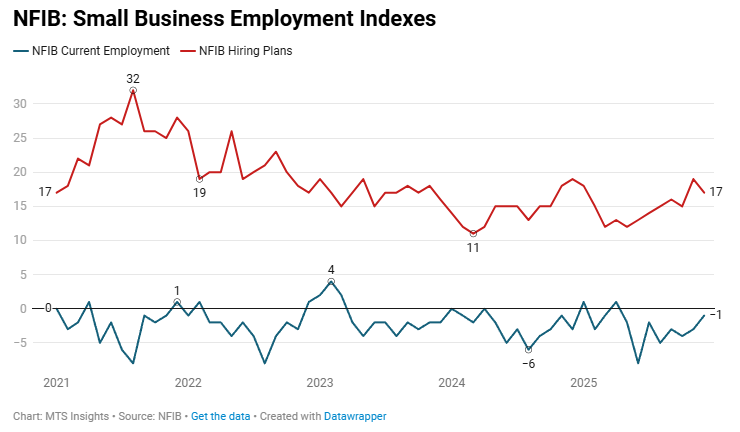
- Labor market conditions remained tight, with 33 percent reporting unfilled job openings (unchanged), well above the 24 percent historical average, and 91 percent of hiring firms reporting few or no qualified applicants, while hiring plans declined to a net 17 percent (-2 pts).
- Sales trends weakened slightly, with actual nominal sales at a net -8 percent (+1 pt from November, seasonally adjusted) remaining below the historical average of 0 percent, while real sales expectations fell -5 pts to a net 10 percent, suggesting more cautious near-term demand outlooks.
- Inventory positions improved to their strongest level of the year, with the net share reporting inventory gains rising +6 pts to -1 percent (seasonally adjusted), while views on current stocks (-1 percent) and investment plans (-1 percent) were both unchanged, indicating more balanced inventory management.
- Supply chain disruptions affected 64 percent of businesses (unchanged from November), but the composition improved as significant impacts fell -4 pts to 3 percent while moderate and mild impacts rose, suggesting gradually easing supply pressures despite continued widespread effects.
- Profit trends improved modestly, with the net share reporting positive profit trends rising +3 pts to -20 percent (seasonally adjusted), with 41 percent of those reporting lower profits citing weaker sales and 64 percent of those with higher profits attributing gains to sales volume.
Attachments
1