

Logistics Managers’ Index: September 2025
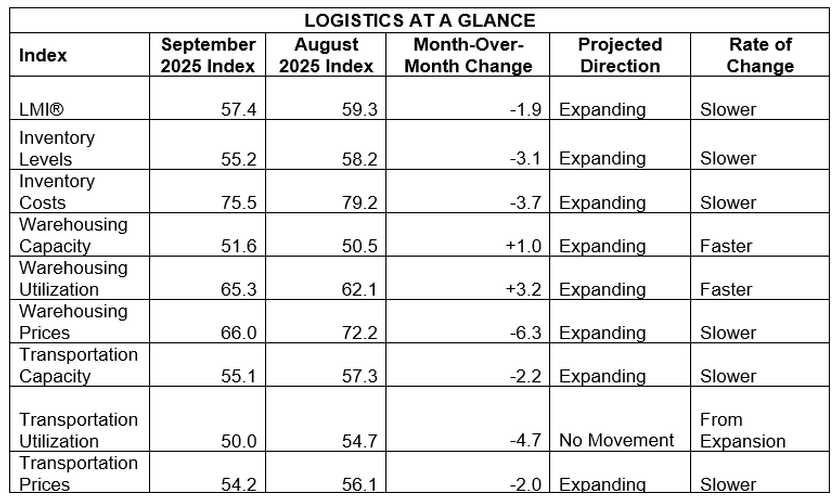
The Logistics Managers’ Index (LMI) fell -1.9 pts to 57.4 in September 2025, the lowest since March, signaling continued but slowing logistics expansion amid softer demand and a weakening freight market.
-
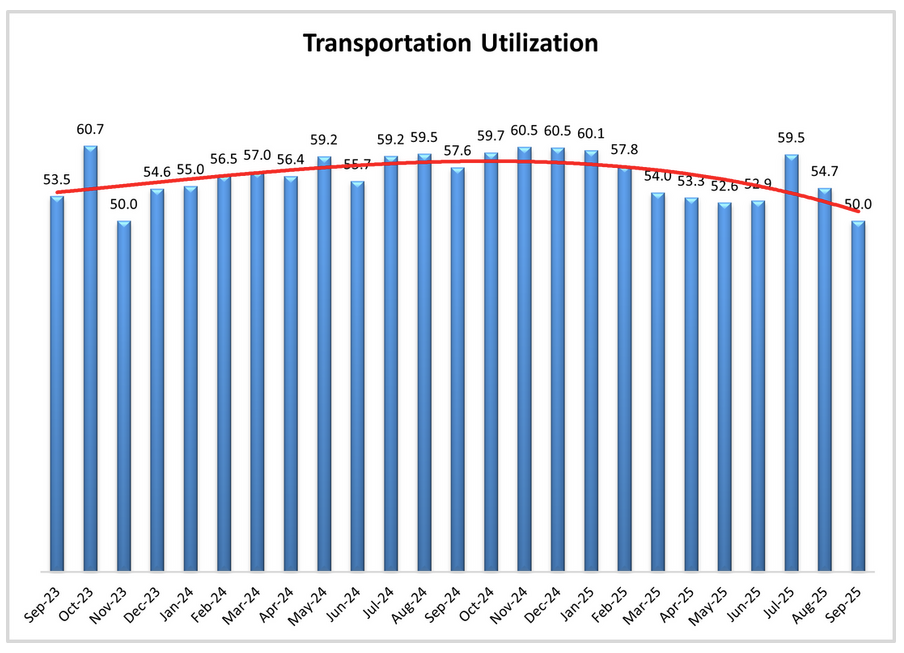
Transportation Utilization: Dropped -4.7 pts to 50.0, indicating no movement and marking the weakest September reading in the index’s history (avg. 65.1). Analysts note this unusual stagnation points to broad freight softness during what is typically peak season.
-
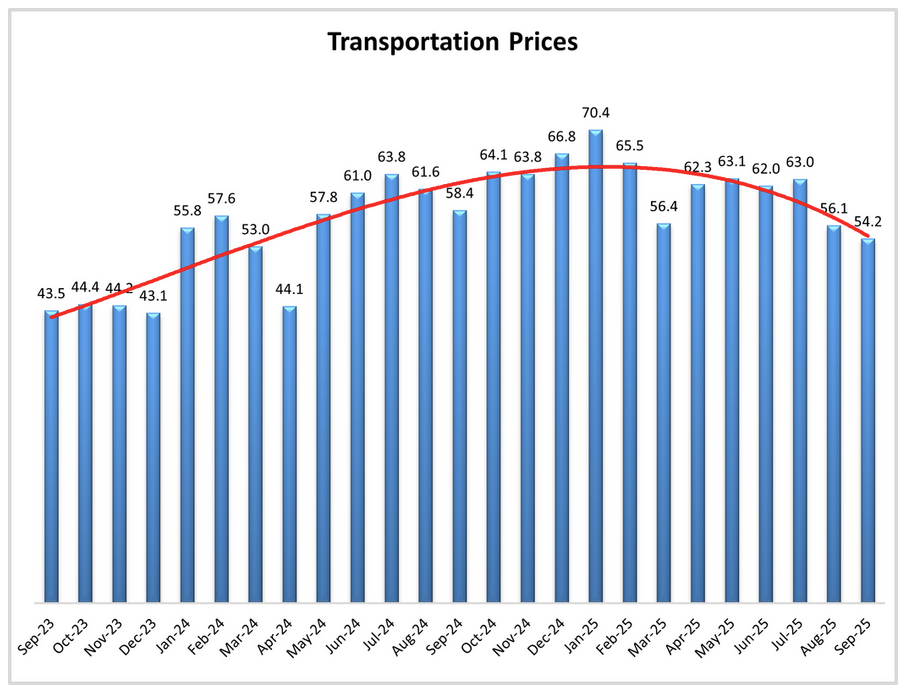
Transportation Prices & Capacity: Prices declined -1.9 pts to 54.2, slightly below Capacity (-2.2 to 55.1), extending the negative freight inversion for a second month. Upstream firms reported only marginal price growth (51.4) while Downstream firms saw stronger gains (61.1), showing a split between manufacturing and retail conditions.
-
Inventory Levels & Costs: Inventory Levels eased -3.1 pts to 55.2, while Costs remained high at 75.5 (-3.7). Downstream firms reported higher costs (79.2) than Upstream (73.3), suggesting retailers are bearing more of the price pressure.
-
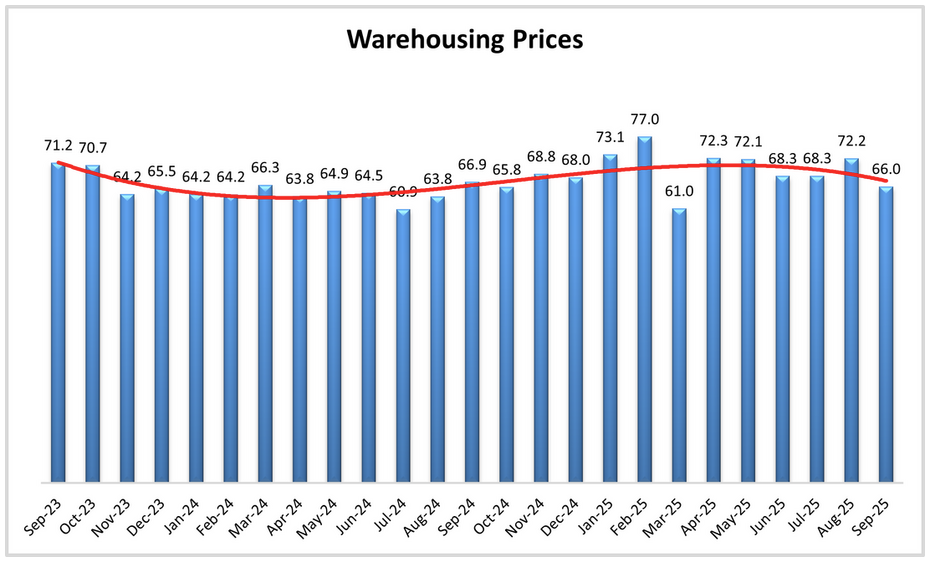
Warehousing: Prices saw the largest drop of any component (-6.3 to 66.0) but remained above 2024 averages, while Capacity edged up +1.1 pts to 51.6 and Utilization rose +3.2 to 65.3, signaling tight but expanding warehouse use.
-
Downstream activity remains stronger, helping offset upstream stagnation in manufacturing and wholesale sectors burdened by earlier inventory builds.
-
U.S. manufacturing PMI rose slightly to 49.1 but stayed in contraction for a seventh month, with new orders at 48.9 and inventories at 47.7, reinforcing weak freight and production trends.
-
ADP estimated U.S. employment fell -32k in September, driven by small business losses, while imports from China fell -27% YoY for three straight weeks — further evidence of subdued supply chain throughput.
-
Respondents expect the overall LMI to rise slightly to 59.6 over the next 12 months, but with softer expectations for logistics costs and a leaner inventory approach, especially among downstream retailers.