


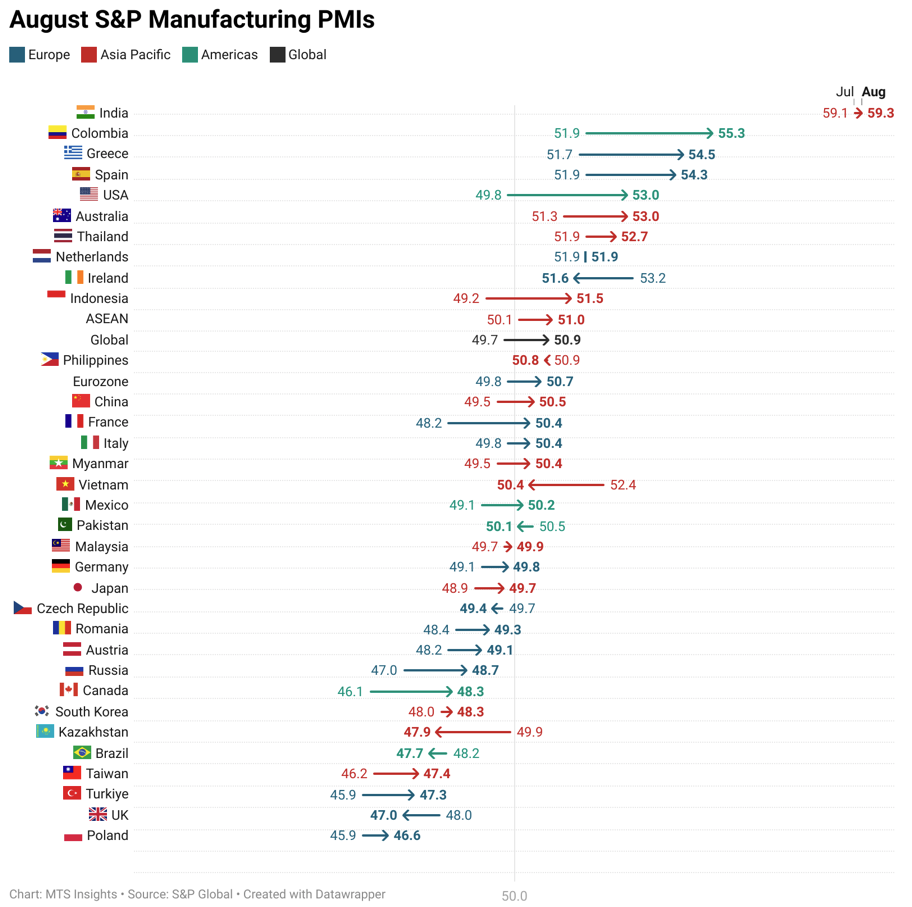
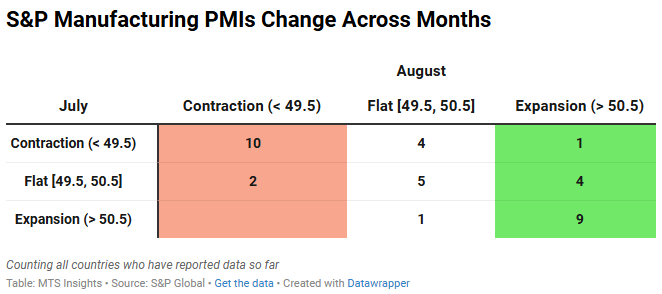
S&P Global Manufacturing PMIs: August 2025
Global - 9/2/2025
Asia Pacific
- Australia - 8/31/2025
- Malaysia - 9/2/2025
- ASEAN - 9/2/2025
- Myanmar - 9/1/2025
- Philippines - 9/1/2025
- Thailand - 9/1/2025
- Vietnam - 9/1/2025
- Indonesia - 9/1/2025
- Japan - 9/1/2025
- Taiwan - 9/1/2025
- China - 9/1/2025
- India - 9/1/2025
- Russia - 9/1/2025
- Kazakhstan - 9/1/2025
- South Korea - 9/1/2025
- Pakistan - 9/1/2025
Europe
- Austria - 8/27/2025
- Ireland - 9/1/2025
- Netherlands 9/1/2025
- Romania - 9/1/2025
- Turkiye - 9/1/2025
- Poland - 9/1/2025
- Spain - 9/1/2025
- Czechia - 9/1/2025
- Italy - 9/1/2025
- France - 9/1/2025
- Germany - 9/1/2025
- Eurozone - 9/1/2025
- Greece - 9/1/2025
- UK - 9/1/2025
North & South America
Key Results
Australia
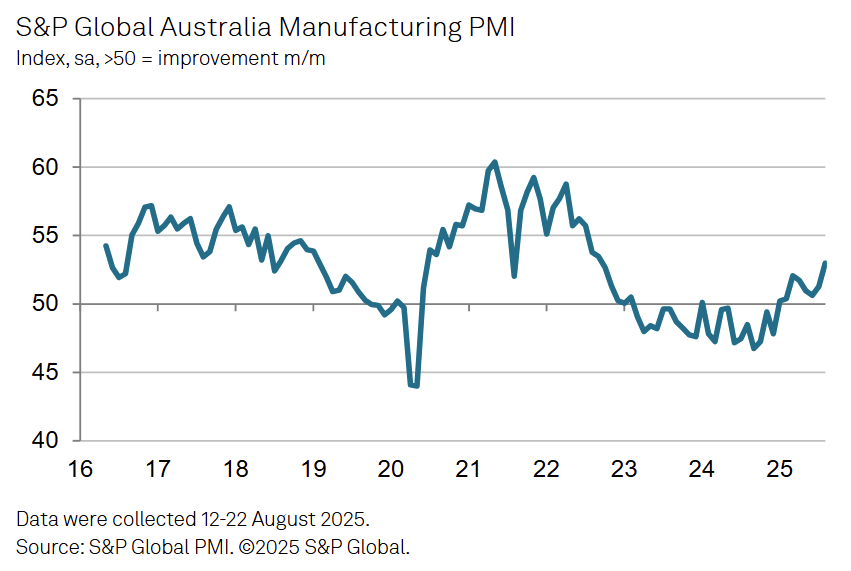
Australia’s Manufacturing PMI rose to 53.0 in August 2025 (from 51.3 in July), the fastest pace of expansion since September 2022, supported by stronger demand and renewed export growth.
-
Production expanded at the quickest rate since April 2022, driven by a sharp increase in new orders, which rose at the fastest pace in nearly three years.
-
New export orders returned to growth for the first time since May, providing additional support to demand.
-
Employment rose marginally for a sixth straight month, helping firms reduce backlogs of outstanding work.
-
Purchasing activity increased for the first time since April, with stocks of purchases and finished goods both recording their strongest gains since mid-2022.
-
Input and output prices rose modestly, but inflationary pressures remained historically subdued, while business confidence surged to its highest level since early 2022.
China
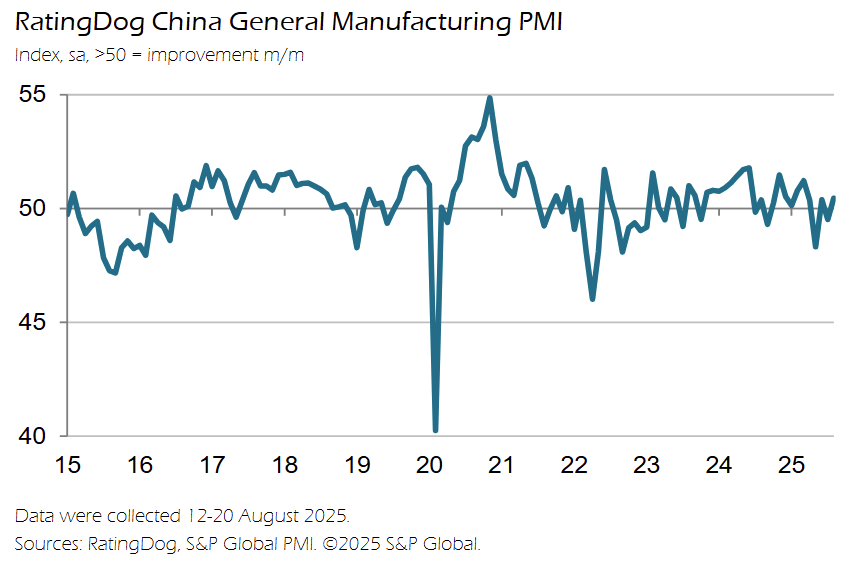
China’s General Manufacturing PMI rose to 50.5 in August 2025 (from 49.5 in July), the highest in five months, signaling a return to expansion in operating conditions.
-
New orders grew at the quickest pace since March, driving a modest rebound in output after July’s decline.
-
New export orders remained in contraction but eased, while backlogs of work increased at the fastest rate in six months.
-
Purchasing activity and inventories expanded, with raw material and semi-finished goods holdings rising at the strongest pace since November 2020.
-
Employment declined for a fifth straight month, as firms remained cautious on staffing despite stronger workloads.
-
Input costs rose at the steepest pace in nine months, but output prices stabilized, ending an eight-month streak of declines.
Spain
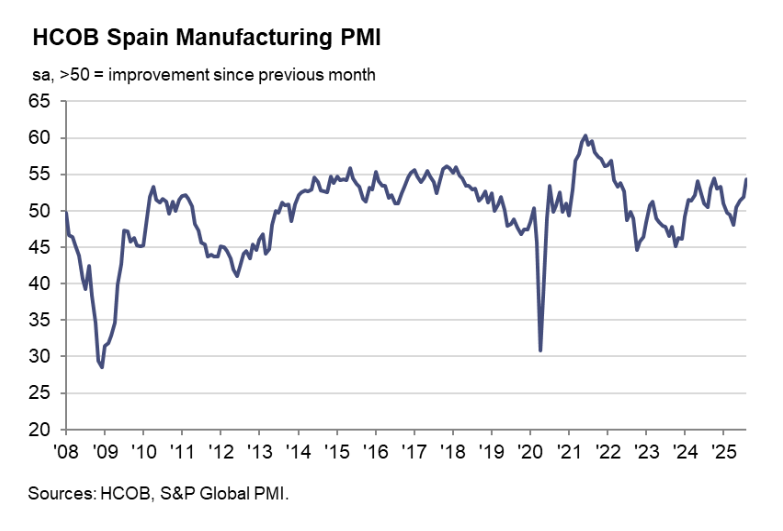
Spain’s Manufacturing PMI rose to 54.3 in August 2025 (from 51.9 in July), marking the fastest pace of expansion since October 2024 and the fourth straight month of growth.
-
Output and new orders expanded at the sharpest rates since October 2024 and May 2024, supported by stronger domestic demand and marketing campaigns.
-
New export orders grew modestly, the strongest increase so far in 2025, though still limited compared with domestic demand.
-
Backlogs of work rose at the fastest pace in 10 months, prompting firms to raise employment at the quickest rate since December 2024.
-
Input purchases increased marginally after seven months of declines, but vendor performance worsened to the greatest extent this year amid shortages and transport delays.
-
Input and output prices both rose modestly, with inflationary pressures remaining contained despite reaching a five-month high.
Italy
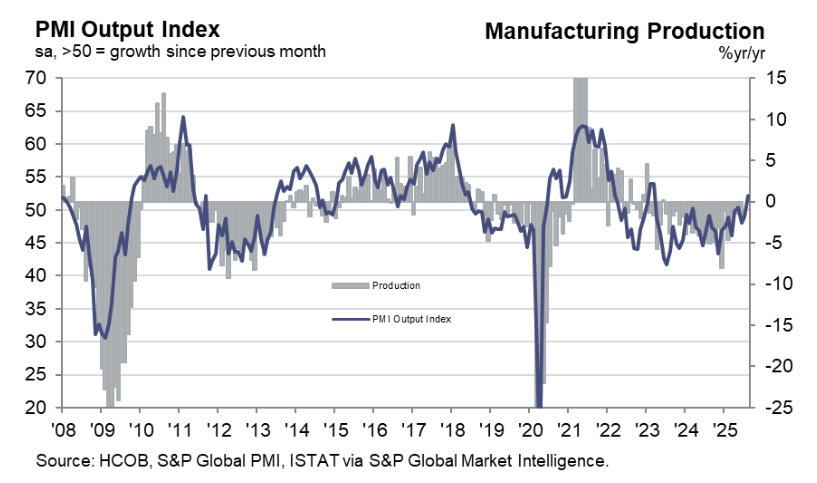
Italy’s Manufacturing PMI rose to 50.4 in August 2025 (from 49.8 in July), moving back into expansion for the first time in nearly 18 months, led by a sharp rebound in output.
-
Production volumes rose at the fastest pace in almost two-and-a-half years, outpacing modest gains in new orders.
-
Total order books increased slightly, the first rise in 18 months, though export sales continued to decline at a sharper rate.
-
Backlogs of work fell at the quickest pace since March, reflecting spare capacity, while employment decreased marginally for a fifth month.
-
Input purchases and inventories dropped, with pre-production stocks declining at the sharpest rate so far in 2025.
-
Input and output prices both edged down modestly, aided by lower energy costs and favorable exchange rate movements.
Germany
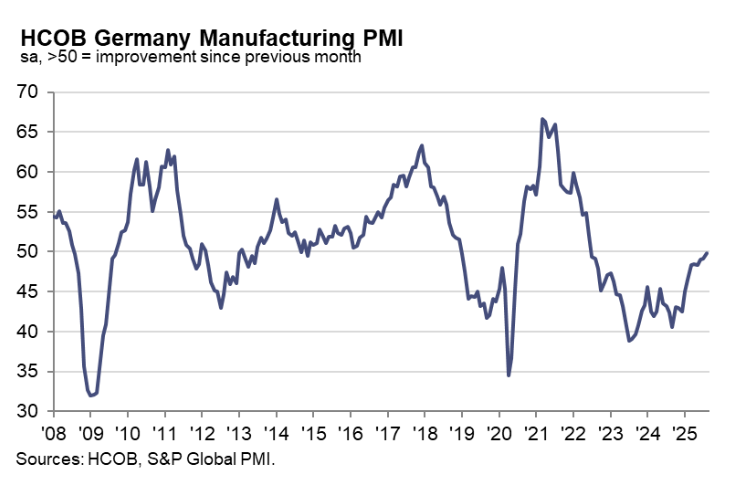
Germany’s Manufacturing PMI rose to 49.8 in August 2025 (from 49.1 in July), a 38-month high, though still below the 50 threshold, signaling continued mild contraction despite the strongest output growth in over three years.
-
The Output Index climbed to 52.9 (from 50.6), marking the fastest expansion since March 2022, while new orders rose for a third straight month.
-
Export sales fell for the first time in five months, tempering the overall demand recovery.
-
Employment declined at a quicker pace than in July, with firms reducing contractors and not replacing departing staff.
-
Purchasing activity fell for the first time in three months, with both pre- and post-production inventories contracting at solid rates.
-
Input costs and output prices continued to decline; factory gate charges fell at the steepest pace in six months due to competitive pressures and lower costs.
Eurozone
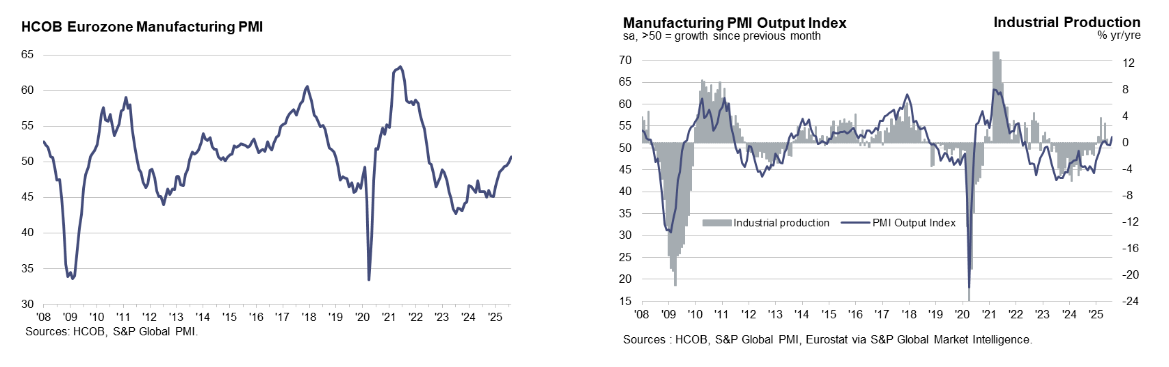 The Eurozone Manufacturing PMI rose to 50.7 in August 2025 (from 49.8 in July), the first expansion since June 2022, driven by the strongest output growth in over three years and a rebound in new orders.
-
The Output Index climbed to 52.5 (from 50.6), marking the sharpest production increase since March 2022.
-
New orders rose for the first time in nearly three-and-a-half years, supported by domestic demand, while export sales declined for a second month.
-
Backlogs of work fell for a 39th straight month, and employment continued to decline, though job losses were marginal and among the softest in over two years.
-
Both pre- and post-production inventories contracted at the quickest pace since March, alongside a renewed fall in purchasing activity.
-
Input costs rose slightly for the first time since March, while output prices fell modestly as firms maintained competitive discounting.
US
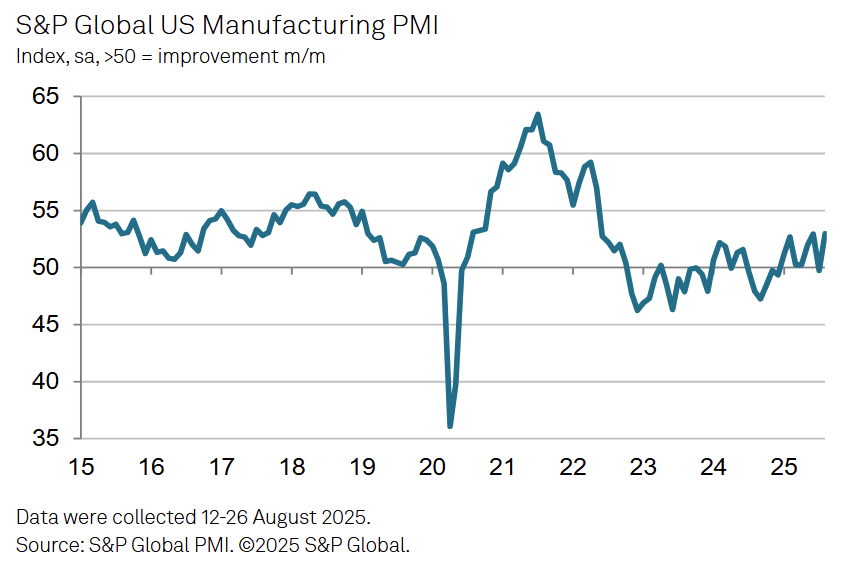
The S&P Global US Manufacturing PMI rose to 53.0 in August 2025 (from 49.8 in July), the highest since May 2022, signaling the strongest improvement in operating conditions in over three years.
-
Manufacturing production surged at the steepest pace since May 2022, supported by higher new orders and inventory building.
-
New orders rose for the eighth straight month, driven mainly by domestic demand, while export sales declined marginally for a second month.
-
Finished goods inventories increased at the fastest pace in 13 months as firms stockpiled amid tariff-related cost concerns and potential supply constraints.
-
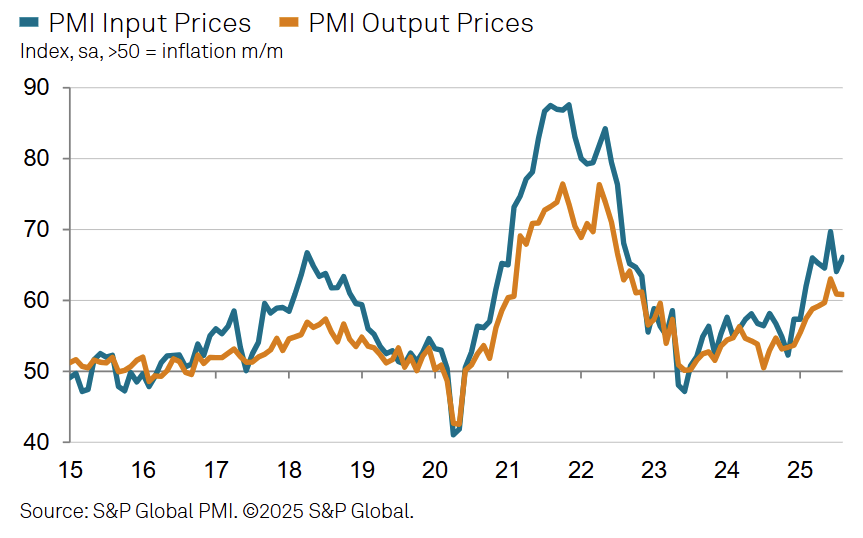
Input cost inflation accelerated to the second-highest rate in three years, with tariffs overwhelmingly cited as the driver; output charges also rose sharply.
-
Employment expanded solidly as firms added staff to address capacity pressures, with backlogs of work increasing at the fastest rate since September 2022.
-
Supplier delivery times improved slightly despite stronger purchasing activity, while business confidence strengthened on expectations of continued domestic demand and planned investments.