


Bank of England Monetary Policy Decision: June 2026
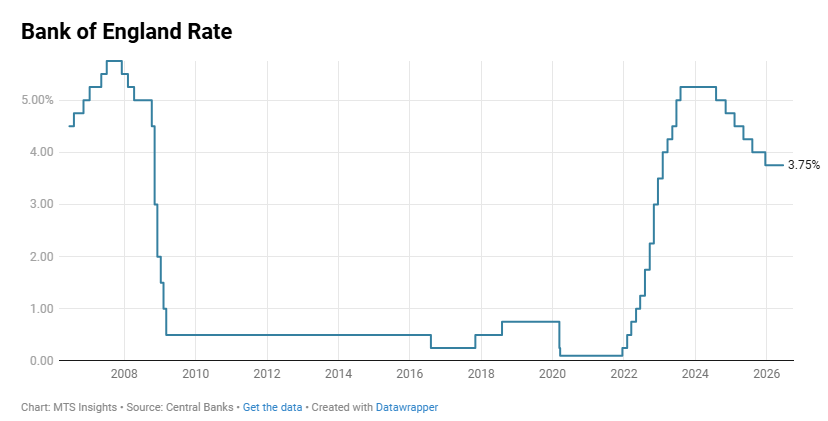
The Bank of England voted 7–2 to maintain Bank Rate at 3.75%, with two members favoring a +25 bps hike to 4.00%, indicating a majority preference to hold while acknowledging upside inflation risks.
- CPI inflation was 2.8% YoY in May (unchanged MoM, down from 3.3% YoY in March), coming in -0.4 ppts below the April Report forecast, showing some near-term disinflation across food, goods, and services.
- Energy prices declined from earlier peaks (Brent ~$100 to ~$79; gas 116p to ~100p per therm) but remained above pre-conflict levels, indicating reduced but still elevated cost pressures.
- Near-term inflation is expected to rise again to just under 3% in Q3 and slightly above 3.25% in Q4, though this path is lower than previously expected due to softer energy and non-energy price developments.
- UK GDP increased +0.6% QoQ in Q1 2026 (+0.1 ppts vs prior estimate), but underlying growth was assessed at ~+0.2% QoQ, with April GDP falling -0.1% MoM, indicating subdued underlying momentum despite strong headline data.
- Labor market indicators showed mixed conditions, with unemployment at 4.9% (slightly below expectations), employment up +0.3%, and vacancies declining -2.6%, pointing to gradual loosening in labor demand.
- Wage growth remained near target-consistent levels, with private sector regular pay at +2.9% YoY and expected settlements around 3.5%, suggesting continued but moderating wage pressures.
- Financial conditions tightened materially, with UK two-year OIS rates ~+70 bps and mortgage rates ~+80 bps above pre-conflict levels, indicating significant transmission of higher rates to households and businesses.