


Federal Reserve Monetary Policy Decision: June 2026
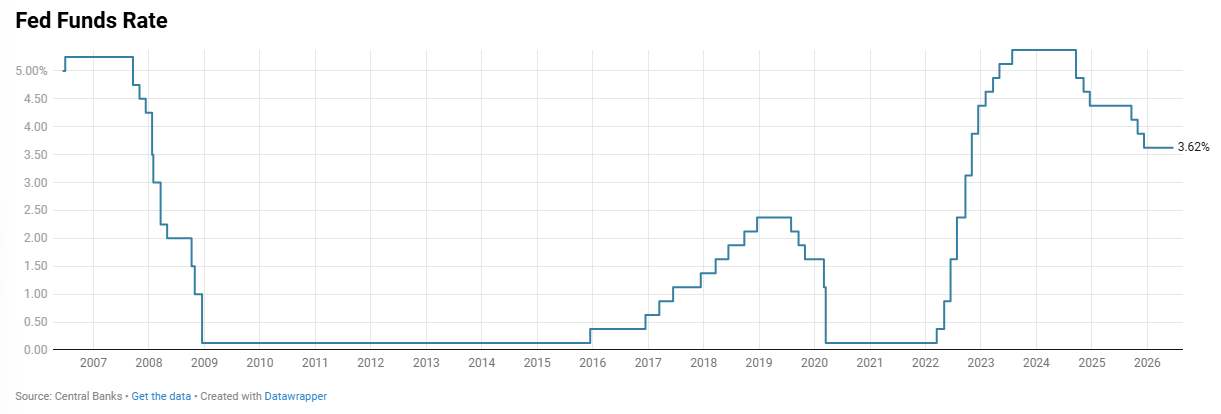
The Federal Reserve held the federal funds rate unchanged at 3.50%–3.75% in June 2026, while raising 2026 core PCE inflation to 3.3% YoY (+0.6 ppts) and headline PCE to 3.6% YoY (+0.9 ppts), signaling a shift toward more hawkish projections amid energy-driven inflation pressures and steady growth.
- The FOMC left the policy rate at 3.50%–3.75% (0 bps change), marking a fifth consecutive meeting with no adjustment since the December 2025 cut, with a unanimous vote indicating no internal dissent.
- The median 2026 real GDP projection was revised down -0.2 ppts to 2.2%, reflecting expected drag from Middle East-related energy shocks, though the balance of risks shifted from downside to roughly balanced.
- Unemployment projections saw only minor revisions, including a slight downward adjustment for 2026, indicating improved labor market conditions and a more balanced risk assessment compared to prior projections.
- Median headline PCE inflation for 2026 was revised up +0.9 ppts to 3.6% YoY and core PCE up +0.6 ppts to 3.3% YoY, with upward revisions extending into 2027, reflecting the impact of sustained energy price pressures.
- The federal funds rate path was revised higher across all years, with the 2026 median now implying at least one rate hike and 2027 projections indicating rates remaining near current levels, signaling a shift away from easing expectations.
- Dot plot details show at least 9 FOMC members expect ≥1 hike by end-2026 and 6 members see rates rising above 4%, highlighting a broad-based shift toward tighter policy expectations.
- The new Fed Chair introduced a shorter policy statement (132 vs 346 words prior) and removed forward guidance language, indicating a deliberate shift toward less explicit signaling and more data-dependent communication.
- The Chair also announced five new task forces focused on communications, balance sheet policy, data, productivity and jobs, and inflation frameworks, signaling an institutional review and potential structural changes to Fed operations.
- Market reactions reflected the hawkish revisions, with the S&P 500 falling -1.2% and 2-year Treasury yields rising +12 bps, indicating repricing toward higher near-term policy rates.