

Conference Board Employment Trends Index: April 2026
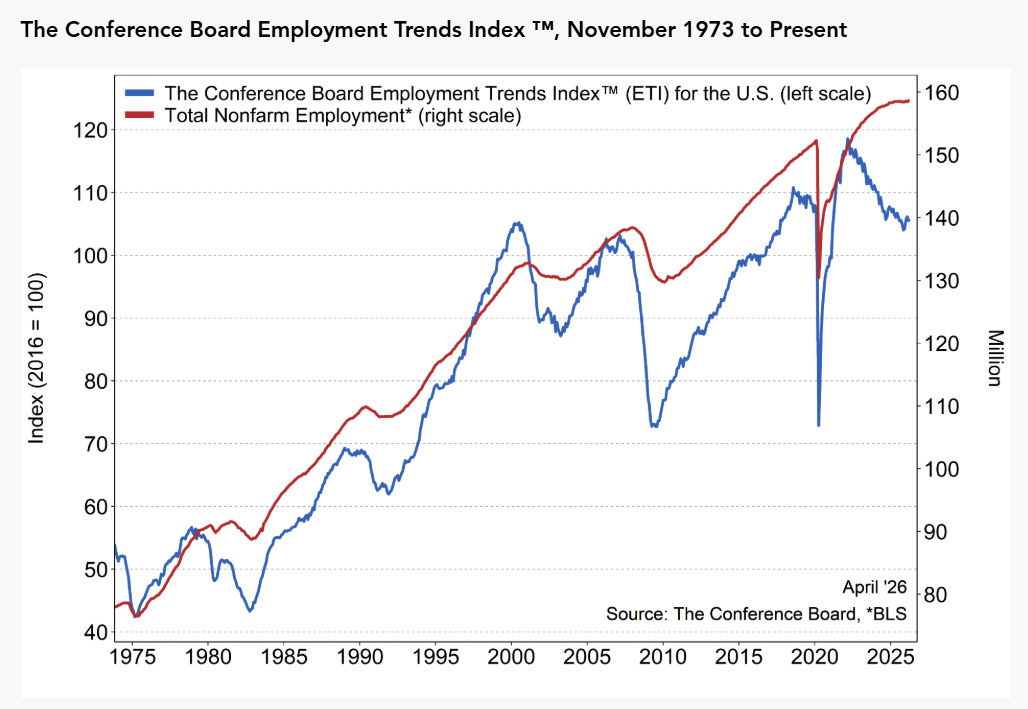
The Conference Board Employment Trends Index increased +0.25 pts MoM to 105.77 in April (from a revised 105.52 in March), indicating a modest rebound in a leading indicator of payroll employment and stabilization after prior declines.
- The ETI rose to 105.77 in April (+0.25 pts MoM), reversing the March decline and signaling improved momentum in the composite measure used to forecast employment trends.
- Seven of eight components contributed positively, indicating broad-based improvement across labor and activity indicators and reinforcing the view of continued labor market resilience.
- The share of consumers reporting jobs are “hard to get” declined -1.5 ppts to 19.8%, the lowest since the start of the year, suggesting improved perceptions of job availability.
- The share of small firms reporting positions they cannot fill increased +2 ppts to 34%, reaching the highest level since June 2025 and indicating renewed hiring demand or labor shortages.
- Initial unemployment insurance claims declined to 203,300, continuing a downward trend from 2025 levels and reaching near-historic lows, signaling fewer layoffs.
- Employment in temporary help services increased and has contributed positively for four consecutive months, suggesting strengthening short-term hiring demand.
- Industrial production and real manufacturing and trade sales increased slightly in April, contributing positively and indicating some improvement in broader economic activity.
- The only negative contribution came from the share of involuntary part-time workers, which rose to 17.9% (above the 2025 average of 17.5%), pointing to some ongoing labor market slack despite overall improvement.