

Investment Manager Index: March 2026
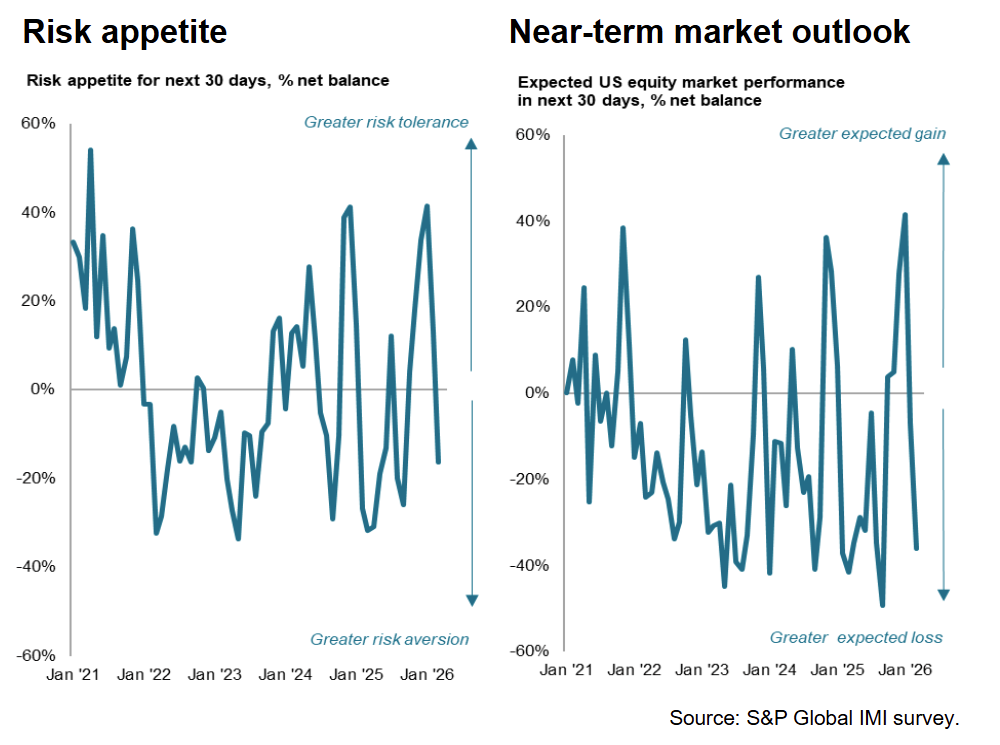
The S&P Global IMI Risk Appetite Index fell to -16% in March from +13% in February, marking a sharp deterioration in investor sentiment and the first shift into risk-averse territory since September.
-
The headline Risk Appetite Index declined to -16% (-29 ppts MoM), indicating that institutional investors turned net risk-averse following the outbreak of war and rising geopolitical uncertainty.
-
Expectations for U.S. equity returns over the coming month deteriorated further and moved deeper into negative territory, reaching the most pessimistic level since September after hitting a survey high in January.
-
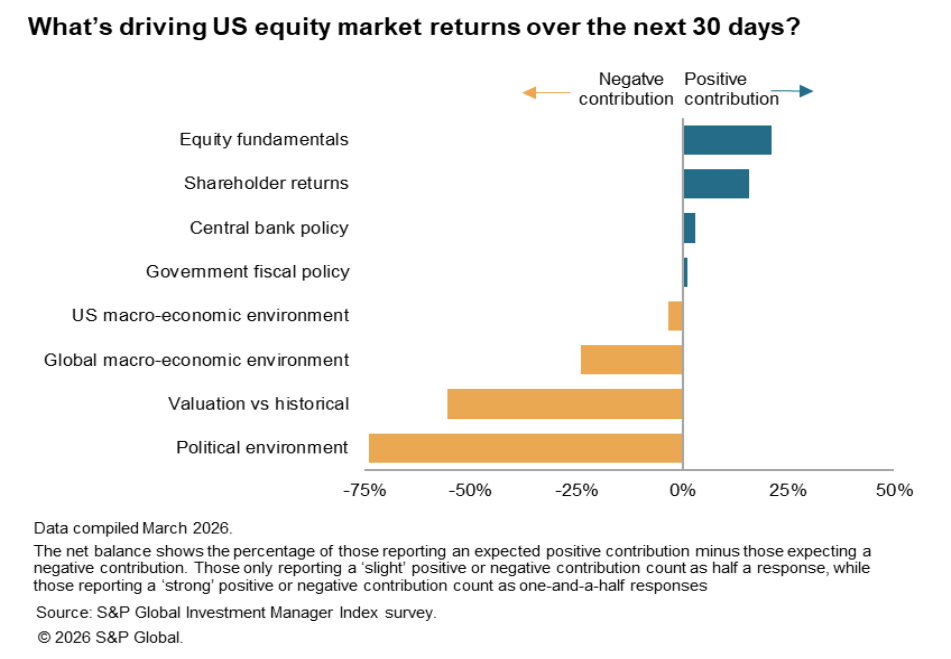
Political risks emerged as the largest drag on investor sentiment, with concerns rising to their highest level since the U.S. tariff announcements in April of the previous year.
-
The macroeconomic environment is now viewed as a near-term drag on equities for the first time since October, reflecting weaker global economic expectations and the impact of higher energy prices.
-
Expectations for monetary policy support weakened, with anticipated benefits from central bank easing falling to the lowest level since August, while perceived fiscal policy support for equities also declined to near-neutral levels.
-
Sector preferences shifted sharply toward defensive positioning, with energy sentiment rising to its highest level in four years and improving views on healthcare, utilities, basic materials, and consumer staples.
-
Cyclical sectors fell out of favor, with consumer discretionary dropping to the bottom of the rankings, while sentiment toward financials recorded the largest negative shift in nearly two and a half years and technology sentiment turned negative for the first time since April of last year.
-
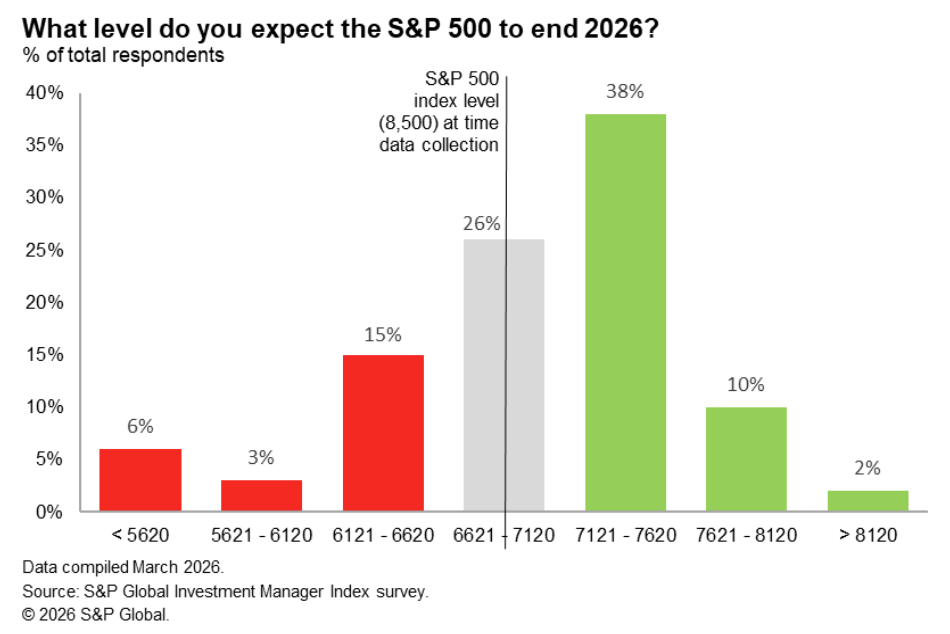
Despite the weaker near-term outlook, longer-term expectations remained resilient, with the median forecast placing the S&P 500 at 7,500 by year-end and investors still expecting mild U.S. economic growth alongside reduced recession probabilities.