

Investment Manager Index: December 2025
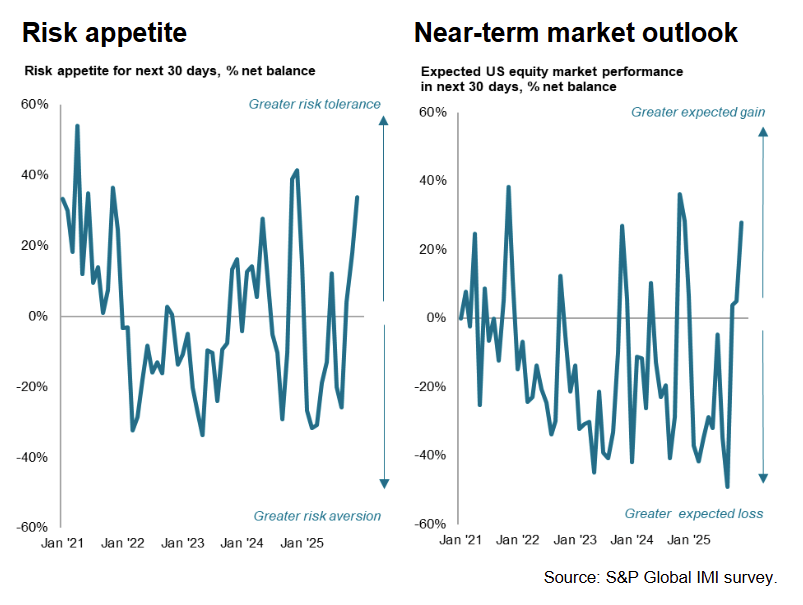
The S&P Global IMI Risk Appetite Index surged to +34% in December from +18% in November, marking its strongest reading since December 2024 and extending a three-month rebound driven by expectations of lower interest rates and improving economic and earnings prospects.
-
Near term market return expectations also reached their highest since December 2024, reflecting one of the most bullish investor outlooks in the survey’s history as both U.S. and global growth views improved.
-
Risk appetite strengthened most among U.S. based investors, while non U.S. respondents showed little change; excluding mutual fund managers, risk appetite is the highest since the survey began in 2020, underscoring broad-based optimism among discretionary managers.
-
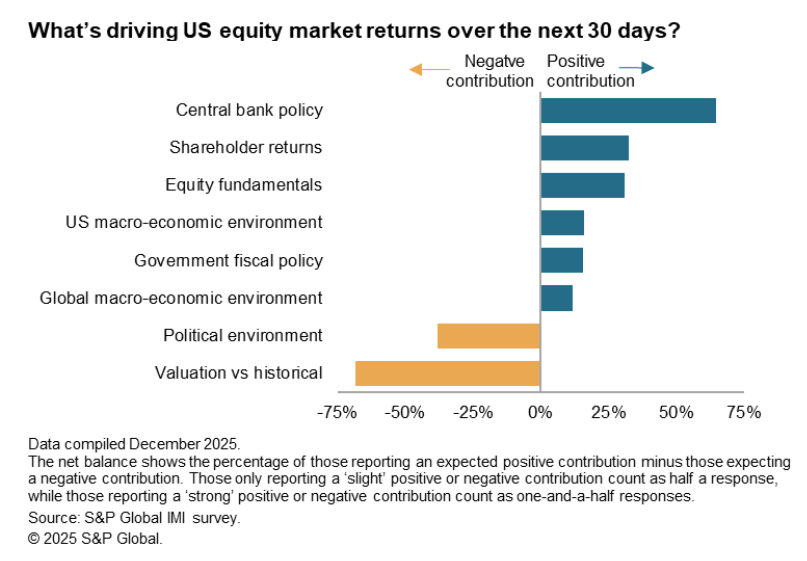
Central bank policy remained the dominant driver for a fourth straight month, with the anticipated equity boost from lower rates at its strongest since April 2021; roughly 80 percent of respondents expect another FOMC cut in December.
-
Macro conditions are seen increasingly supportive, with the U.S. macroeconomic contribution to equity returns at its highest since January and global macro trends viewed as most favorable since January 2022; growth expectations for 2026 are among the strongest of the past three years.
-
Fiscal policy expectations improved following the end of the government shutdown, lifting its perceived market contribution to a one-year high and reducing the political drag to its lowest since January.
-
Valuation concerns remain the largest headwind, but their perceived negative impact has eased to the lowest since June, even after equity markets rebounded from the November selloff.
-
Sector sentiment remains most positive for healthcare and financials, with continued strength in communication services and tech; meanwhile, sentiment toward consumer discretionary turned positive for the first time since January, reflecting rising expectations for improved consumer spending.
-
Real estate remains the least favored sector, though negative sentiment toward consumer staples and energy has softened compared with prior months.