


US CPI: June 2025
The June CPI report offered a mixed picture for inflation watchers. While the headline and core figures were largely in line with expectations, the details tell a more nuanced story. Beneath the surface, price pressures in key goods categories appear to be picking up, hinting at the early impact of rising tariffs. Energy and food costs have also re-accelerated, suggesting that the path back to 2% inflation may be bumpier than recent progress implies. For the Fed, this report doesn’t scream urgency, but it does reinforce the case for patience.
CPI
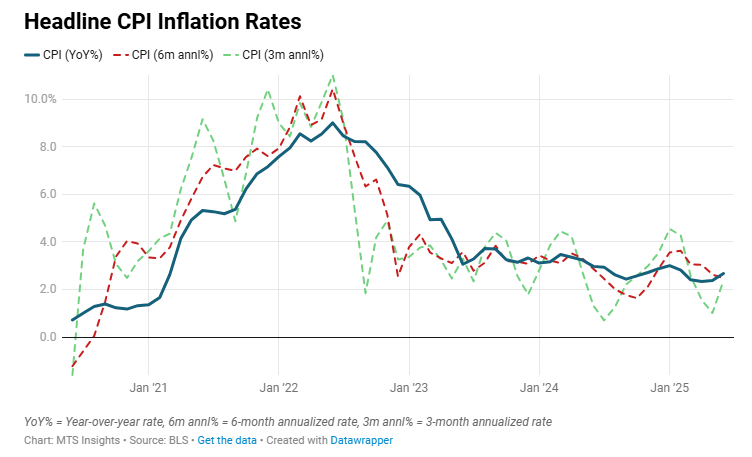
US CPI increased 0.3% MoM and 2.7% YoY in June, coming in line with analyst expectations, as the monthly rise in prices records the highest rate since January of this year. Additionally, the annual rate is now at a four-month high after easing to a four-year low in April. The hotter reading on overall prices was partly due to a reversal in the energy segment and another solid rise in food prices.
- The energy segment increased 0.9% MoM in June, the highest monthly increase since January. Both energy goods and services were priced higher, up 1.0% MoM and 0.9% MoM, respectively. Gas prices finally found some of the summer seasonal hikes, up 1.0% MoM, and the electricity index also saw a 1.0% MoM increase. On an annual basis, the energy segment is still negative, at -0.8% YoY, but to the least extent since February.
- Food prices increased by 0.3% MoM in June, matching the solid rise in May. Food at home was up 0.3% MoM with half of the six grocery segments rising (the other half declined). Fruits and vegetables posted their largest MoM gain since May 2023 at 0.9% MoM, and nonalcoholic beverages were up 1.4% MoM, the largest since July 2022. Food away from home was up 0.4% MoM with full service meal costs up 0.5% MoM. The food index ended Q2 up 3.0% YoY, matching the annual rate at the end of Q1. It’s likely we will continue to see food inflation rise as tariffs on food products start to hit grocery stores and restaurants.
Core CPI
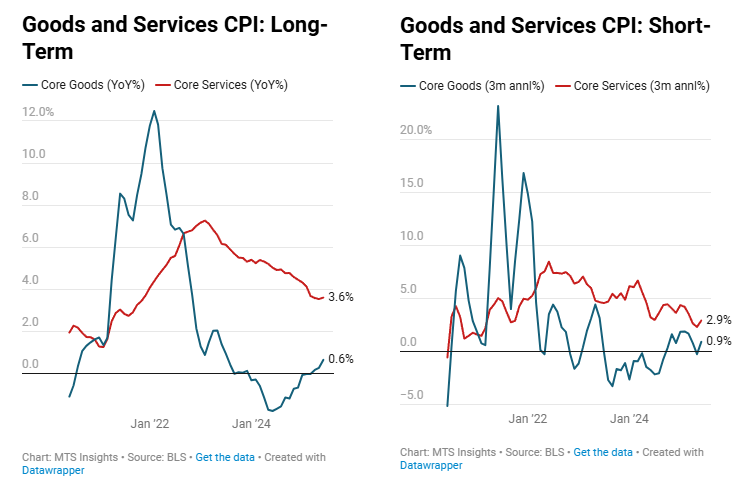
The volatile, non-core categories appeared to be the main source of inflationary pressure in June. Core CPI was up just 0.2% MoM. The moderate monthly increase in core prices pushed the annual rate up a tick to 2.9% YoY, but both rates were below the consensus forecasts of 0.3% MoM and 3.0% YoY. Both core goods and services price growth continued their gradual cooling compared to the hotter prints in 2024, but price pressures are still slightly above where the Fed wants them to be, likely due to higher import costs from tariffs.
- The core goods segment increased 0.2% MoM in June, the highest since February, pushing the annual rate to 0.7% YoY, the highest since July 2023. Some of the hotter segments included household furnishings & supplies (+1.0% MoM, largest since January 2022), recreation goods (+0.8% MoM), and apparel (+0.4% MoM). While these segments were hot, declines in new (-0.3% MoM) and used (-0.7% MoM) vehicle prices kept the broader goods index subdued. If we exclude used cars from the core goods segment (still including new cars), that special aggregate was up 0.3% MoM, or the largest since March 2023. Overall, there appears to be evidence that inflationary pressure in goods is rising and has been so far this year.
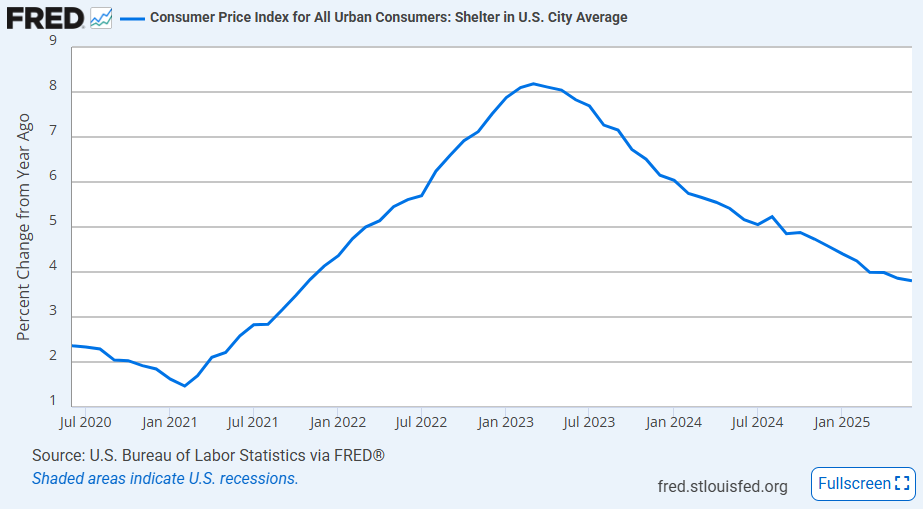
- The core services segment increased 0.3% MoM, about where it has been trending throughout Q2 2025. These moderate increases suggest that services price pressures have receded from their worst, thanks to housing inflation entering a consistent cooling trend. The shelter segment was up just 0.2% MoM in June, and notably, its annual rate dropped to 3.8% YoY, the lowest since November 2021. Medical care services (+0.6% MoM) and other personal services (+0.6% MoM) were the main segments on the rise in June. On an annual basis, core services were up 3.6% YoY, matching the previous month’s rate, but services price pressures in the short-term have been consistently falling and are below three percent.
The details in the June CPI report are very important to consider. The headline CPI and core CPI rates both appeared to be a bit cooler-than-expected compared to expectations, but the positive surprise relied on some key categories, shelter, new and used vehicles, and energy, to keep inflation subdued in June. The BLS’s special aggregate which excludes used cars and shelter from core CPI increased 0.3% MoM in June, which is the highest monthly increase since January. I believe that this tick up in MoM inflation is tariffs finally making their way into the data, and I think we will continue to see similar tariff impacts over the summer, especially if tariff rates go back up on August 1st.