


US CPI: July 2025
CPI
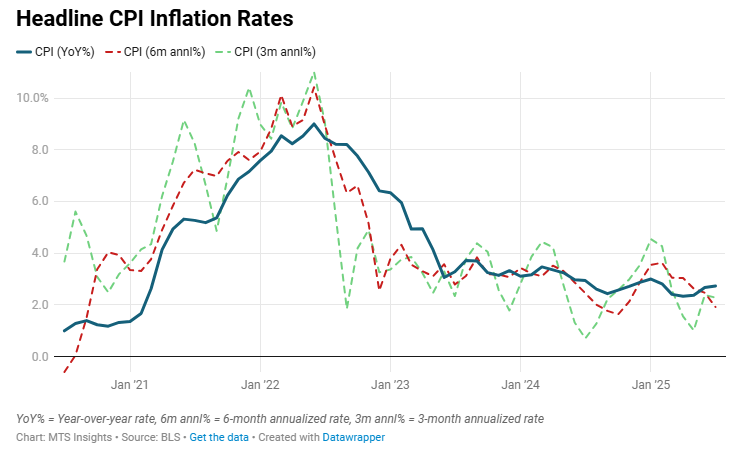
US CPI posted a moderate monthly gain in July, rising 0.2% MoM, while the annual rate remained unchanged at 2.7% YoY compared to June. The data points were roughly in line with expectations, but the annual rate was slightly below the consensus estimate of 2.8% YoY. There were several segments pulling the index in either direction. The main deflationary force came from the energy segment, but that was offset by a moderate rise in non-energy goods and services prices. Let’s take a closer look at the volatile components:
- Food CPI was flat on a monthly basis in July after posting gains of 0.3% MoM in both May and June. Prices for food at home dropped -0.1% MoM with only 2/6 grocery store subindexes rising. The decline was driven by lower cereals & bakery products (-0.2% MoM) and nonalcoholic beverages (-0.5% MoM). On the other hand, the segment for meats & eggs saw a slight 0.2% MoM increase. The index for food away from home increased 0.3% MoM with prices for full service meals up 0.5% MoM. Overall, food inflation is stable around 3% YoY, where its been since March.
- Energy CPI was the major source of deflation in the July report as it dropped -1.1% MoM in July as a result of another sizeable drop in gasoline prices (-2.2% MoM). Gas prices have not risen like they usually do over the summer which translates to stronger seasonally adjusted declines in the CPI report (not seasonally adjusted, the gas index was down -0.5% MoM). Energy services saw a smaller decline at just -0.3% MoM and offset some of the larger decline in gasoline. On an annual basis, the energy segment is down 1.6% YoY, a smaller decline than was seen a few months ago.
Core CPI
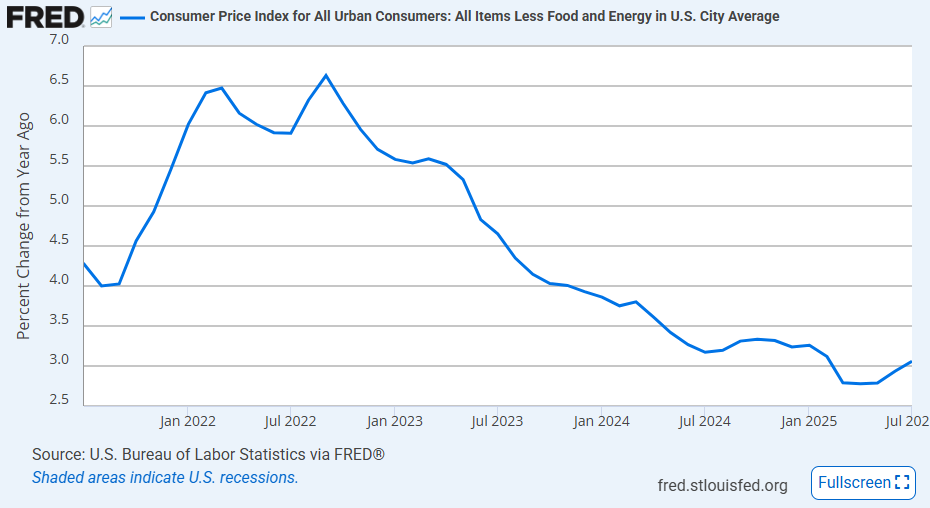
The US core CPI increased 0.3% MoM in July, slightly ahead of the headline index but in line with expectations given by analyst forecasts. The annual rate saw a hotter shift as it ticked up 0.2 ppts to 3.1% YoY, larger than the acceleration to 3.0% YoY that was expected by analysts. Although, the upside surprise can be attributed more to rounding since the YoY rate to two decimals was 3.05%. The core inflation rate has now increased for two straight months and is at its highest since February. This month, core services prices saw the largest monthly gain since January and were the cause of the frothy gain in broader core prices. However, core goods prices also increased, pushing the annual increase to a two year high.
- The core services segment increased 0.4% MoM in July, the strongest MoM rise since January. In this report, the shelter index was not the force behind a hot services reading as it was up just 0.2% MoM. Instead, significant gains in medical care services (+0.8% MoM) and transportation services (+0.8% MoM) drove the core services segment higher with the former seeing the largest monthly gain since September 2022. Transportation services was impacted by a 4.0% MoM increase in airline fares, the largest in over three years. Despite a relatively hot MoM print, the annual core services inflation remained at 3.6% YoY.
- The core goods segment increased 0.2% MoM in July, matching the monthly pace seen in June. All of the core goods subsegments except for one increased in July with the largest increase seen in the household furnishings & supplies index (+0.7% MoM). Prices for vehicles were mixed with new vehicle prices unchanged on a monthly basis while used vehicle prices increased 0.5% MoM. Apparel (+0.1% MoM) and medical care goods (+0.1% MoM) prices both saw marginal increases. The trend in core goods prices has been a slow and steady uptrend, rather than a sharp, jagged spike in response to tariffs. The annual rate of growth of core goods prices sits at 1.2% YoY, up from 0.7% YoY in June and the highest since June 2023.
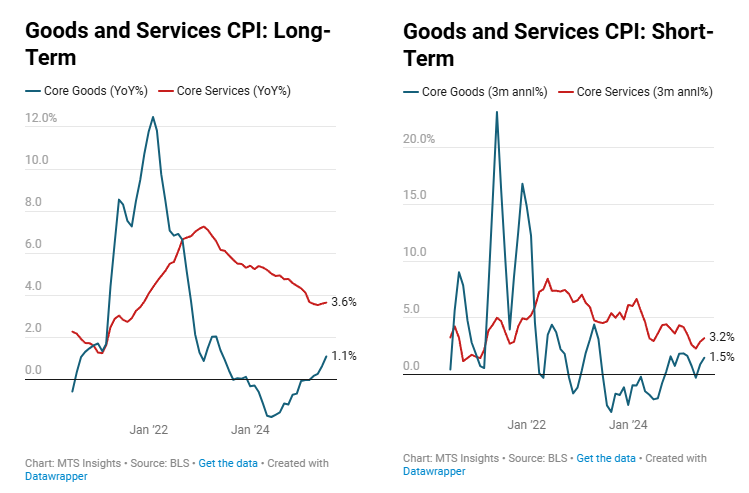
Overall, the July CPI report does not provide the strong upside surprise that many analysts were expecting to see over the summer as tariffs started to work their way into the supply chains and to consumers. However, that does not mean that tariffs are not having any effect on prices at all. The reality is that firms have likely prevented a spike in prices by building inventories ahead of the implementation of the tariffs (that were also delayed a bit), allowing for a smoother transition to the new tariff reality. We should continue to see core goods price pressures rise through the end of the year and become a significant source of inflationary pressure by the end of the year.