


NFIB Small Business Optimism: March 2025
The Small Business Optimism Index fell for the third month in a row, dropping -3.3 pts to 97.4 in March, below expectations of a smaller decline to 98.9. The rise since the election, driven by a sudden improvement in soft data in response to Trump’s victory, has been cut by over 7 pts in the first three months of 2025. The pain is unlikely to end there. This survey was completed before the announcement of US reciprocal tariffs which has been incredibly bearish for small caps. The fundamentals for smaller firms in the face of tariffs are bleak and should prevent a “buy the dip” moment.
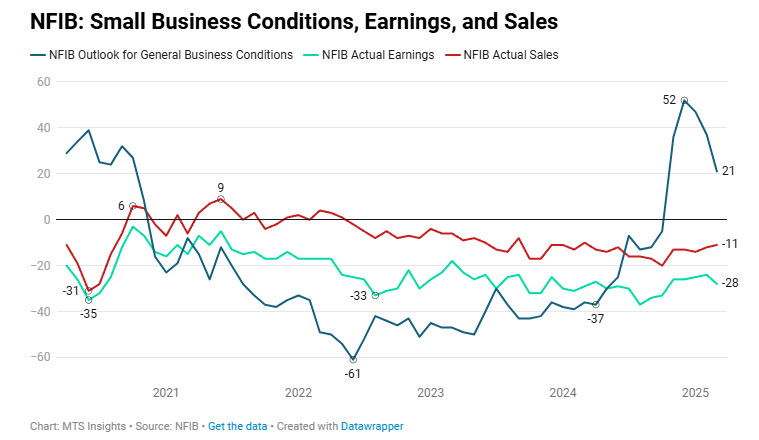
As I highlighted in my analysis of the February NFIB report, the Trump administration’s pursuit of protectionism has caused small business owners to temper the optimistic attitudes they reported in December when sentiment was boosted by lower taxes and deregulation in the coming year. The General Business Conditions Outlook index is the main index that saw a post-election surge, and that has fallen another -16 pts to 21 in March. In total, the index has fallen -31 pts through the first quarter of 2025. The outlook is coming more in line with the measures of actual sales and actual earnings which both remain negative. In fact, the Actual Earnings index fell -4 pts in March to -28, the lowest since October 2024.
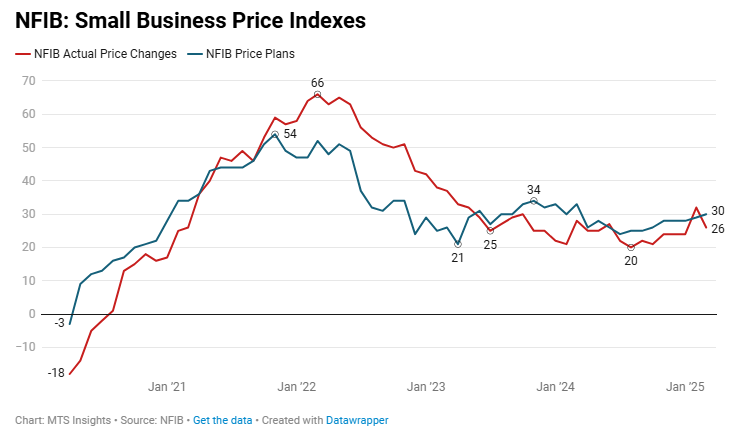
The movement in the price indexes suggests that there wasn’t yet a broad concern that tariffs would force small business owners to increase prices. The Actual Price Changes index backed off -6 pts to 32, an important reversal from what looked like a spike in pricing pressures coming from small firms in February. However, the reading is still the 2nd-highest since June 2024 and indicative of a gradual upward trend. Price expectations have seen a smoother increase over the course of Q1 2025, up 1 pt to 30 in March, and are now at the highest since March 2024. I expect these indexes to see larger moves up in the April survey as the reciprocal tariffs (if put in place) would be a broad-based increase in costs at a time when earnings for small businesses are consistently trending lower.
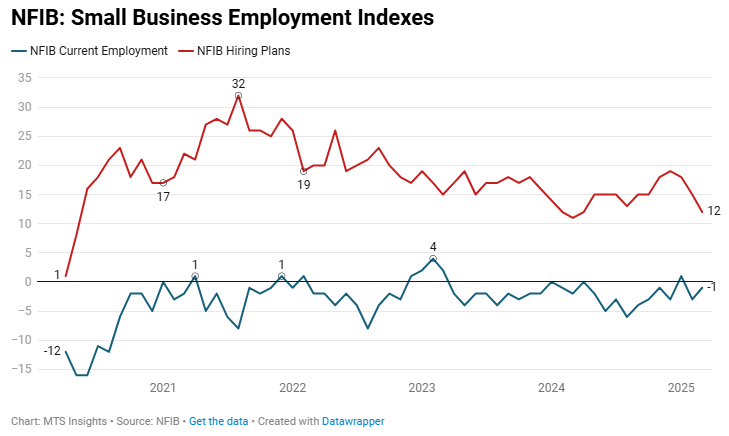
The employment indexes showed a similar trend as the price indexes. The Current Employment index improved 2 pts to -1, partly reversing a -4 pt decline in February. While a flat trend in actual hiring isn’t good, what is more concerning is that small businesses have reversed the increase in their hiring plans that was reported after Trump’s win. The Hiring Plans index peaked at 19 in December and is now down to 12 in March, the lowest since April 2024. For now the reading is positive, but the reaction to a sudden increase in nonlabor costs is likely to lead to a downturn in hiring expectations.
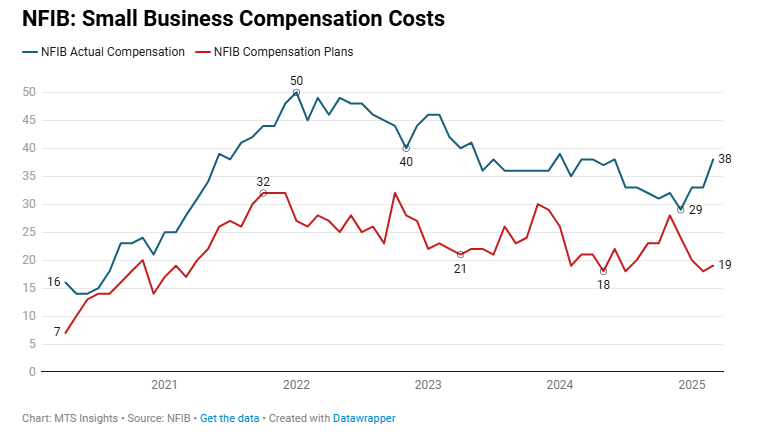
Indeed, employment will have to decline if those labor costs continue to trend the way they have been. The Actual Compensation Costs Index increased 5 pts to 38 in March, the highest since June 2024 and outpacing the Compensation Plans index by the widest margin since early last year. Small businesses consistently find themselves with a shortfall of qualified applicants, and this has pushed labor costs up in response. Paired with the rise in input costs that will come from tariffs, small businesses are looking at further margin compression if they don’t raise prices.
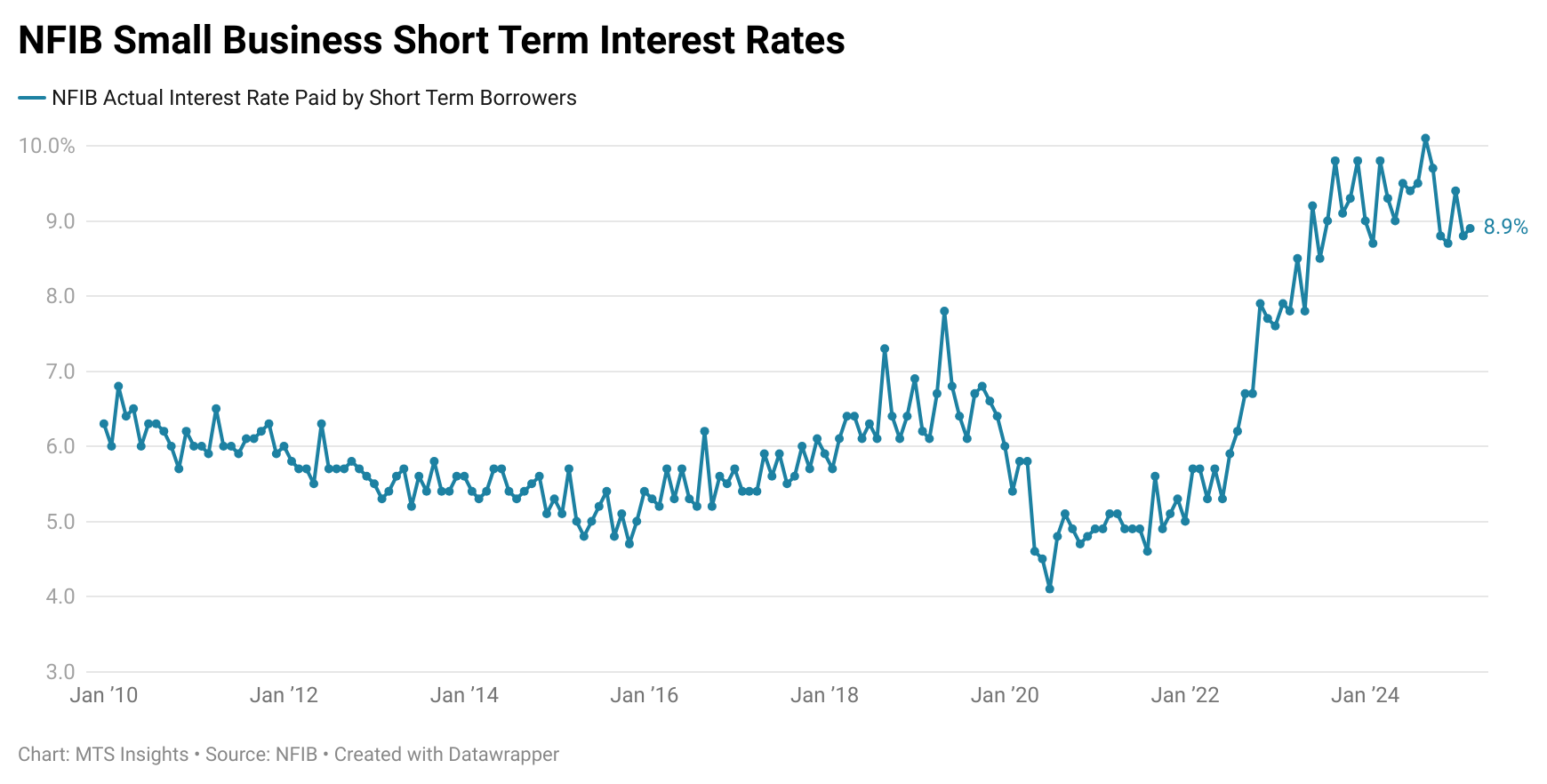
One avenue that small businesses could find some relief is in financing costs. President Trump has signaled several times that he wants Powell and the Fed to cut rates, and a sharp increase in market volatility could provide some relief is there is a flight to safety that causes bond yields to decline. In March, there was no relief as the NFIB measure of small business rates remained elevated at 8.9%, and early April trends suggest that relief this month could be minimal. Volatility caused a short-term decline in rates, but that has been completely reversed and the market continues to respect the inflationary pressures that are likely to come out of the tariffs that would keep the Fed on the sidelines. Additionally, as growth prospects sour, banks are likely to increase the risk premium on financing smaller firms which were already struggling pre-reciprocal tariff announcement.