


US Employment Situation: December 2024
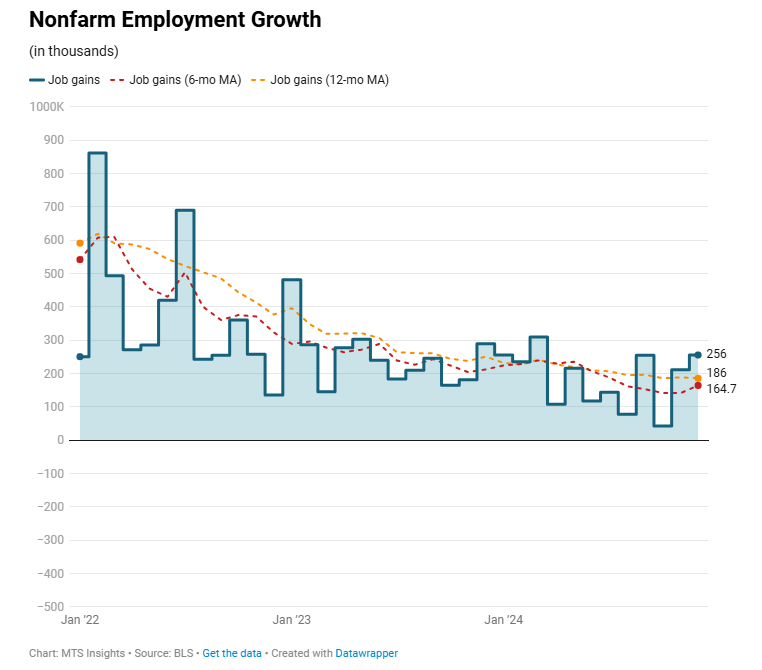
The US added 256,000 jobs in December, beating expectations of 160,000 added, and the unemployment rate fell -0.1 ppt to 4.1% after it had ticked back up to 4.2% in November and was expected to stay there. The headline numbers are very hot and are evidence against the Fed’s case that the labor market is cooling.
Establishment Data
Despite there being a narrative of slowing hiring growth, the December nonfarm payroll employment change came in at a very strong 256,000 which surpassed expectations of there being about 100,000 less. The strength was not distorted by revisions in previous months as November and October only saw minor updates that ended in a small -8,000 loss from revisions. Total private jobs added was a strong 223,000 which means that government jobs were only a small portion of the increase at 33,000.
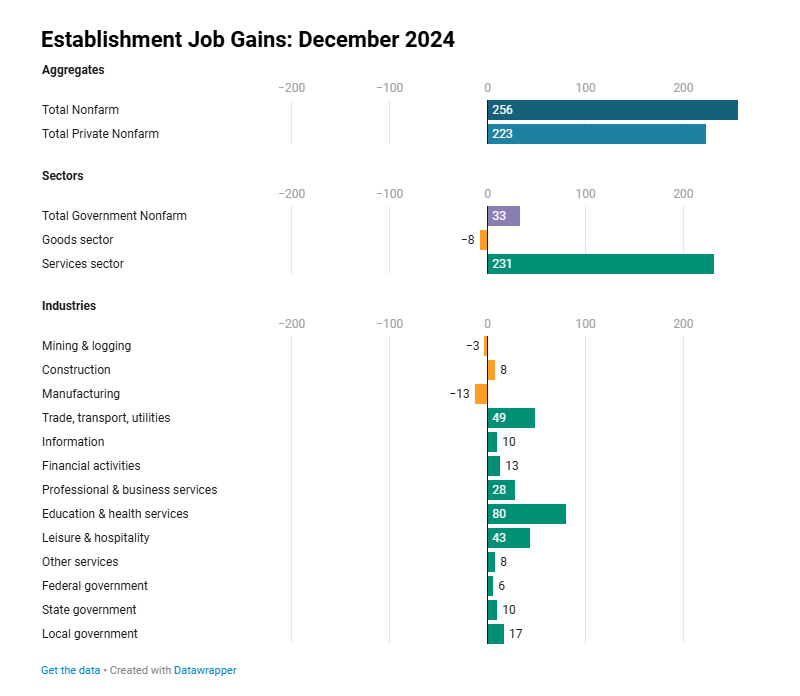
Once again, we see that the services sector is the main source of hiring momentum with 231,000 jobs added there while the goods sector actually saw a decline of -8,000. The main cyclical sectors in the goods sector like manufacturing and construction remain notably cool with the former losing -13,000 jobs and the latter gaining just 8,000. Meanwhile, the service sector expansion, which is to be demonstrated in ISM survey data, continues to drive employment growth. Private education & health services saw the largest increase of 80,000 followed by solid increases in retail (+43,400) and leisure & hospitality (+43,000). The growth in those last two industries suggests consumer activity remained strong over the holiday season.
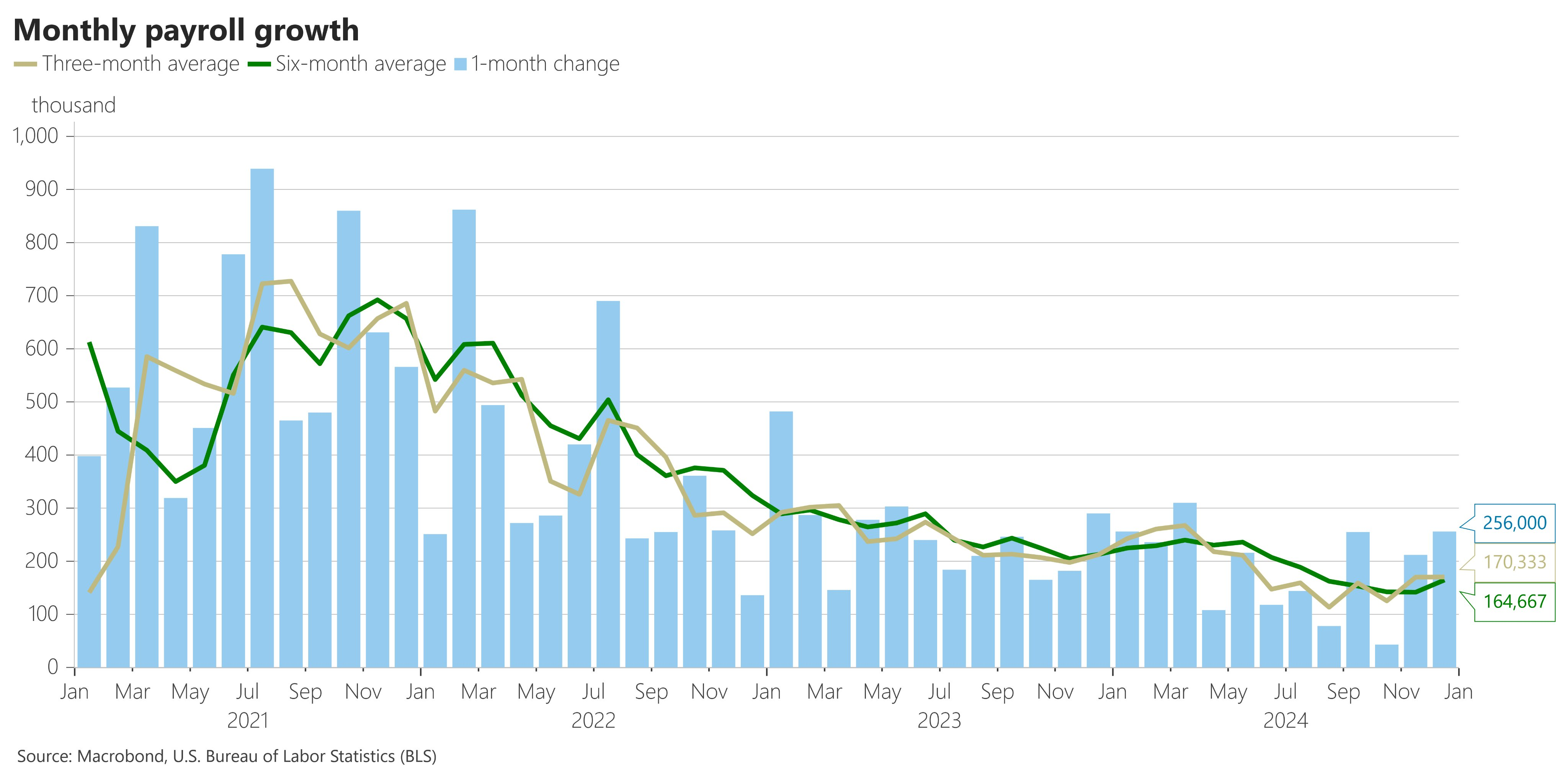
The Fed has long held that the momentum in job growth is slowing, and it did do that for a bit in Q3 2024. However, the recent jobs reports are showing that this perspective needs to be changed. The US added 165,000 jobs on average over the last 6 months, the highest since July.
Household Data
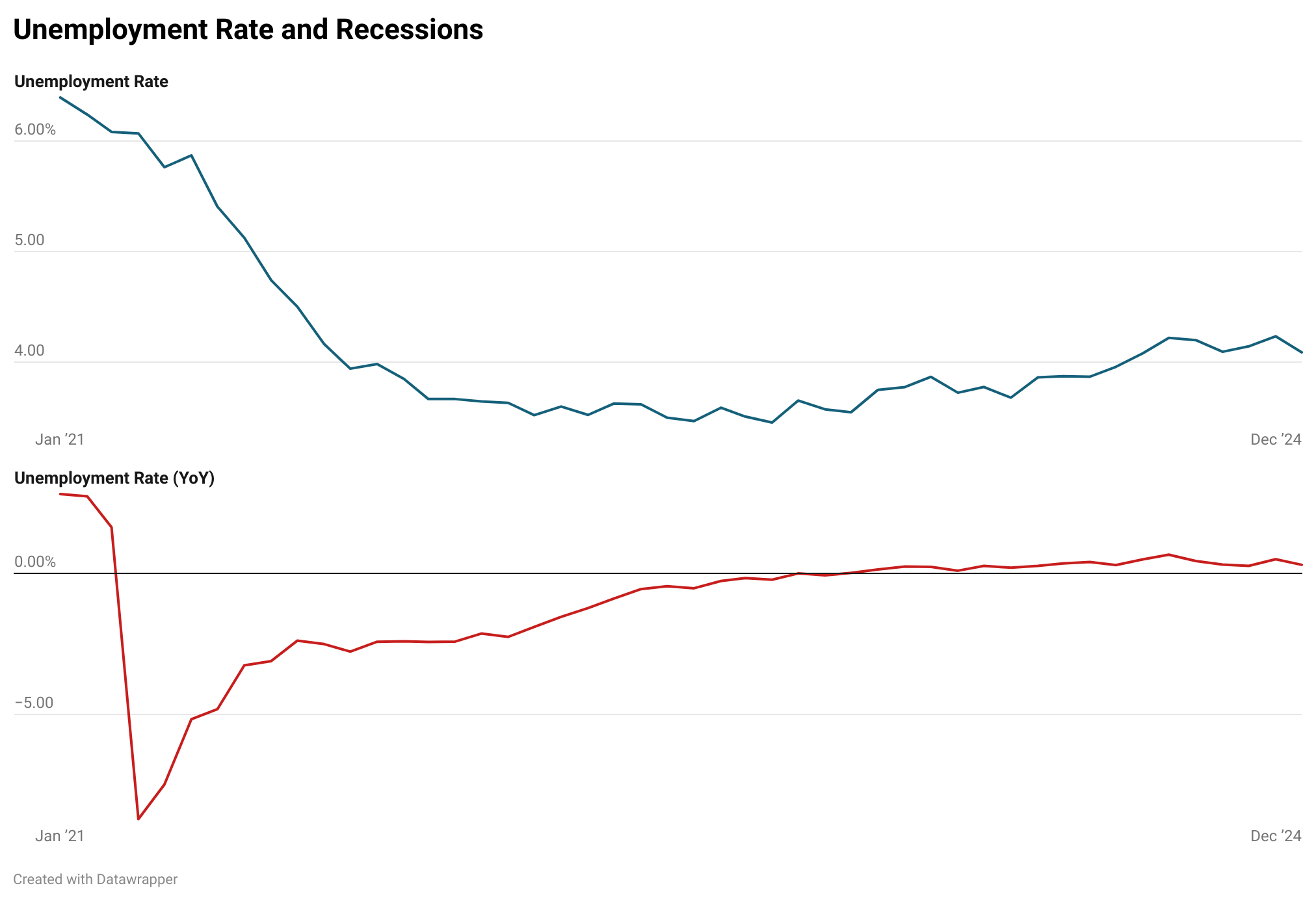
For once, we have some Household data that is consistent with the strength in the Establishment data. The unemployment rate fell -0.1 ppt to 4.1% which, as mentioned before, was below expectations. The jobless rate fell because of a large increase in employment of 478,000 and a large decrease in the number of unemployed of -235,000. This means that the labor force growth of 243,000 was completely incorporated into the employed labor force, a strong signal of labor market strength. When looking at unemployment rates segmented out, they fell across the board with a noticeably strong decline in the unemployment rate of teenagers, down -0.7 ppts to 12.4%. Youth unemployment is typically more sensitive to cyclical economic conditions.
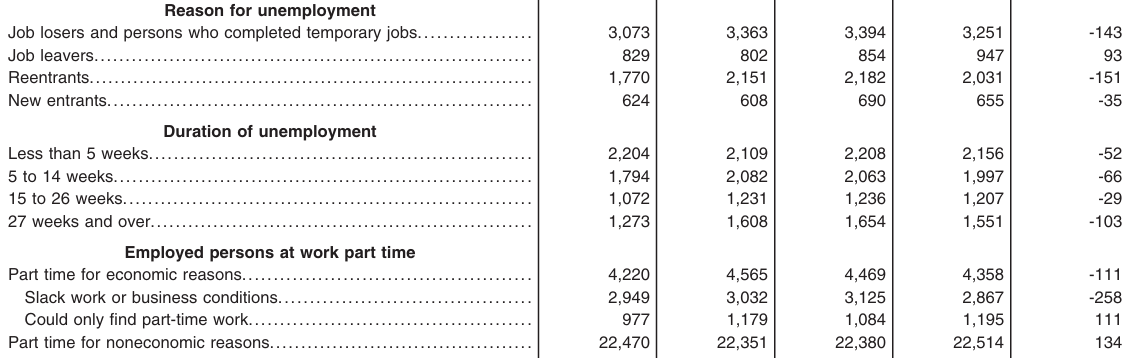
The survey found that the only individuals who became unemployed were those quitting their jobs. There were declines in the number of job losers and the number of labor force entrants or reentrants who could not find a job. On top of that, unemployment fell across all durations with a notable -103,000 decline drop in long-term unemployment numbers. Even in the part time numbers there was evidence of labor market strength. The number of part time workers for economic reasons fell -111,000 with slack work or business conditions causing part time employment down -258,000.
Wage Data
Where there might have been a bit of softness was in the wage growth numbers which is actually where softness may be good news. Average hourly earnings grew 0.3% MoM and 3.9% YoY in December, down from 4.0% YoY in November and slightly below expectations of 4.0% YoY. Goods wages were the primary component of the deceleration as goods average hourly earnings eased from 4.3% YoY to 4.2% YoY. Wage growth in the service sector was unchanged at 3.9% YoY. though at two decimals there was a small deceleration.
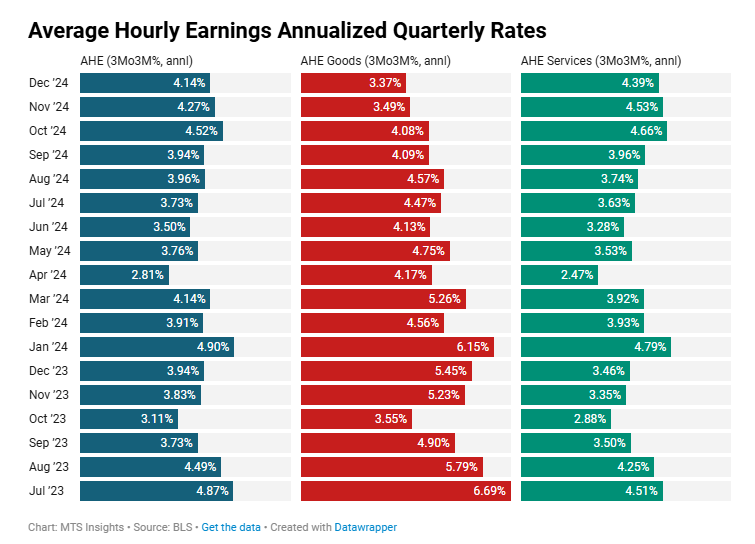
Looking at the annualized rate of wage growth over the last three months, we can see that inflationary pressures are starting to trend lower again after peaking in October. The overall quarterly annualized rate of 4.1% is down from 4.5% at the start of Q3 and more in line with the wage pressures the Fed was looking at before the September rate cut. Goods sector wage pressures actually look to be at the lowest in the post-pandemic period, and service sector pressures are trending in the right direction and won’t be impacted by the holiday period any longer.
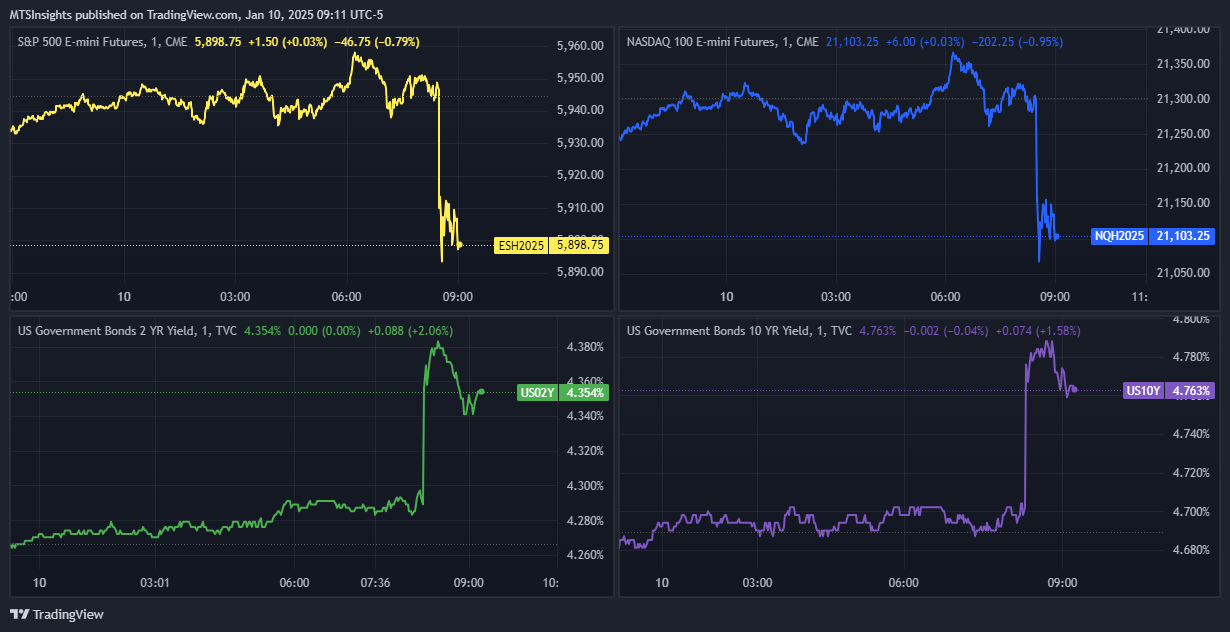
The market reaction to the hot jobs report was fierce. Bond yields had a sudden and sharp reaction as both the 2-year and the 10-year Treasury yields jumped around 10 bps initially. That increase has fallen back a bit, but around an hour after the jobs report release, they are still up around 6-7 bps. The 10-year yield, up to around 4.75%, is now at the highest point since November 2023, surpassing the April 2024 peak which was caused by a flurry of hot data in Q1 2024. The sharp increase in borrowing costs caused equity futures to pull back from their flattish positions. Just before open, S&P 500 futures were down -0.5% and NASDAQ futures were down -0.6%. Russell 2000 futures were down the most, setting up small caps to have a poor end to the week, at -1.4%. In general, the market reaction seems to imply that the Fed’s easing cycle might be coming to a close soon… or may already be over.
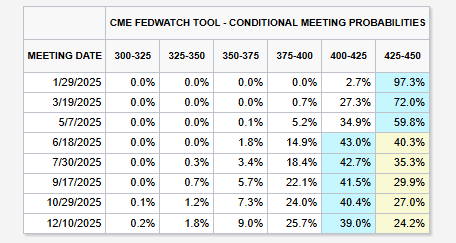
The Fed fund futures market demonstrated this viewpoint as rate cut probabilities dropped for the first three meetings in 2025. The market already saw a January cut as basically off the table with a probability of a pause at 93.6% yesterday and at 97.3% today, but March and May cuts were very much in play. After the December jobs report, the March cut probability fell from 41.3% yesterday to 27.3% today, and the May cut probability fell from 55.3% to 40.2%.
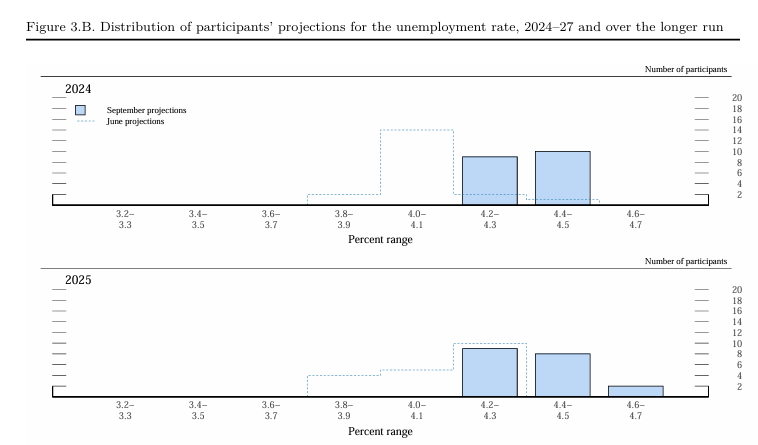
Rewind to September 2024, the Fed cut by 50 bps and introduced a plan to get ahead of the labor market it saw was in a clear state of loosening in order to avoid large increases in unemployment. It communicated its view of labor market weakness through its median 2024 unemployment rate projection of 4.4%, set in the September SEP, and not a single member projected an unemployment rate of 4.1% at the end of 2024. The December jobs report is a rejection of that labor market assessment and means that the Fed will have to reassess its perspectives of the US economy in Q1 2025, as it already had started to in the November and December meetings.
Trump Boost?
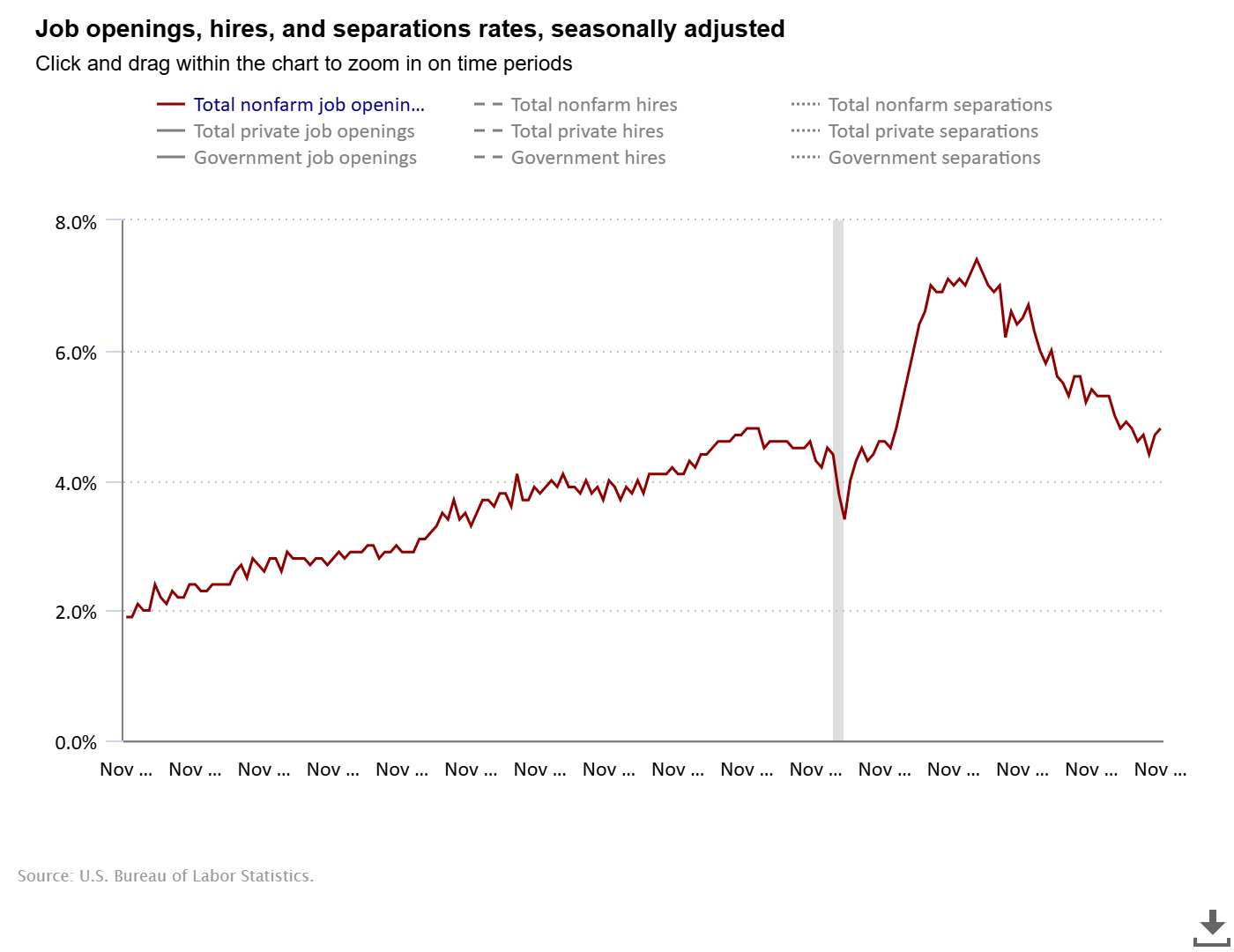
One final thing to consider with this employment update is how much Trump’s election win could have impacted hiring. I believe that the increase in business optimism following November 5th may have actually had a significant impact. The November NFIB survey showed a 41 pt surge in the small business outlook for general business conditions, and the hiring plans subindex ticked up 3 pts to its highest reading in 2024. The November JOLTS report also showed a surprise increase in job openings by over 250,000 and the job openings rate increased to the highest since June at 4.8%.
If it is true that businesses see deregulation and tax cuts in a new Trump administration, it would make sense that business owners would reason they could hire that one or two employees they have been meaning to hire in order to expand. However, I see this as more of a temporary tailwind for hiring that will be less important when Trump’s policies are actually realized. Hiring trends will adjust to economic conditions, which are currently solid, and the labor market will likely return to a gradual easing until actual change occurs.