


US CPI: December 2024
| Data Point | December | Forecast | November |
|---|---|---|---|
| CPI | 0.4% MoM, 2.9% YoY | 0.3% MoM, 2.9% YoY | 0.3% MoM, 2.7% YoY |
| Core CPI | 0.2% MoM, 3.2% YoY | 0.2% MoM, 3.3% YoY | 0.3% MoM, 3.3% YoY |
| Core Goods CPI | 0.1% MoM, -0.5% YoY | - | 0.3% MoM, -0.6% YoY |
| Core Services CPI | 0.3% MoM, 4.4% YoY | - | 0.3% MoM, 4.6% YoY |
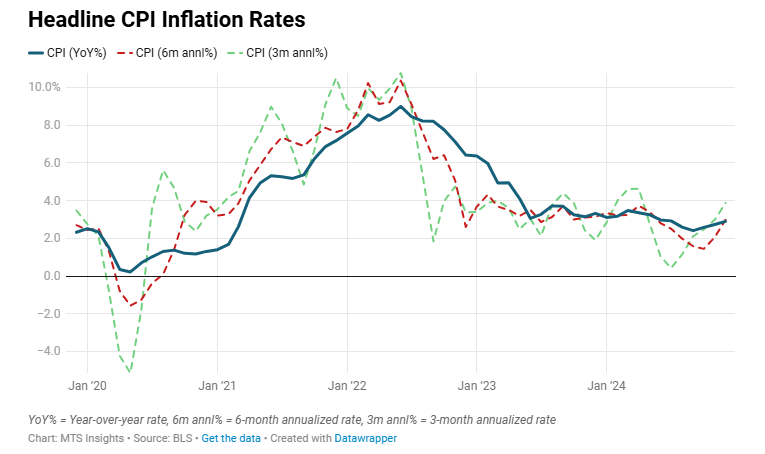
US CPI increased 0.4% MoM and 2.9% YoY in December, a small upside surprise on the monthly rate but an annual rate that was in line with expectations and the highest since July. The core CPI inflation reading was on the cooler side with an in-line monthly increase of 0.2% MoM and a huge downside surprise in the annual rate to 3.2% YoY (vs 3.3% YoY expected). The market took the cue from the core CPI YoY miss and reacted bullishly to what it perceived as a signal that price pressures are cooler than previously thought.
Food and Energy
The fastest monthly increase in the CPI since March was largely impacted by energy prices bouncing back from weakness in Q3 and Q4. Energy CPI jumped 2.6% MoM which is the fastest since August 2023. Gas prices jumped 8.3% MoM and fuel oil prices were up 3.9% MoM, both one-year highs for monthly rates, but on an annual basis, both were still negative (as was energy CPI down -0.5% YoY). The other non-core segment, food, maintained a solid pace of growth at 0.3% MoM and 2.5% YoY, up from 2.4% YoY in November. Both food at home and food away from home saw 0.3% MoM gains as food price growth picked up gradually throughout the year. The annual pace of food inflation is now at the highest point since January.
Core CPI
The core inflation reading is what is driving the market today as the report noted a smaller 0.2% MoM rate in December, the slowest since July, and an annual rate of 3.2% YoY, down from 3.3% YoY and the lowest since August. The disinflationary move was important because it reestablishes a disinflation trend that had faded in Q3 and early Q4 and sets up the rate for more deceleration in 2025. Here are some key core CPI details:
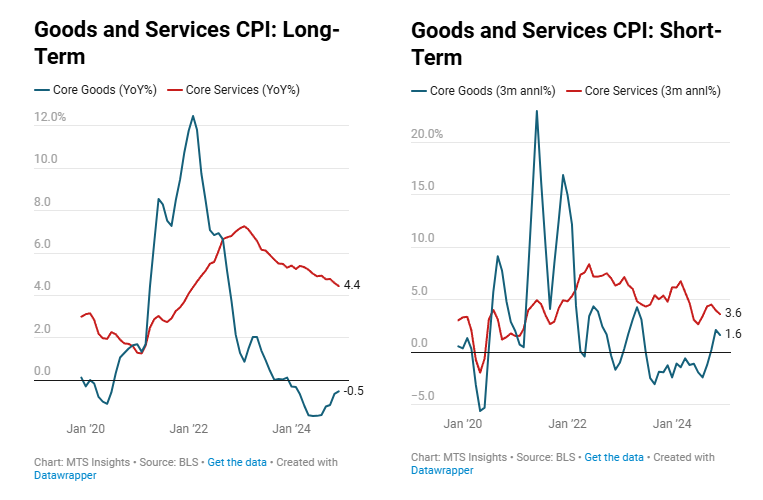
- Core goods CPI was up 0.1% MoM but still down on an annual basis by -0.5%. This is the largest annual rate since February but still negative. New vehicle (+0.5% MoM) and used vehicle (+1.2% MoM) monthly price growth were the main price pressures in December as the transportation commodities (less fuel) index increased 0.7% MoM. However, this was offset by softer readings elsewhere: household furnishings & supplies (-0.2% MoM), apparel (+0.1% MoM), medical care goods (0.0% MoM), and recreation goods (-0.5% MoM).
- Core services CPI saw its third straight increase of 0.3% MoM but the annual rate decelerated to 4.4% YoY, the lowest since February 2022. This was caused by a similar slowdown in the shelter index which was up 0.3% MoM and 4.4% YoY, the slowest annual rate since January 2022. Other services categories were a mix of slow and moderate increases with medical care services up 0.2% MoM, recreation services up 0.4% MoM, education & communications services up 0.2% MoM, and transportation services up 0.5% MoM.
- The transportation services segment is notably up 7.3% YoY (though that is down from 8.2% YoY in November) and now becoming a segment to watch. It includes motor vehicle insurance prices which is up 11.3% YoY, and airline fares which increased 3.9% MoM in December and are now up 7.9% YoY, the fastest annual rate since March 2023.
- Supercore inflation, services less rent of shelter, increased 0.4% MoM and decelerated to 4.0% YoY, the lowest since February. This watered-down snapshot of the service sector is gradually closing in on the general services segment as the shelter component continues to cool.
- Another core measure of inflation that excludes food, energy, shelter, and used vehicles increased just 0.2% MoM and clocked in at 2.4% YoY which was unchanged from its reading in November.
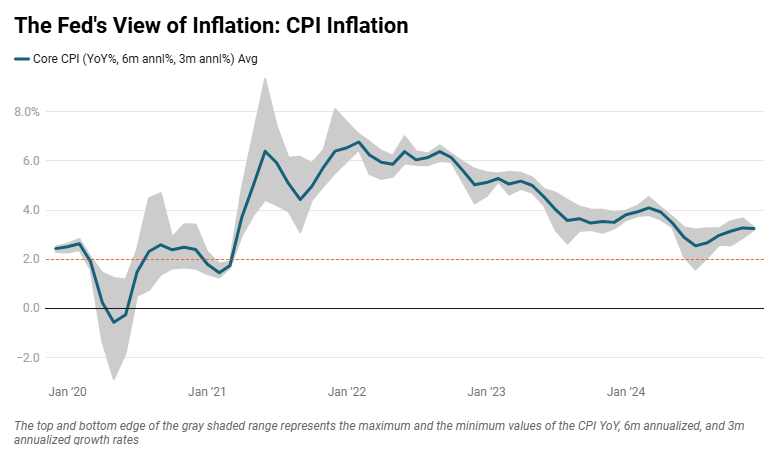
Broadly, the story of the December data is that the hotter readings of price pressures in October and November look to have cooled. The short-term core CPI 3Mo3M annualized rate had risen to 3.7% in November from 2.1% in August, and with the cool December reading, that measure eased to 3.3%. The annualized monthly reading for December actually comes out to 2.7%, so a few more months like that and short-term price pressures will drop back to where they were in the first half of 2024 when disinflation was intact.