


US PPI: April 2025
The headline PPI index fell -0.5% MoM, a big miss below the consensus estimate of a 0.2% MoM increase. The decline is the first since October 2023 and the largest since producer costs crashed during the pandemic in April 2020. On an annual basis, the rate of growth fell to 2.4%, down from 3.4% in March and the lowest since September 2024. The drop in April was not evident across all categories as some segments have larger impacts than others.
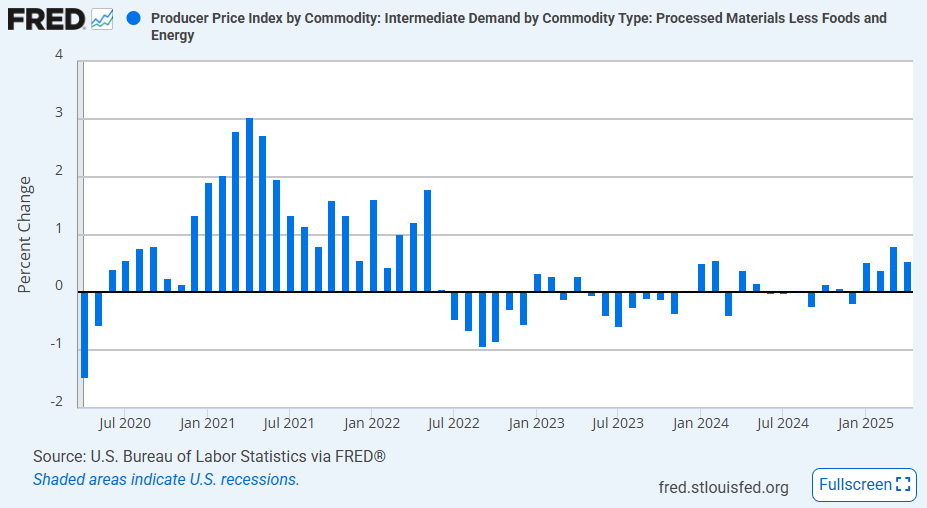
Final demand goods PPI was unchanged in April, mostly due to declines in food and energy costs, which fell -1.0% MoM and -0.4% MoM respectively. Eggs continued to be a standout category, dropping -39.4% MoM. Excluding those two segments and final demand goods, PPI was up 0.4% MoM, one of the strongest increases in over a year. The increase in that core segment was seen across both consumer goods and capital goods, up 0.3% MoM and 0.6% MoM. The rise in finished goods costs is being driven by strong gains in core intermediate goods cost,s which increased 0.7% MoM and 0.5% MoM in the last two months (both gains are the highest since the 2021-2022 post-COVID supply chain crunch). These increases are likely coming as a result of the tariffs put in place in February and March.
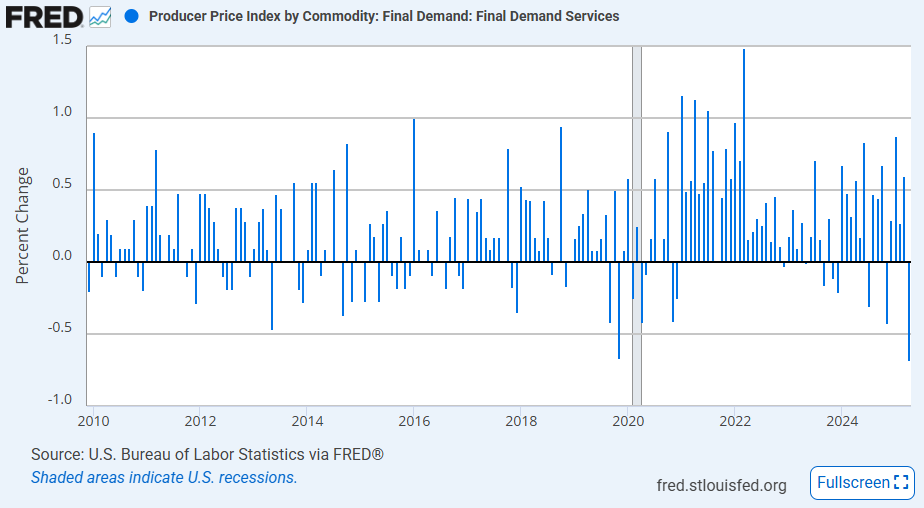
Final demand services PPI looks have been the main driver of the headline decline, falling -0.7% MoM, as all of its subsegments fell in April. Notably, this is the largest decline in final services PPI since the series began in December 2009. The largest decline was seen in the final demand trade services segment which fell -1.6% MoM and accounted for over two-thirds of the overall services PPI drop. The move here points to a significant decline in retail and wholesale margins in April that was probably driven by higher tariff rates. Additionally, the transportation and warehousing services segment dropped by -0.4% MoM, likely a result of trade and travel cooling in the wake of US trade policy changes.
The PPI report as a whole looks deflationary, but there are key differences within the data to point out. Food and energy, the two volatile segments, were important deflationary factors that actually hide some of the inflationary pressure from tariffs in finished consumer and capital goods costs. The services side was the main reason for the PPI decline through the sharp decline in the trade segment. That specific move is a bit deflationary in that it suggests that retail and wholesale firms are eating some of the higher costs from tariffs for now, but that could shift if trade services firms are not able to survive the margin compression.