


ISM Manufacturing PMI: April 2025
Like the S&P report, the ISM Manufacturing PMI did not move much, down just -0.3 pts to 48.7 in April, which was a smaller decline than the consensus forecast of a drop to 48.0. Unlike the S&P report, the ISM data suggested that the manufacturing sector was in a slight contraction for the second straight month. The details of the report were mixed and did not show industrial capitulation:
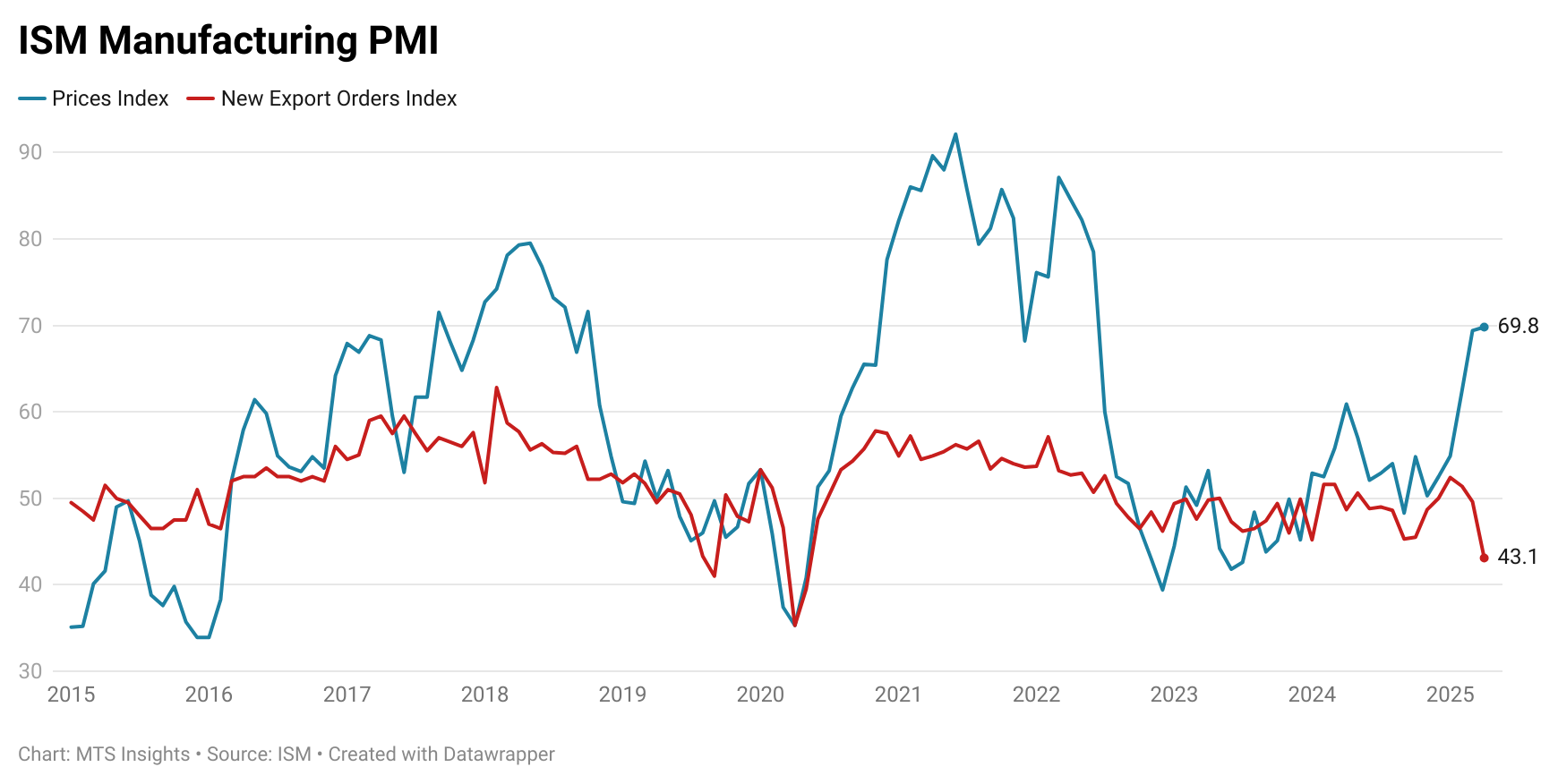
- The New Order index bounced back in April, rising 2.0 pts to 47.2, after a sharp decline of -3.4 pts to 45.2 in March. Despite that, tariffs have resulted in three straight months of declining demand. While the general new order index rebounded, the New Export Orders index fell -6.5 pts to 43.1, the largest decline in foreign demand since the pandemic and comparable to the weakness seen during the global financial crisis. The disparity between the general and foreign orders indexes backs up the trend seen in the S&P PMI that suggested manufacturers were able to cushion the decline in export orders with firmer domestic orders.
- While the decline in demand softened, the drop in production worsened to the worst since the pandemic and the global financial crisis. 24.2% of respondents to the survey reported lower production in April, and the comments pointed to tariffs and trade uncertainty as a major reason for this. Lower production caused the growth in firms’ inventories to come close to a halt. That index fell -2.6 pts in April to 50.8, signaling meager growth.
- The ISM Employment index has been signaling a decline in staffing for three months now, but that decline softened slightly in April. The index moved up 1.8 pts to 46.5. ISM reported that “Respondents’ companies continue to reduce head counts through layoffs, attrition and hiring freezes; an approximate 1-to-1 ratio of hiring versus staff-reduction comments reflects an acceleration of head-count reductions due to the uncertain near- to mid-term demand.”
- The Prices index in the ISM report is also near multi-year highs like the subcomponent in the S&P report, adding to the March surge with an additional 0.4 pts in April for a reading of 69.4. The index is up 17.3 pts so far in 2025 suggesting that trade tensions have created conditions for higher inflation amidst rising costs for manufacturers.