

Conference Board Employment Trends Index: July 2026
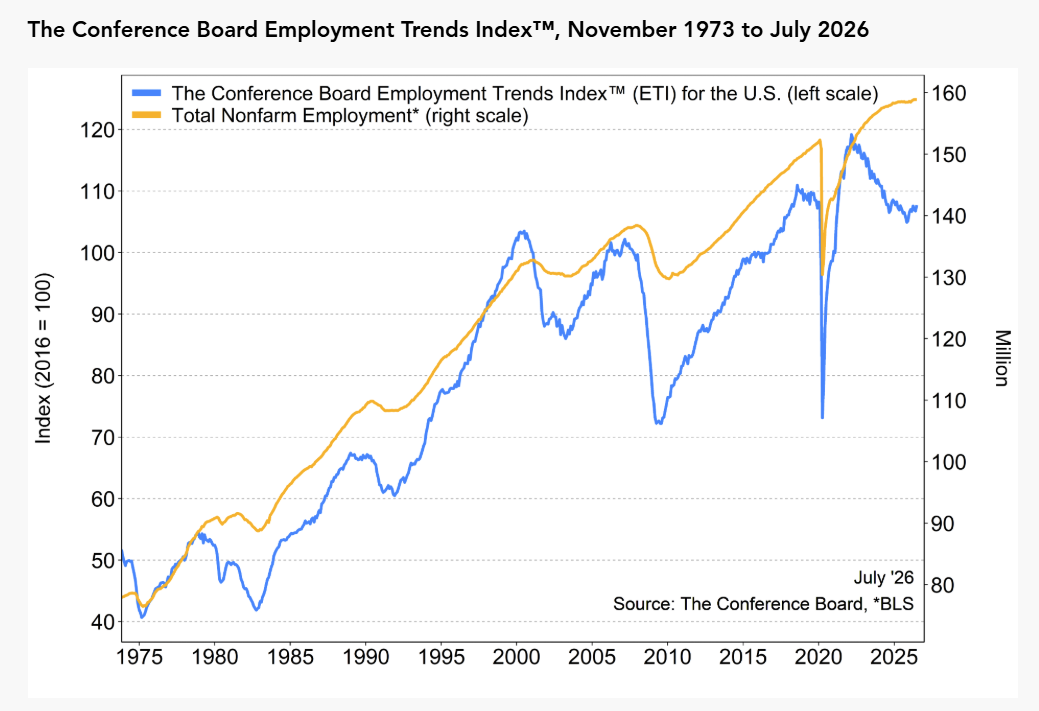
The Conference Board Employment Trends Index (ETI) rose to 107.71 in July from a revised 106.74 in June (+0.97 pts MoM), rebounding after two monthly declines and signaling continued, though modest, labor market resilience.
-
The ETI increased to 107.71 (+0.97 pts MoM), reversing declines in May and June. The index remained just +0.6% above its level one year earlier, suggesting payroll growth is likely to stay modest in the coming months.
-
The largest positive contribution came from the share of small firms reporting positions they were unable to fill, which rose to 36% (+4 ppts MoM), its highest level since June 2025, indicating stronger hiring demand among small businesses.
-
Initial unemployment claims declined in July to their lowest level since September 2022, providing the second-largest positive contribution and signaling that layoffs remained limited.
-
Job openings were estimated to increase by +168,000 to 7.53 million, while real manufacturing and trade sales were estimated to rise +0.2%, both contributing positively to the index and pointing to continued labor demand and economic activity.
-
The share of consumers reporting that jobs were "hard to get" declined to 21.5% from 21.7% in June, indicating a modest improvement in perceptions of labor market conditions.
-
Temporary-help employment increased by +3,400 in July, contributing positively and suggesting a slight improvement in hiring within a sector often viewed as a leading labor market indicator.
-
The largest negative contribution came from the share of involuntary part-time workers, which increased to 17.4% from 17.1% in June, indicating some deterioration in labor market quality.
-
Overall, six of the ETI's eight components contributed positively and two contributed negatively, with industrial production joining involuntary part-time employment as the only drags on the index.