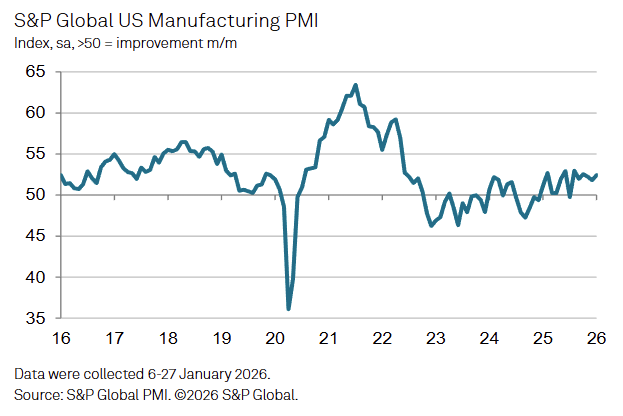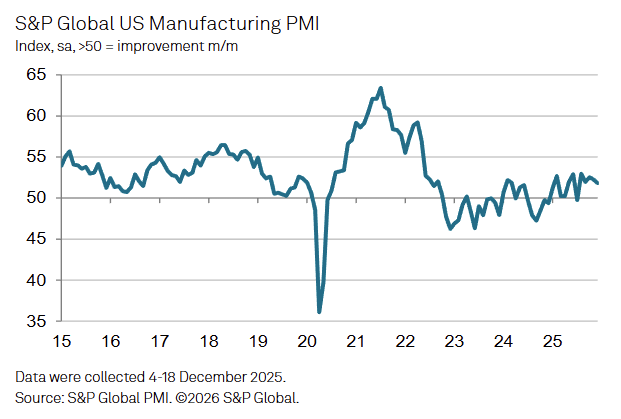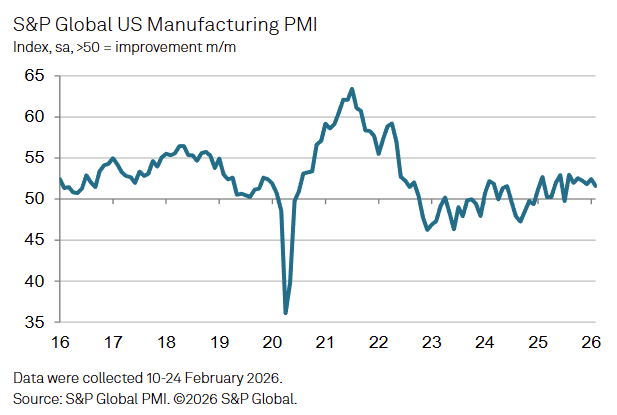
The S&P Global US Manufacturing PMI edged down to 51.6 in February (Jan: 52.4), marking the weakest expansion in seven months as slower orders and export declines moderated overall growth.
-
Output and new orders both increased but at softer rates, with production rising at the slowest pace since last September and new work only marginally higher as tariffs, high prices and extreme weather weighed on demand.
-
New export orders fell for an eighth consecutive month and at the sharpest rate since April 2025, particularly reflecting weaker sales to Canada, showing continued reliance on domestic demand.
-
Employment growth was minimal as firms showed restraint in hiring due to concerns about order book health and declining backlogs, indicating excess capacity limited workforce expansion.
-
Inventories of finished goods were unchanged, ending a six-month accumulation phase, while firms also reduced pre-production inventories for the first time in seven months as part of cost control efforts.
-
Supplier performance deteriorated with transportation delays and low stock availability, and purchasing activity rose more slowly than in January, indicating ongoing supply constraints.
-
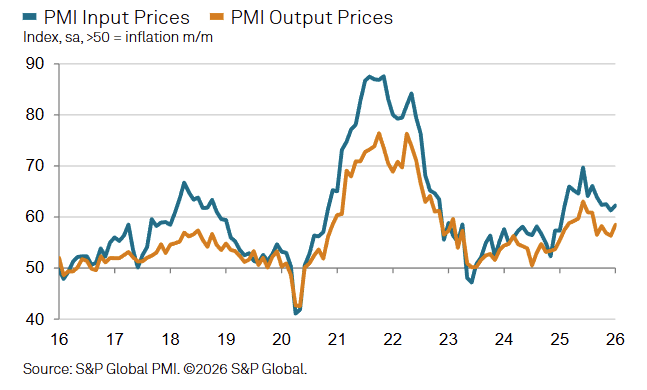
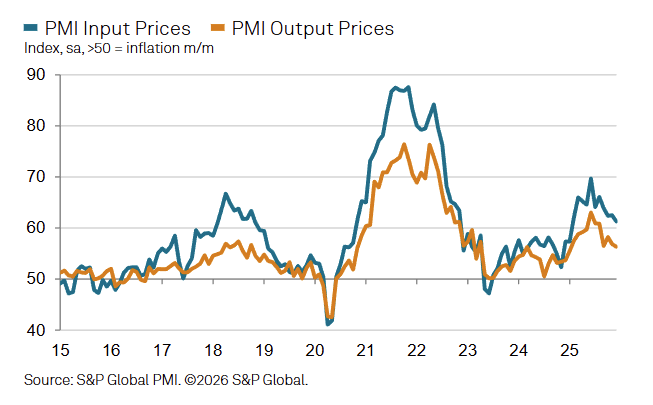
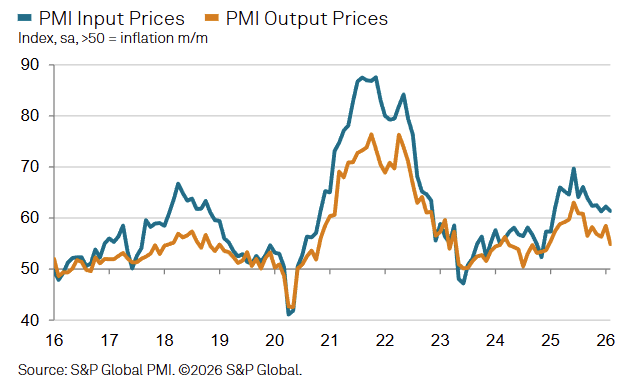
Input cost inflation remained elevated but below 2025 peaks due to tariffs and raw material prices, while selling price inflation slowed to a 14-month low as competitive pressures limited pass-through.
-
Business optimism strengthened to an eight-month high, supported by expectations for product launches and expansion plans despite uncertainty surrounding tariffs and the broader political environment.

 USA
/
S&P Global
USA
/
S&P Global