

NOAA National Climate Report: March 2026
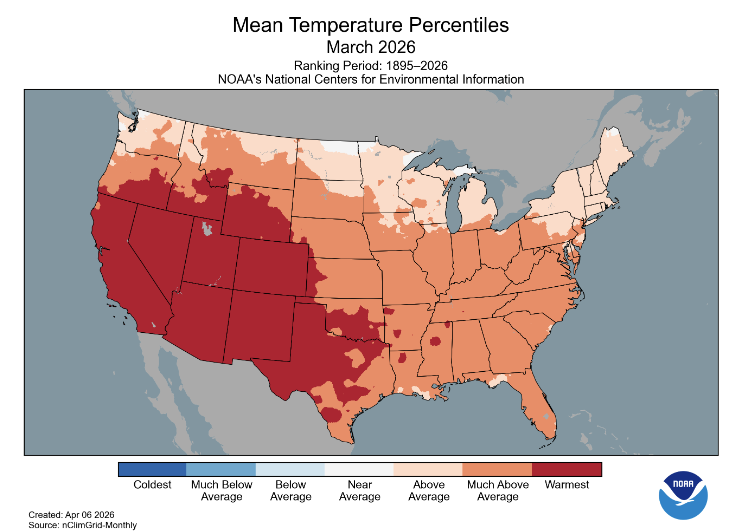
The CONUS average temperature was 50.85°F in March 2026 (+9.35°F vs average), marking the warmest March on record alongside extremely dry conditions and expanding drought coverage.
- CONUS temperatures averaged 50.85°F (+9.35°F vs average), the first monthly reading exceeding +9°F above baseline and the warmest March in the 132-year record, indicating an exceptionally large temperature anomaly.
- Maximum daytime temperatures averaged +11.4°F above the March norm and +0.9°F above the April average, highlighting the intensity of daytime heat relative to both seasonal benchmarks.
- Ten states recorded their warmest March on record, while more than 500 counties (over one-quarter of the CONUS) observed record warmth, demonstrating the widespread geographic extent of the heat.
- The April 2025–March 2026 period became the warmest 12-month span on record, indicating persistent and cumulative temperature strength over the past year.
- CONUS precipitation totaled 1.83 inches (-0.68 inch vs average), ranking as the eighth-driest March on record, reflecting broadly dry conditions across much of the country.
- January–March precipitation was less than 70% of average, marking the driest first quarter on record, indicating an extreme and sustained precipitation deficit.
- California received less than 10% of its normal March precipitation, recording its driest March on record, while nine states ranked among their ten driest, highlighting severe regional dryness.
- Drought coverage expanded to 59.9% of the CONUS (+5.0 ppts MoM), the largest extent since November 2022, with widespread intensification across the West, Plains, and Southeast, indicating worsening drought conditions.
- Assessing the U.S. Temperature and Precipitation Analysis in March 2026