

Kansas City Fed Manufacturing Survey: January 2026
Tenth District manufacturing activity was unchanged in January, with the composite index at 0 for a second straight month and expectations still expansionary despite cooling momentum.
-
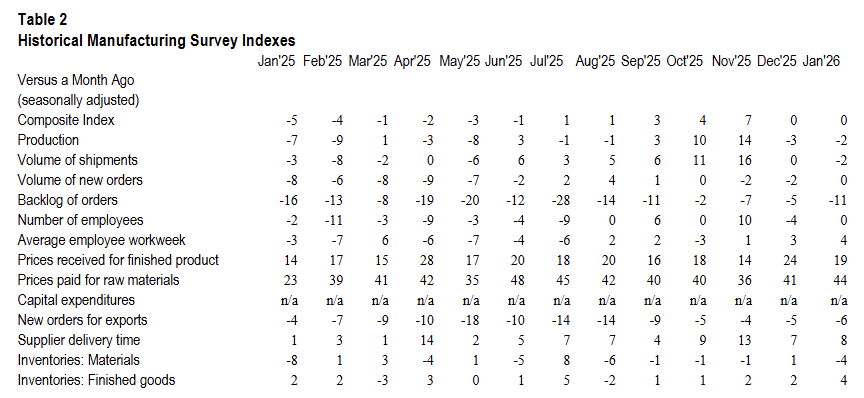
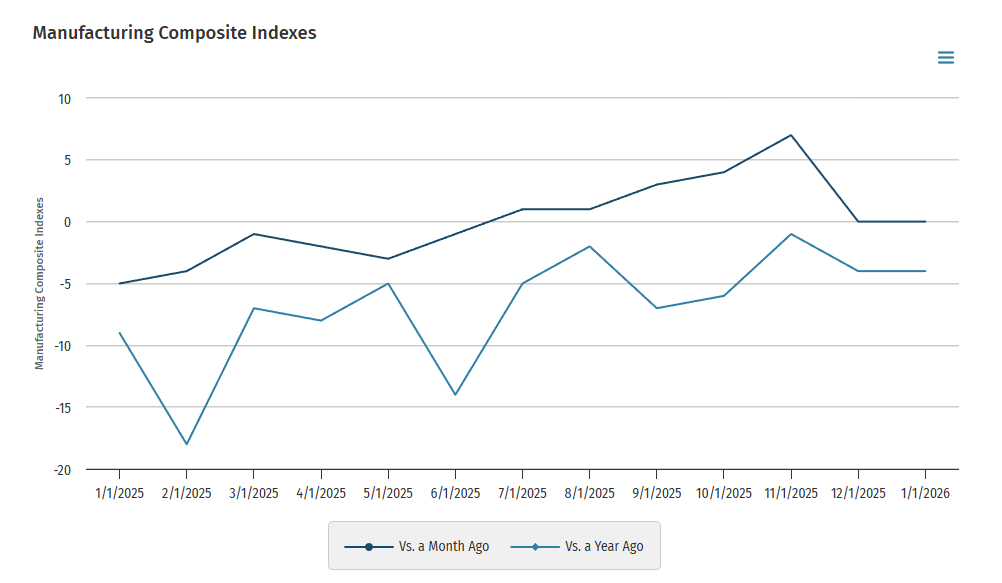
The month-over-month composite index held at 0 in January (Dec: 0; Nov: 7), indicating flat overall activity after slowing from late-2025 strength.
-
Key MoM components were steady: new orders remained at 0 (Dec: 0) and employment remained at 0 (Dec: 0), suggesting demand and hiring conditions were largely unchanged.
-
The year-over-year indexes were mixed, with production slightly positive while employment weakened further to -11 (from -7), pointing to softer labor conditions versus a year earlier.
-
Capital expenditures (YoY) declined sharply earlier but improved in the latest reading, rising to 4 from 14, though still indicating weaker capex momentum compared with prior strength.
-
Prices paid for raw materials increased further in January, while prices received for finished goods cooled, implying input cost pressures strengthened even as output price growth moderated.
-
By industry mix, nondurable manufacturing activity declined while durable activity grew slightly, led by nonmetallic mineral and metal manufacturing.
-
Future expectations cooled but stayed expansionary: the future composite index slipped to 7 (from 10), though expectations for production and shipments increased from last month.
-
Special questions showed labor demand was mostly stable over the past year (57% little to no change), while top 2026 concerns centered on domestic demand (39%), geopolitical uncertainty (24%), and worker availability (21%).