


S&P Global Flash PMIs: July 2025
- Australia - 7/23/2025
- Japan - 7/24/2025
- India - 7/24/2025
- France - 7/24/2025
- Germany - 7/24/2025
- Eurozone - 7/24/2025
- UK - 7/24/2025
- US - 7/24/2025
Key Results
Australia
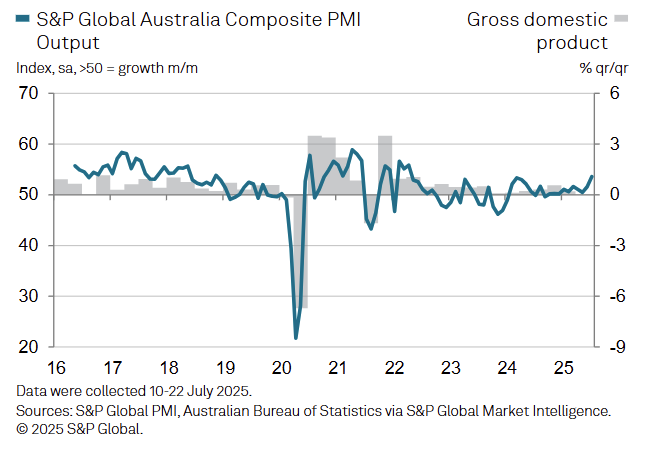
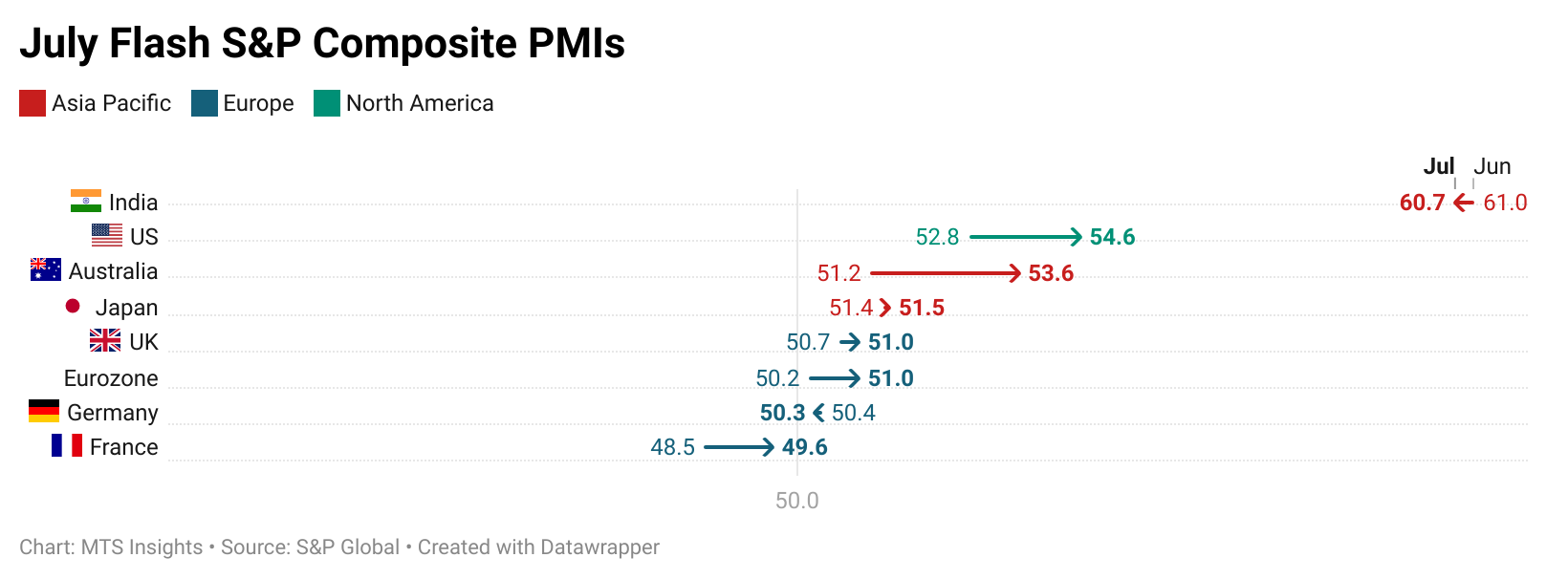
Australia’s Flash Composite PMI rose to 53.6 in July (from 51.6 in June), the highest since April 2022, signaling the fastest private sector output growth in over two years.
- Services Business Activity Index rose to 53.8 (Jun: 51.8), while Manufacturing PMI increased to 51.6 (Jun: 50.6).
- Manufacturing Output Index rose to 52.3 (Jun: 49.9), marking the first expansion in three months.
- New orders grew at the fastest pace in over three years, though export orders remained in contraction.
- Input and output price inflation both rose, surpassing their long-run averages.
- Business confidence eased to an 8-month low despite continued job gains and output growth.
Germany
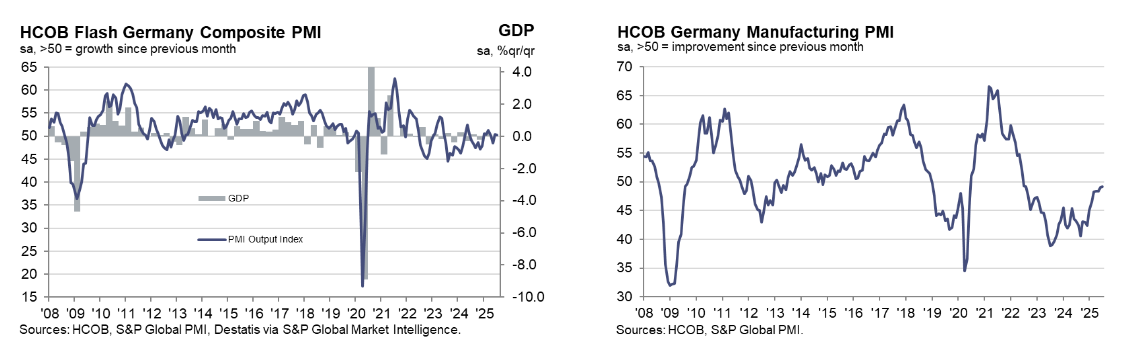
Germany’s Flash Composite PMI edged down to 50.3 in July (from 50.4 in June), signaling marginal private sector growth for a second consecutive month.
- Services Business Activity Index rose to 50.1 (Jun: 49.7), ending a 3-month contraction streak.
- Manufacturing Output Index slowed to 50.6 (Jun: 51.9), while Manufacturing PMI improved slightly to 49.2 (Jun: 49.0).
- Input and output price inflation eased to the lowest levels since October 2024, with factory gate prices falling for the third straight month.
- Employment declined modestly for a second month, with broad-based job cuts across services and manufacturing.
- Business expectations rose to the highest since May 2024, led by stronger sentiment in the services sector.
Eurozone
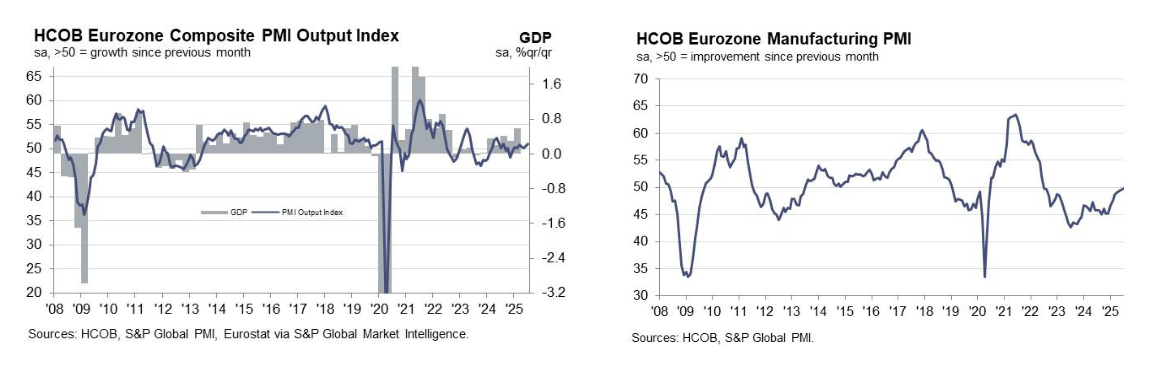
The Eurozone’s Flash Composite PMI rose to 51.0 in July (from 50.6 in June), marking an 11-month high and the seventh straight month of private sector expansion.
- Services Business Activity Index rose to 51.2 (Jun: 50.5), while Manufacturing Output Index dipped slightly to 50.7 (Jun: 50.8).
- Manufacturing PMI rose to 49.8 (Jun: 49.5), a 36-month high despite remaining in contraction.
- New orders stabilized after 13 months of decline; services new business rose but manufacturing orders fell.
- Input cost inflation eased to a 9-month low; output price inflation was steady overall, with services charges rising more slowly.
- Employment rose modestly, driven by gains outside of Germany and France, even as those two posted continued job losses.
US
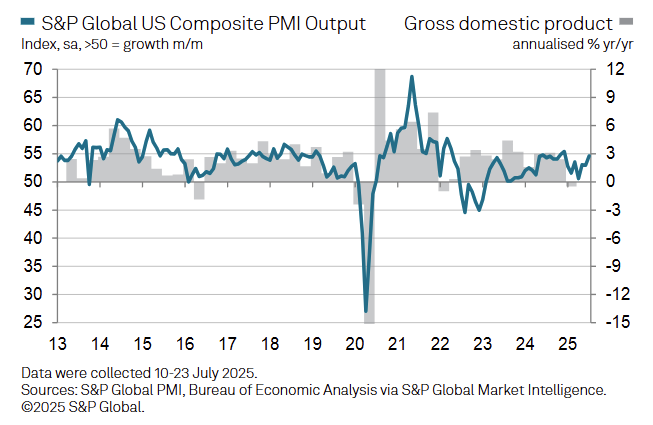
US Composite PMI rose to 54.6 in July (from 52.9 in June), marking a 7-month high as services strength offset weaker manufacturing.
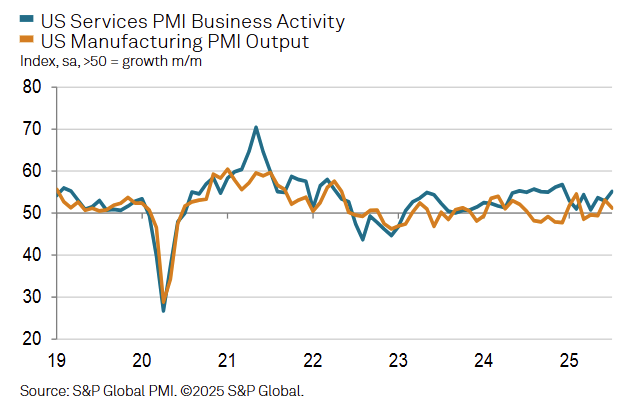
- Services Business Activity Index jumped to 55.2 (June: 52.9), the fastest growth since December 2024.
- Manufacturing PMI fell to 49.5 (June: 52.9), the first sub-50 reading since December, signaling renewed contraction.
- Employment rose overall, but factory jobs fell as backlogs declined in manufacturing; services backlogs rose at a 3-year high pace.
- Business confidence dipped further, with firms citing concerns over tariffs and federal spending cuts.
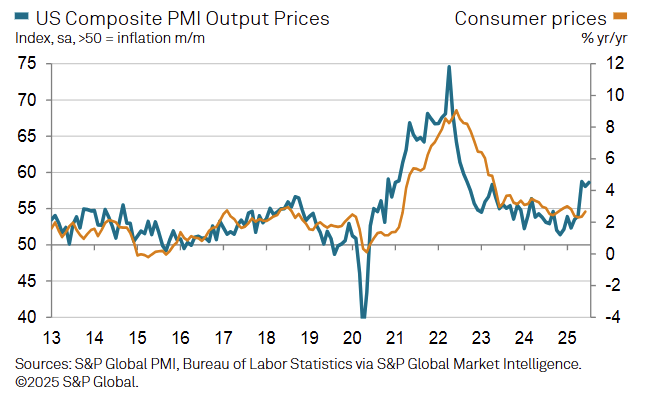
- Prices charged for goods and services rose at the second-fastest pace since September 2022, just below May’s recent peak.
- Services price inflation accelerated, marking the second-steepest monthly rise since April 2023.
- Factory gate price inflation eased slightly but remained historically high, the second-largest increase since November 2022.
- Input cost inflation picked up again in July, registering the second-steepest rise since January 2023.
- Manufacturing input costs remained especially elevated, though slightly lower than June’s post-pandemic peak.
- About two-thirds of manufacturers citing higher input costs attributed them to tariffs; nearly half also linked selling price hikes to tariffs.
- Roughly 40% of service firms reporting price increases explicitly mentioned tariffs as a key driver.