


S&P Global Flash PMIs: April 2025
- Australia - 4/22/2025
- Japan - 4/23/2025
- India - 4/23/2025
- France - 4/23/2025
- Germany - 4/23/2025
- Eurozone - 4/23/2025
- UK - 4/23/2025
- US - 4/23/2025
Key Results
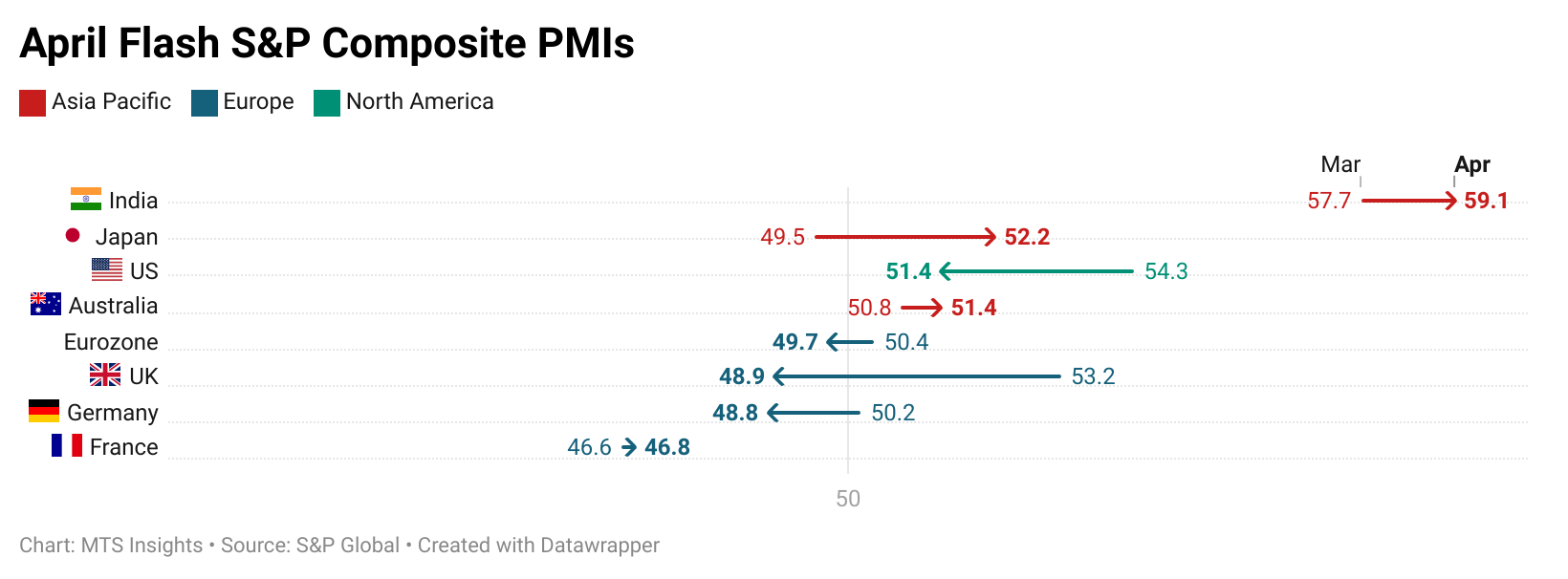
Japan
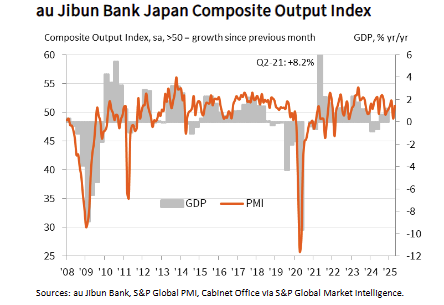
Japan’s S&P Flash PMI pointed to renewed growth in private sector academy in April with the manufacturing seeing a weaker decline and the services sector returning back to growth.
- The Services PMI index jumped 2.2 pts to 52.2, and the Manufacturing Output index increased 2.3 pts to 48.9.
- The manufacturing PMI reading was the second-lowest seen for just over a year, but was consistent with a modest deterioration overall.
- Helping to lift the index slightly was the softest drop in factory production for four months.
- However, overall new orders declined at a solid pace that was the fastest since February 2024, with the downturn in new export business also gathering pace.
- Supporting the fresh rise in service sector activity was a further improvement in customer demand, with overall sales increasing at the strongest rate in three months.
- As a result, companies hired additional staff at the quickest pace since January, while backlogs continued to expand modestly.
Eurozone
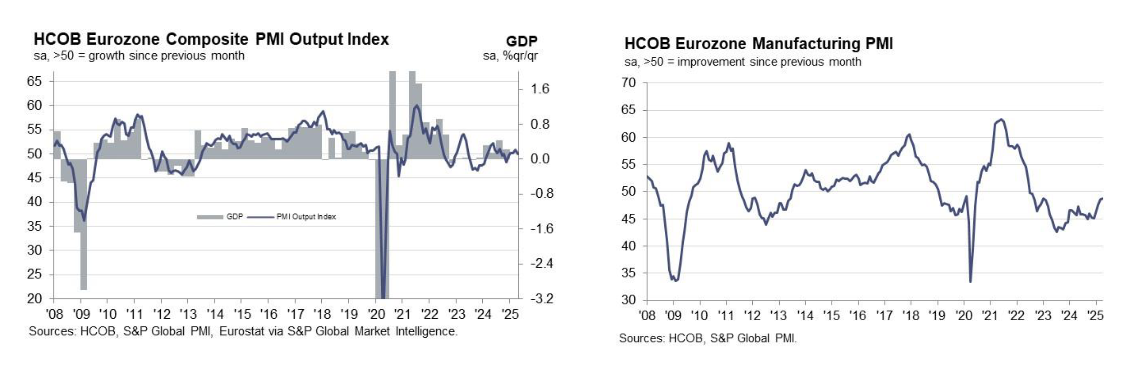
The S&P Flash Eurozone PMI revealed a weaker service sector offsetting a stronger manufacturing sector in April.
- The Manufacturing PMI increased 0.1 pts to 48.7, a 27-month high, and the Manufacturing Output index improved 0.7 pts to 51.2, a 35-month high.
- The Services PMI flipped from a moderate increase in March at 51.0 to a slight contraction at 49.7 in April.
- Companies were generally reluctant to expand output given a further reduction in new orders during April, the eleventh straight month.
- New export orders (which include intra-Eurozone exports) also decreased, and at a broadly similar pace to that seen for total new business. New export orders have decreased continuously since March 2022.
- April saw a sharp drop in business confidence in the euro area, with sentiment down to the lowest since November 2022.
- After having risen for the first time in eight months during March, employment broadly stagnated in April.
- Input costs increased at the slowest pace since November last year, and at a rate that was below the series average. Output prices also increased at a weaker pace in April, with the rate of inflation easing to a five-month low.
UK
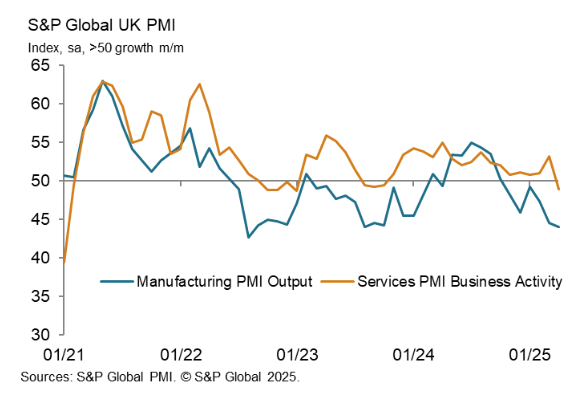
The S&P Flash UK Composite PMI fell -3.4 pts to 48.2 in April, a 29-month low and a drop below expectations of a 50.4 reading.
- Both the services and manufacturing sectors saw sharper contractions with the Services PMI down -3.6 pts to 48.9 (27-month low) and the Manufacturing Output PMI down -1.3 pts to 44.0 (32-month low).
- The degree of optimism towards the year ahead outlook slumped to its lowest since October 2022.
- S&P: “Total new work received by UK private sector firms decreased for the fifth month running and at a solid pace in April. Anecdotal evidence suggested that US tariff uncertainty and general concerns about the economic outlook had encouraged a wait-and-see approach to major spending decisions among clients. This led to the fastest reduction in new work from abroad since May 2020.”
US
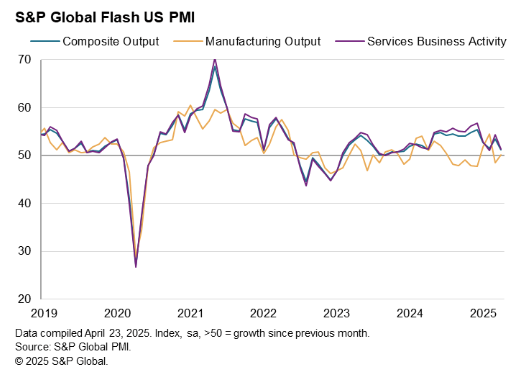
The S&P Flash US Composite PMI fell -2.3 pts to 51.2 as private sector growth slowed to a 16-month low.
- Demand growth was subdued in particular by a fall in exports of services (which includes tourism) on a scale not seen since Jan 2023.
- Sentiment among companies about their output over the coming year fell for a third successive month, dropping sharply to register the least optimistic outlook since July 2022.
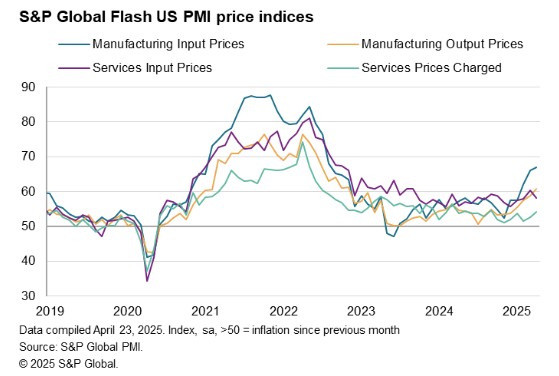
- Avg prices charged for goods and services rose in Apr at the sharpest rate for 13 months, increasing especially steeply in manufacturing (where it was at a 29-month high).
- Higher charges were attributed to rising costs, linked to tariffs, rising import prices, and labor costs.