


Bank of Canada Monetary Policy Decision: September 2026
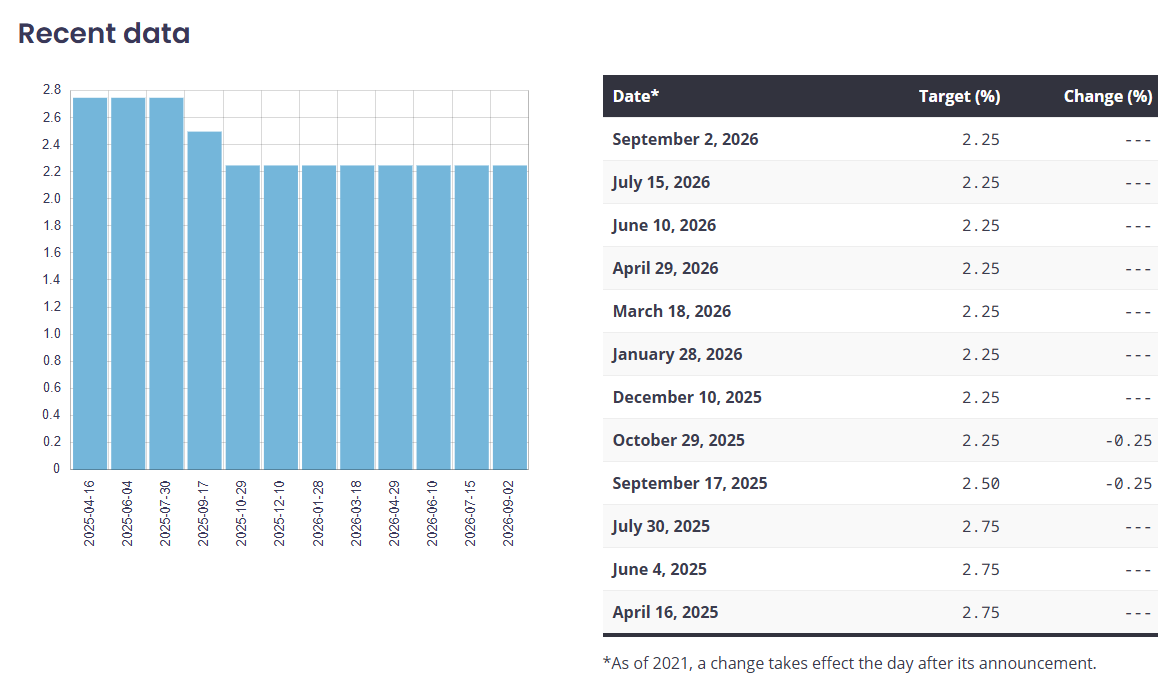
The Bank of Canada held its policy rate at 2.25% as Canadian GDP growth strengthened to +3.3% in Q2 and unemployment edged down to 6.4% in July, while CPI inflation remained around 3%, reflecting a broadening economic recovery alongside increased upside inflation risks.
-
The Bank of Canada held the overnight rate at 2.25%, with the Bank Rate at 2.50% and deposit rate at 2.20%, judging that the economy and inflation were evolving broadly in line with the July Monetary Policy Report.
-
Canadian GDP grew +3.3% in Q2 following very weak Q1 growth, with the Bank describing the pickup as broad-based despite some temporary factors. Consumption posted solid gains, housing activity rebounded, and exports and business investment increased sharply.
-
Labour market conditions improved in recent months, with the unemployment rate edging down to 6.4% in July. However, the Bank said labour demand remains subdued and indicators continue to point to excess supply in the economy.
-
CPI inflation remained around 3% in recent months, mainly reflecting persistently higher gasoline prices. Excluding gasoline, inflation was +2.2% YoY in July, while measures of core inflation remained close to the Bank's 2% target.
-
The Bank noted little evidence so far that higher energy prices have spread to other inflation components, but said continued high oil prices and elevated refinery margins increase the risk of spillovers into other goods and services.
-
New US tariffs and Canadian countermeasures following the breakdown of bilateral trade talks have increased uncertainty around the recovery. The Bank noted that the measures will raise costs for some businesses and could feed into consumer prices over time.
-
Financial conditions have tightened since July, with long-term bond yields rising globally and in Canada, while the Canadian dollar appreciated slightly amid US-dollar weakness.
-
Governing Council said upside risks to inflation have increased while new tariffs have made the growth outlook more uncertain, and it will assess the sustainability of the economic rebound and inflation outlook while remaining prepared to adjust monetary policy as needed.