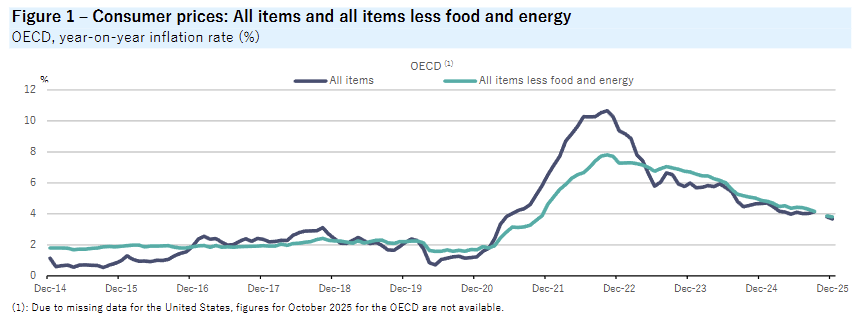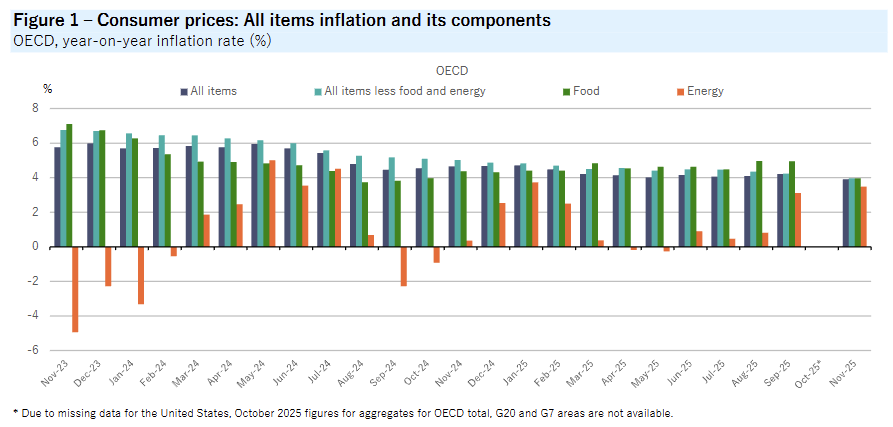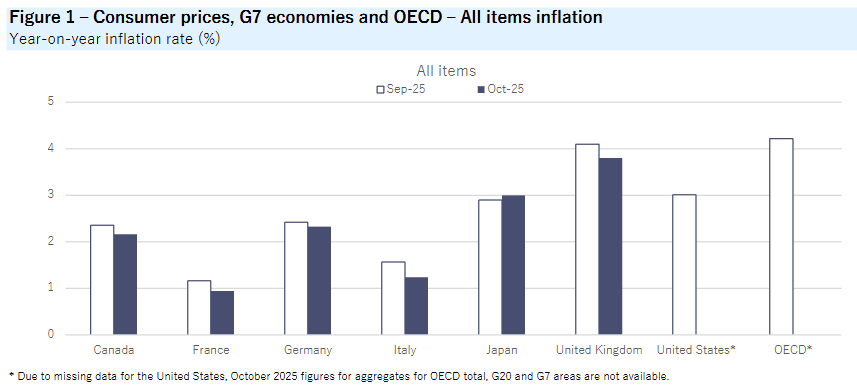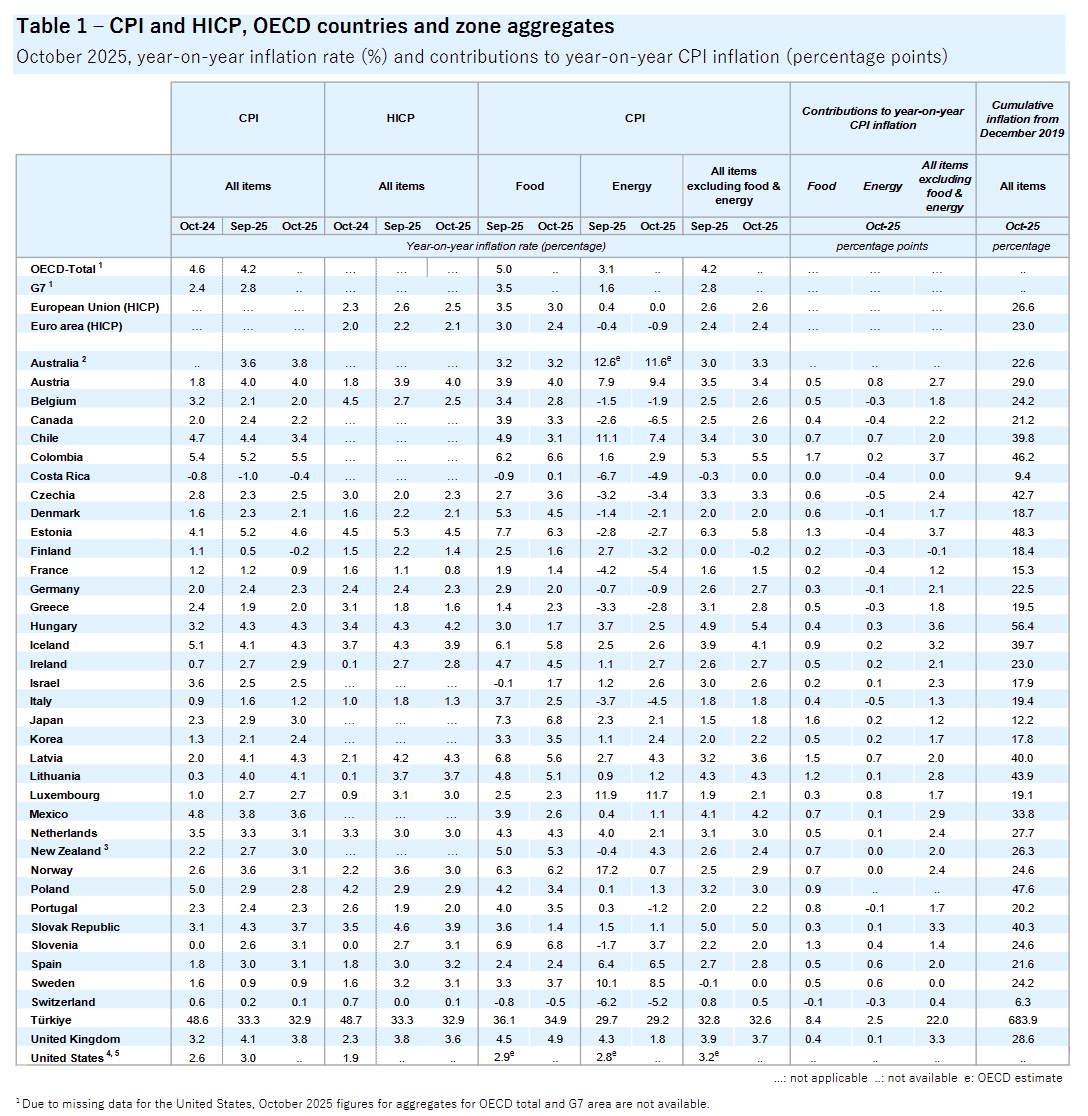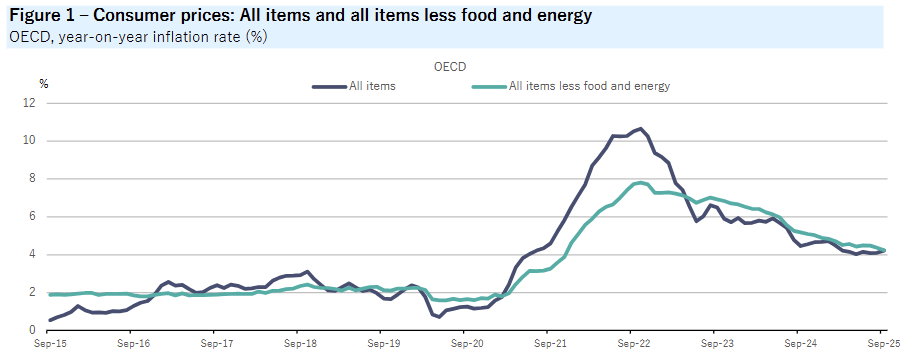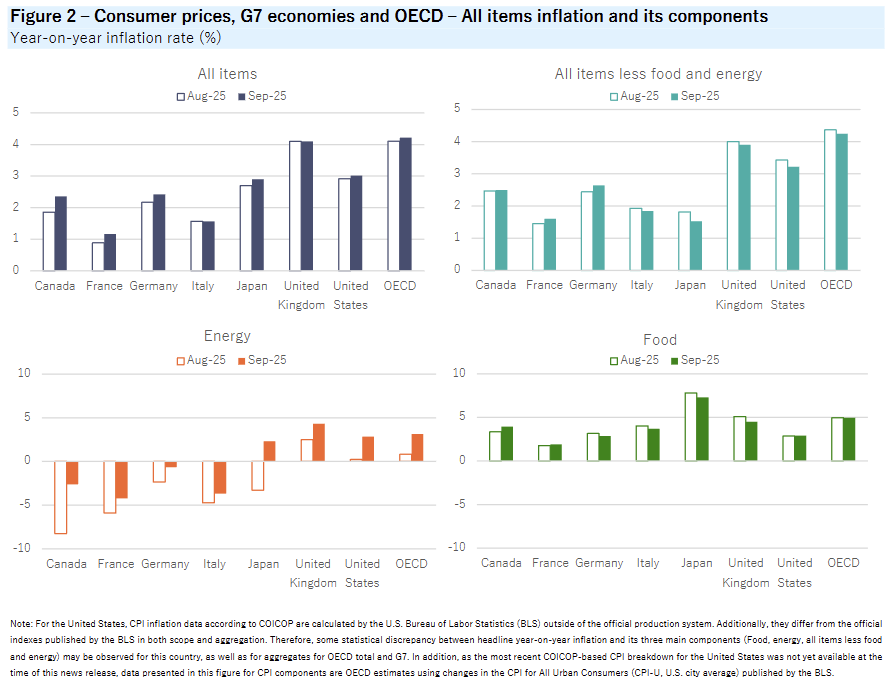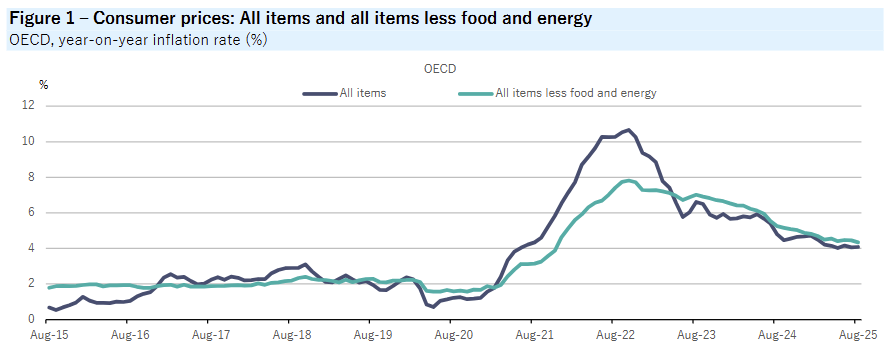
OECD headline inflation held steady at 4.1% YoY in August 2025, unchanged since March, as rising food and energy costs were offset by slightly softer core inflation.
-
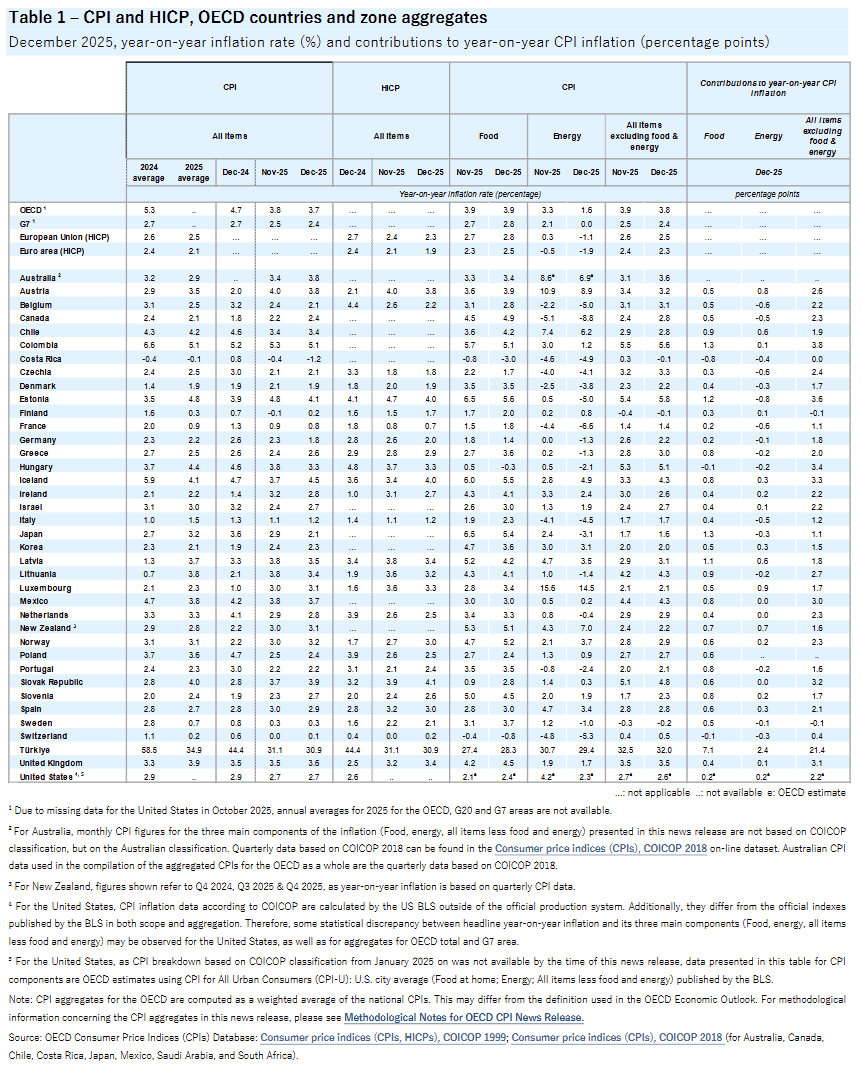
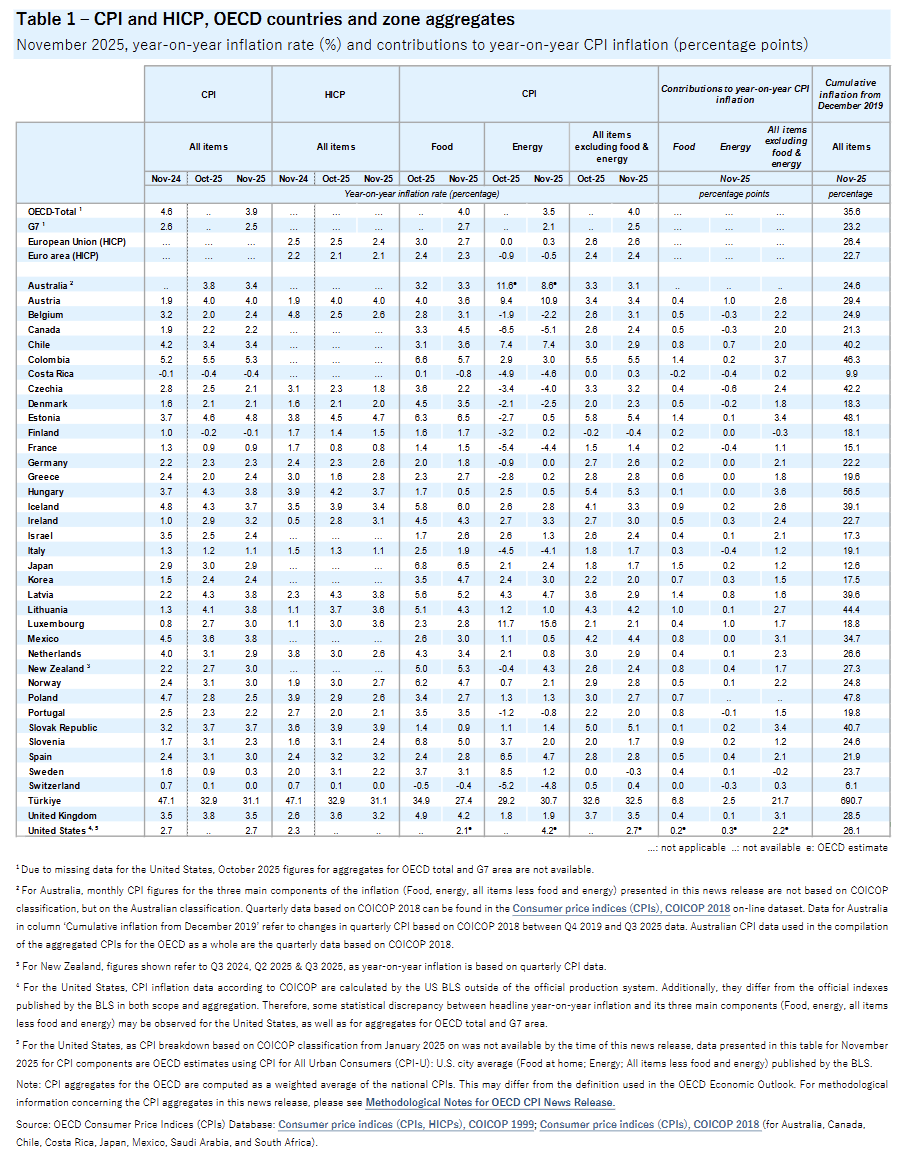
Headline inflation rose in 15 of the 38 OECD countries, fell in 13, and was broadly stable in 10; Costa Rica remained in deflation, while Türkiye continued to see inflation above 30%.
-
OECD food inflation accelerated to 5.0% (from 4.5% in July), the highest since February 2024, with sharp increases in Türkiye, Korea, and Colombia.
-
Food prices across the OECD were 45.8% higher than in December 2019, marking the largest cumulative gain among inflation components.
-
Energy inflation increased to 0.7% (from 0.3%), while core inflation edged slightly lower to 4.3%, remaining the main driver of overall inflation.
-
G7 inflation was stable at 2.7% YoY, rising modestly in Canada, Germany, and the U.S., but easing in Japan amid declines in food and energy prices.
-
Euro area HICP inflation held at 2.0% for the third straight month in August, with food inflation steady at 3.2%; the September flash estimate showed a slight uptick to 2.2%.
-
G20 inflation was broadly stable at 3.7%, with declines in China (-0.4%), Argentina, and South Africa offset by an increase in India.

 Global
/
OECD