
 USA
/
New York Fed
NY Fed Household Debt and Credit Report
About
Latest Releases
7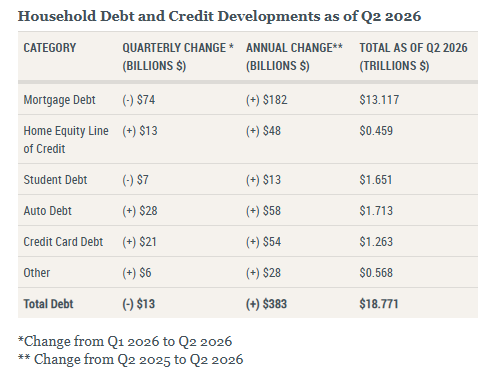
Total household debt rose +$191B QoQ (+1.0% QoQ, +$740B YoY) to $18.78T in Q4 2025, reflecting continued balance growth alongside rising delinquencies.
- Total household debt increased to $18.78T (+$191B QoQ; +$740B YoY), indicating steady expansion in aggregate borrowing levels compared with both the prior quarter and year.
- Mortgage balances rose +$98B QoQ (+$565B YoY) to $13.17T, remaining the primary driver of overall debt growth and the largest component of household liabilities.
- Credit card balances increased +$44B QoQ (+$66B YoY) to $1.28T, while aggregate credit limits expanded +$95B, pointing to continued availability and usage of revolving credit.
- Auto loan balances grew +$12B QoQ (+$12B YoY) to $1.67T, while new originations declined slightly to $181B (Q3: $184B), suggesting softer lending flow despite higher outstanding balances.
- HELOC balances increased +$11.6B QoQ (+$38B YoY) to $434B, with credit limits rising +$25B (+2.5%), extending the ongoing expansion in home equity borrowing.
- Student loan balances rose +$11B QoQ (+$49B YoY) to $1.66T, with the 90+ day delinquency rate holding at 9.6%, indicating elevated repayment stress as reporting resumed.
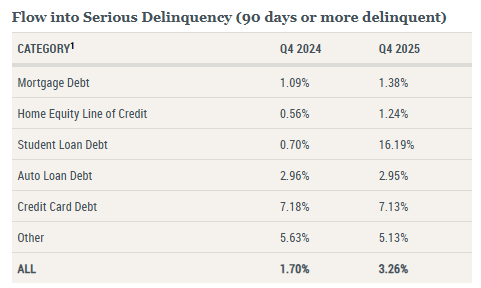
- Aggregate delinquency increased to 4.8% of outstanding debt, with early delinquency transitions mixed and serious delinquency rising across mortgages, credit cards, and student loans, pointing to a gradual deterioration in credit quality.
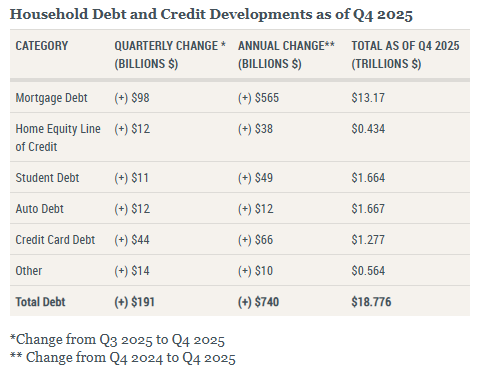
Total household debt rose $191B (+1.0% QoQ, +$740B YoY) to $18.78T in Q4 2025, showing modest balance growth alongside worsening delinquency trends.
-
Mortgage balances increased $98B QoQ (+$565B YoY) to $13.17T, remaining the primary driver of overall debt growth despite rising mortgage delinquencies.
-
Credit card balances rose $44B QoQ (+$66B YoY) to $1.28T, while aggregate credit card limits expanded $95B, pointing to continued availability of revolving credit.
-
Auto loan balances increased $12B QoQ (+$12B YoY) to $1.67T, while new auto originations dipped slightly to $181B (Q3: $184B), indicating softer loan flow despite rising balances.
-
HELOC balances grew $11.6B QoQ (+$38B YoY) to $434B, with credit limits up $25B (+2.5%), extending the expansion trend that began in 2022.
-
Student loan balances rose $11B QoQ (+$49B YoY) to $1.66T, while the 90+ day delinquency rate remained elevated at 9.6% as payment reporting resumed after pandemic forbearance.
-
Aggregate delinquency increased to 4.8% of outstanding debt, with early delinquency transitions mixed and serious delinquency rising for mortgages, credit cards, and student loans.
-
The broad US debt serious delinquency rate increased 23 bps QoQ to 3.26% and is up from 1.70% a year ago (due to student loan delinquencies reappearing in the data in 2025).
-
The mortgage debt serious delinquency rate increased 10 bps to 1.38%, and credit card debt serious delinquency increased 8 bps to 7.13%.
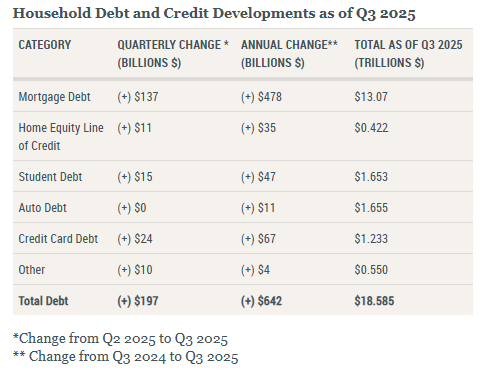
Total household debt rose $197B (+1.0% QoQ, +$642B YoY) to $18.59T in Q3 2025, marking continued moderate growth as delinquency rates stabilized and mortgage performance remained resilient.
-
Mortgage balances increased $137B QoQ (+$478B YoY) to $13.07T, supported by strong housing fundamentals and low delinquency amid tight underwriting and high home equity.
-
Credit card balances rose $24B QoQ (+$67B YoY) to $1.23T, while aggregate credit limits expanded $94B (+1.8% QoQ), indicating steady consumer credit growth.
-
Auto loan balances were unchanged at $1.66T, while new auto originations dipped slightly to $184B (from $188B in Q2).
-
HELOC balances increased $11B QoQ (+$35B YoY) to $422B, extending a growth trend that began in 2022.
-
Student loan balances rose $15B QoQ (+$47B YoY) to $1.65T; the delinquency rate remained elevated at 9.4% as previously unreported missed payments reappeared on credit reports.
-
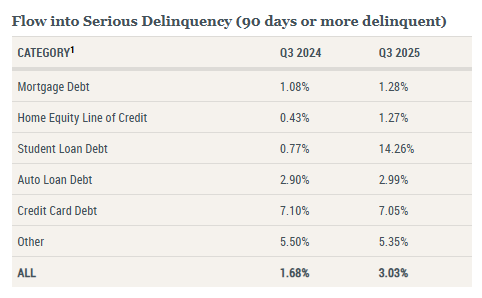
Overall delinquency stood at 4.5%, with early delinquencies mixed, credit card and student loans rising while other categories declined.
-
Serious delinquency (90+ days) increased across most debt types, reaching 3.03% overall (vs. 1.68% YoY), led by student loans (14.26%, up sharply YoY), while mortgage serious delinquency edged down slightly to 1.28%.
-
Mortgage originations rose to $512B, the highest since early 2024, pointing to renewed activity in the housing market despite elevated borrowing costs.
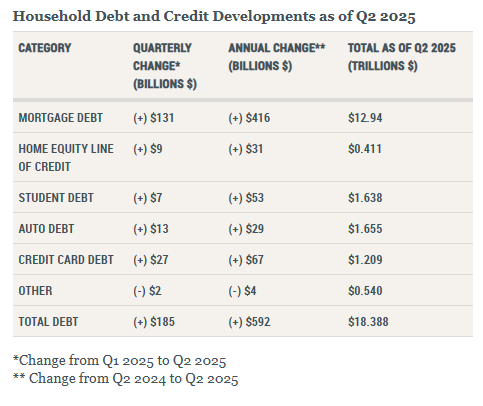
Total household debt increased $185 billion (+1.0% QoQ, +$592B YoY) to $18.39 trillion in Q2 2025, driven by gains in mortgage, credit card, and auto balances.
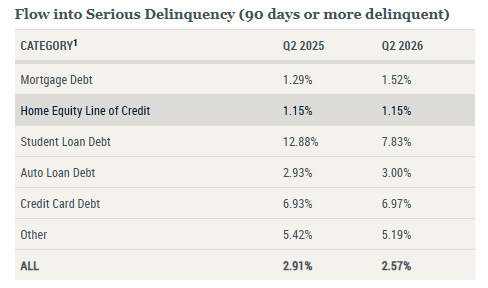
- Mortgage debt rose $131B QoQ (+$416B YoY) to $12.94T, while mortgage delinquency ticked up to 1.29% from 0.95% YoY.
- Credit card balances rose $27B QoQ (+$67B YoY) to $1.21T; delinquency declined slightly to 6.93% from 7.18% YoY.
- Auto loan debt rose $13B QoQ (+$29B YoY) to $1.66T; serious delinquency held steady at 2.93%.
- Student loan balances rose $7B QoQ (+$53B YoY) to $1.64T; delinquency spiked to 12.88% from 0.80% YoY due to resumed reporting.
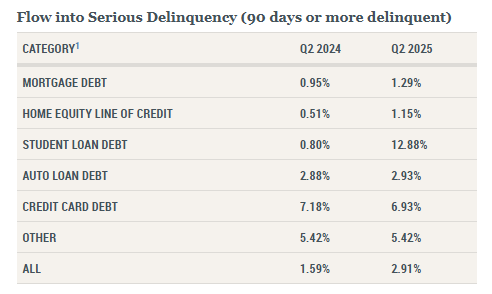
- The share of all household debt in serious delinquency (90+ days) rose to 2.91% in Q2 2025, up from 1.59% a year earlier.
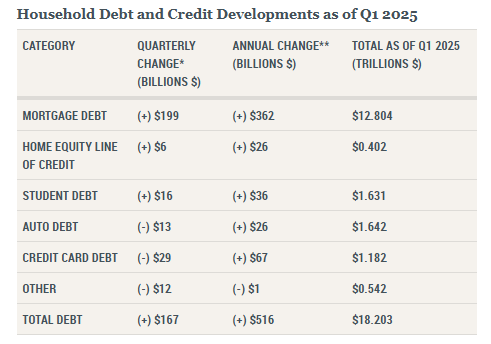
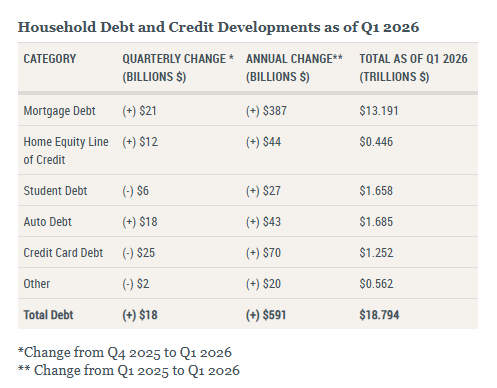
Total household debt increased $167 billion, or 0.9% QoQ, to $18.20 trillion in Q1 2025, the largest quarterly increase since Q1 2024.
- An increase of $199 billion in mortgage debt drove the overall increase in household debt as non-mortgage debt fell -$32 billion across the other categories.
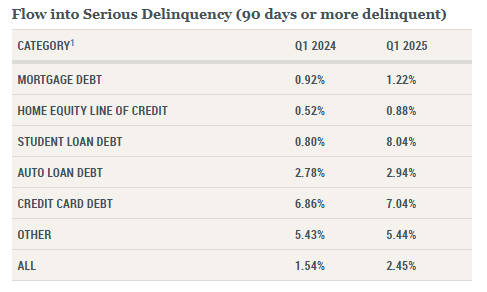
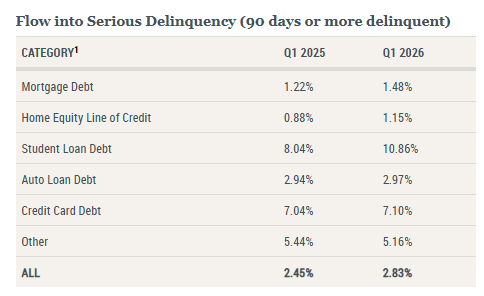
- Missed federal student loan payments that were not previously reported to credit bureaus between Q2 2020 and Q4 2024 are now appearing in credit reports. Consequently, 7.74% of aggregate student debt was reported 90+ days delinquent in Q1 2025, compared to less than 1% reported in Q4 2024.
- Total household debt in serious delinquency reached 2.45% in Q1 2025, up from 1.70% in Q4 2024 and up from 1.54% in Q1 2024.
- However, serious delinquency rates for auto, credit card, and other debt all fell over the quarter.
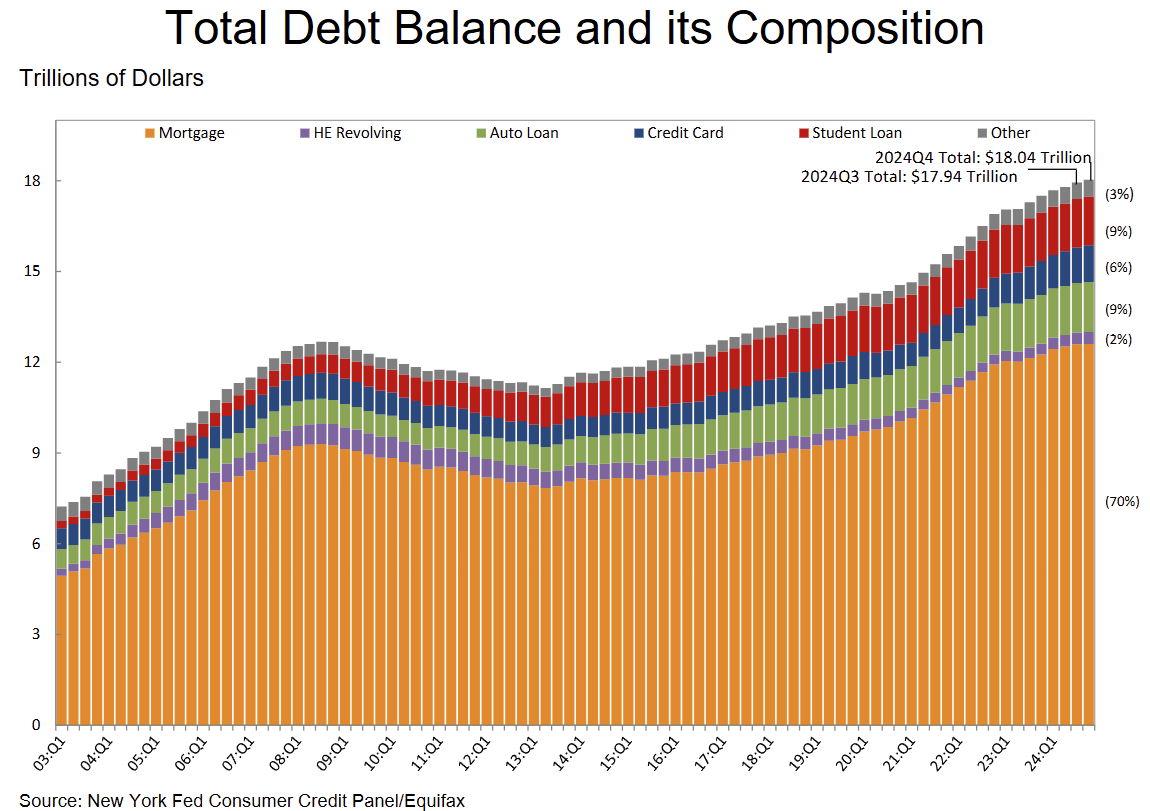
Total household debt increased $93 billion, or 0.5% QoQ, in Q4 2024 to $18.036 trillion.
- Total mortgage debt increased $11 billion to $12.05 trillion, and total auto debt increased $11 billion to $1.655 trillion.
- Credit card debt saw the largest quarterly increase, up $45 billion to $1.211 trillion.
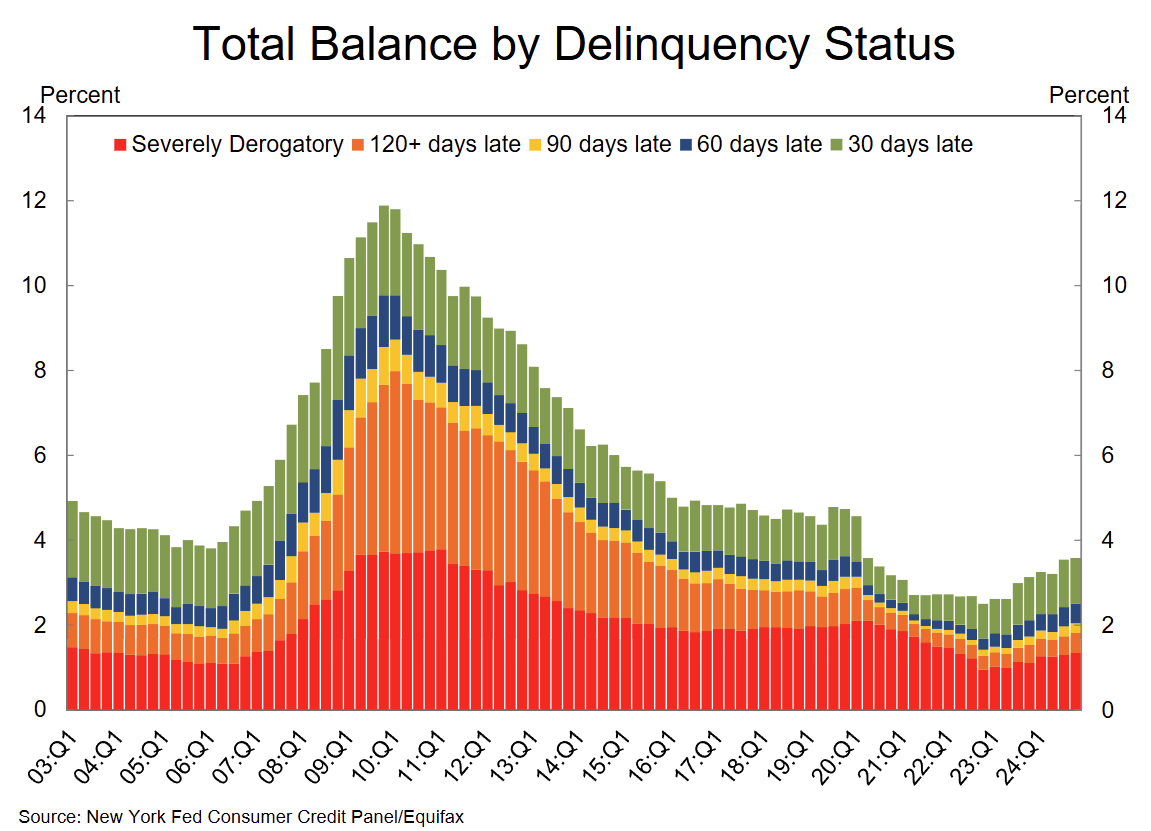
- Delinquency rates for all debt inched up from 3.5% in Q3 2024 to 3.6% in Q4 2024. Serious delinquency rates were up to 1.70% in Q4, just 2 bps higher than Q3.
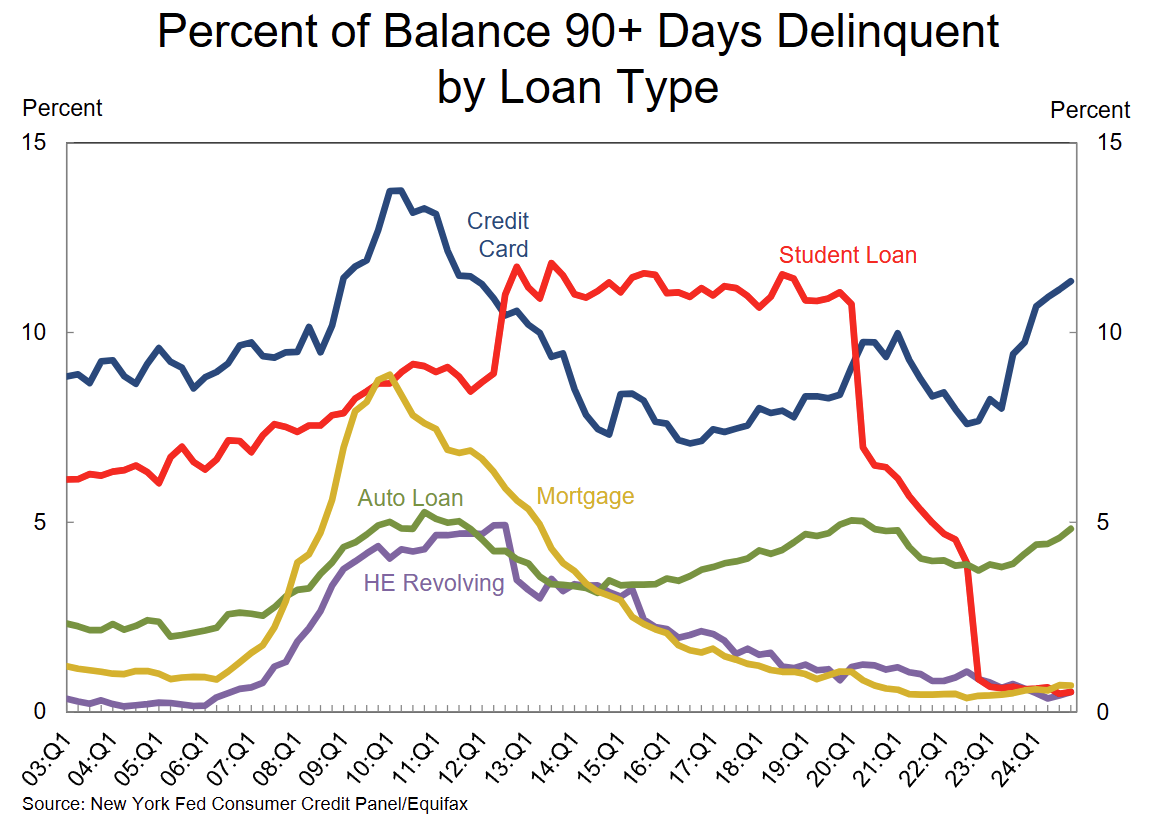
- The largest increases in serious delinquency over the quarter were in credit card balances, up 22 bps to 11.35%, and in auto loans, up 24 bps to 4.83%.
- The percentage of mortgage loan balances in serious delinquency was mostly unchanged, up just 1 bps to 1.09% in Q4.