 Euro Area Labor Costs
- Source
- Eurostat
- Source Link
- https://ec.europa.eu/
- Frequency
- Quarterly
- Next Release(s)
- March 19th, 2026 5:00 AM
Latest Updates
-
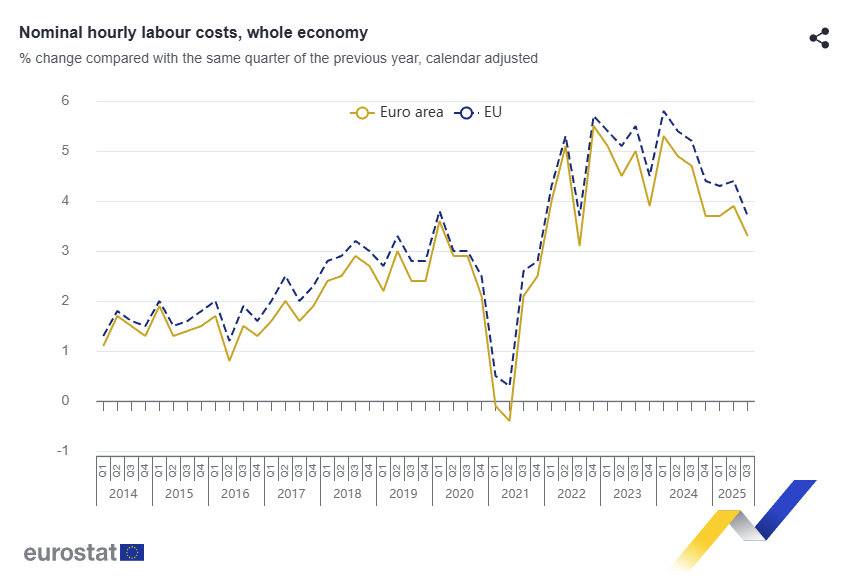
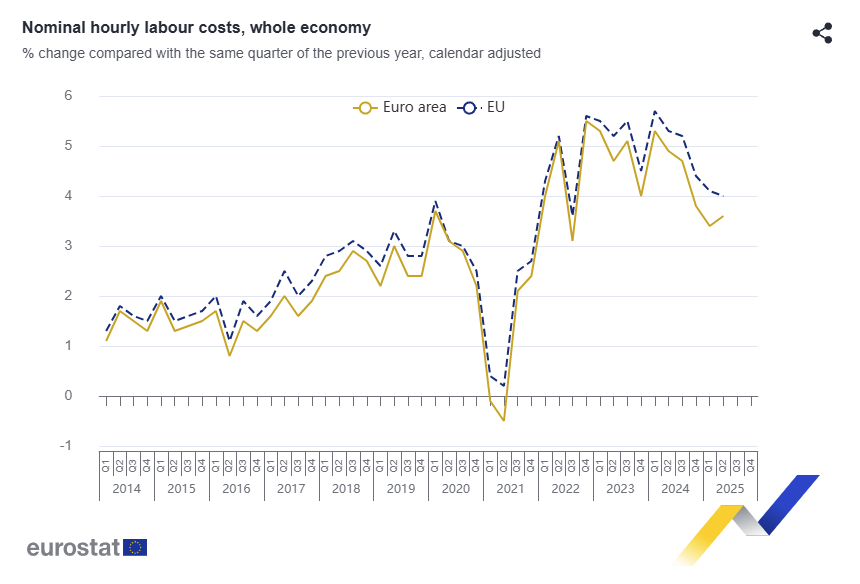
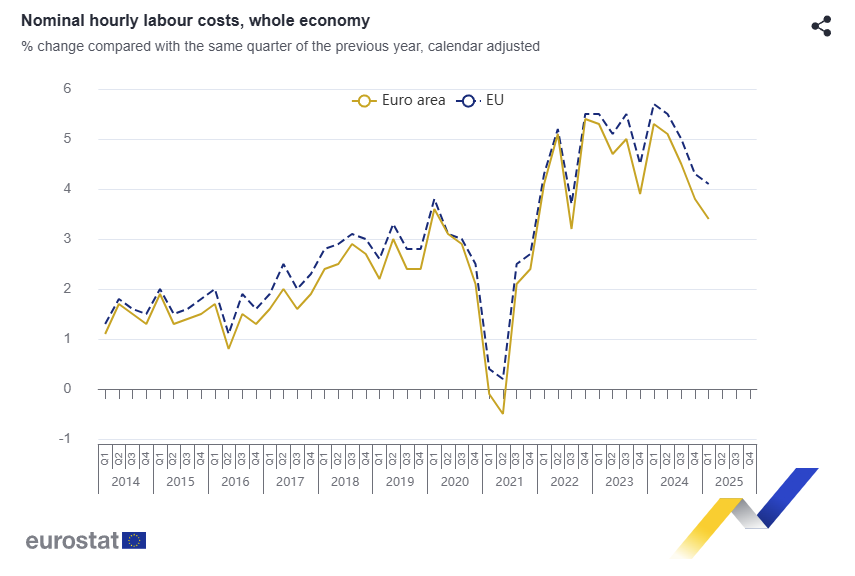
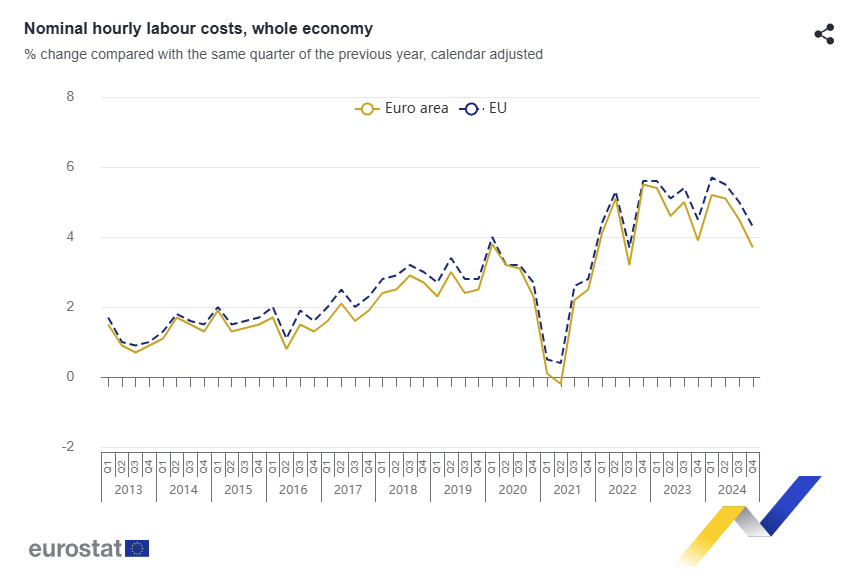
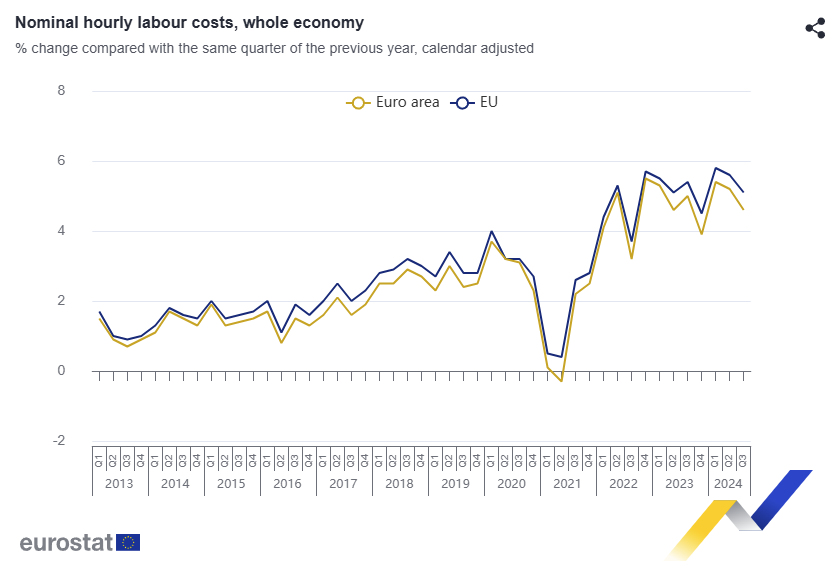
Euro area hourly labour costs rose +3.3% YoY (vs 3.5% YoY expected) in Q3 2025, while EU costs increased +3.7% YoY, indicating continued but moderating cost growth.
-
In the euro area, wages and salaries increased +3.0% YoY and non-wage costs rose +4.0% YoY, showing faster growth in ancillary labour costs than base pay
-
By sector in the euro area, labour costs rose +3.3% YoY in industry, +4.3% in construction, and +3.2% in services, with construction remaining the fastest-growing segment..
-
In the EU, wages and salaries grew +3.5% YoY and non-wage costs increased +4.2% YoY, keeping overall labour cost growth above the euro area pace.
-
In the EU, labour costs increased +3.7% YoY in industry, +4.7% in construction, and +3.7% in services, indicating broadly similar sectoral patterns to the euro area.
-
The highest EU wage cost increases by activity were in other service activities (+4.5% YoY), construction (+4.3%), and professional, scientific and technical activities (+4.3%), while electricity, gas and steam recorded the smallest rise (+2.5%).
-
Non-wage costs in the EU rose fastest in construction (+5.8% YoY), other service activities (+5.6%), and real estate (+5.5%), highlighting strong growth in employer cost components beyond wages.
-
Across countries, the largest wage cost increases were in Bulgaria (+12.4% YoY), Lithuania (+9.7%), Croatia (+9.1%), and Hungary (+8.8%), while France (+1.3%), Slovenia (+1.6%), Spain (+2.0%), Austria (+2.1%), and Italy (+2.4%) saw much smaller gains; Malta recorded a -1.4% decline.
-