
 Euro Area GDP
Data
GDP
- Source
- Eurostat
- Source Link
- https://ec.europa.eu/
- Frequency
- Quarterly
- Next Release(s)
- April 30th, 2026 5:00 AM
-
May 13th, 2026 5:00 AM
-
June 5th, 2026 5:00 AM
-
July 30th, 2026 5:00 AM
-
August 14th, 2026 5:00 AM
-
September 7th, 2026 5:00 AM
-
October 30th, 2026 5:00 AM
-
November 13th, 2026 5:00 AM
-
December 7th, 2026 5:00 AM
-
January 29th, 2027 5:00 AM
-
February 15th, 2027 5:00 AM
-
March 5th, 2027 5:00 AM
Latest Updates
-
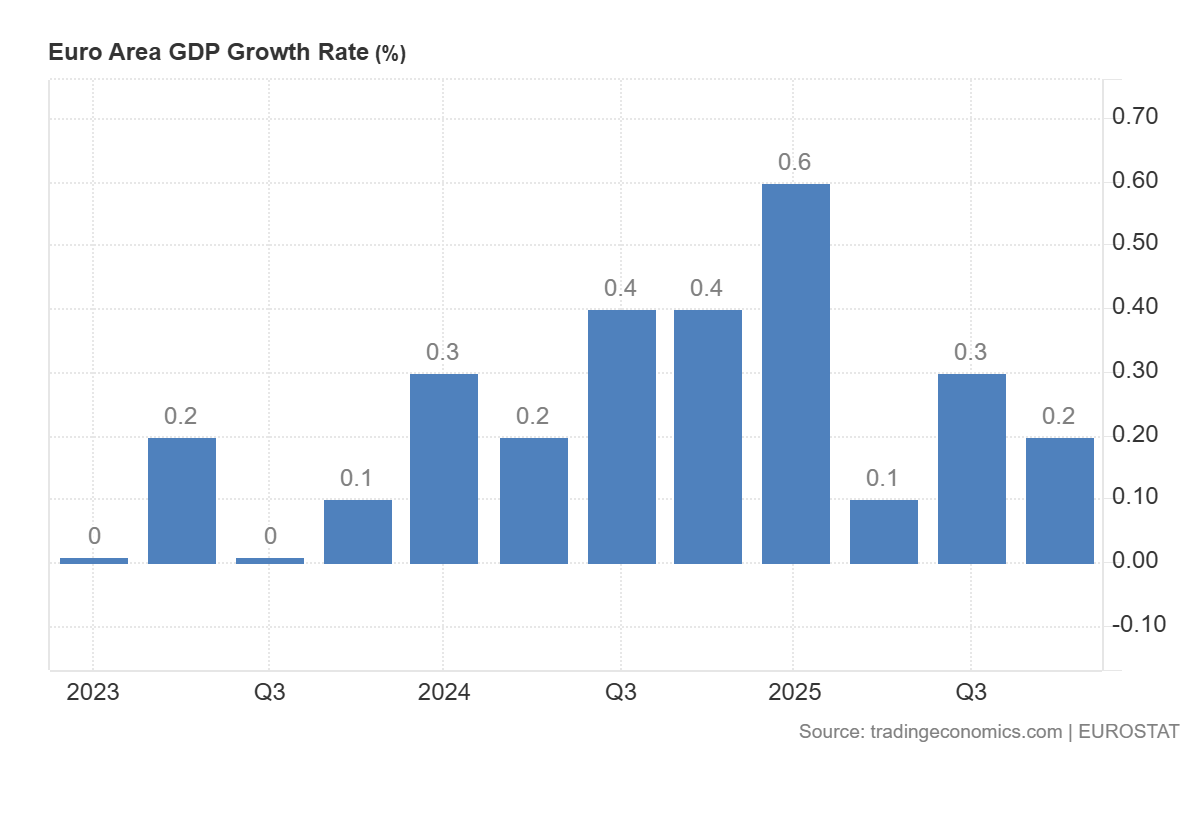
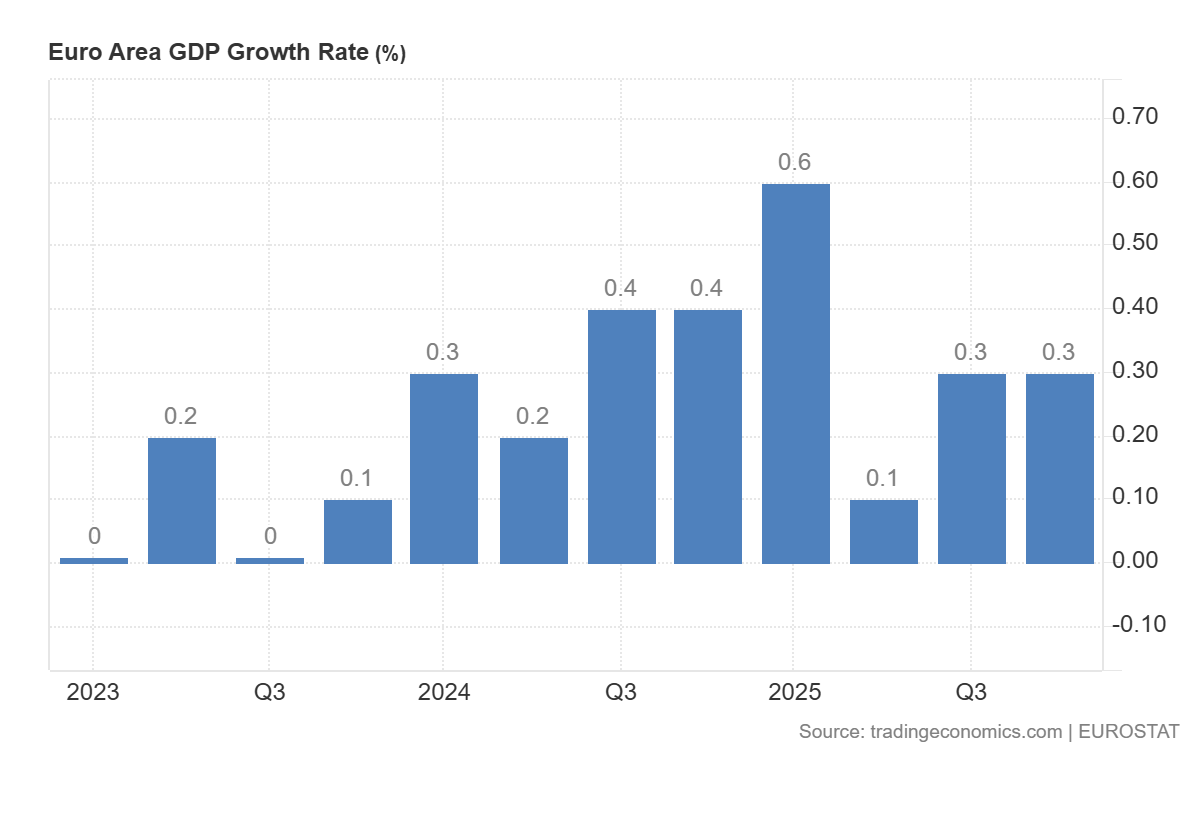
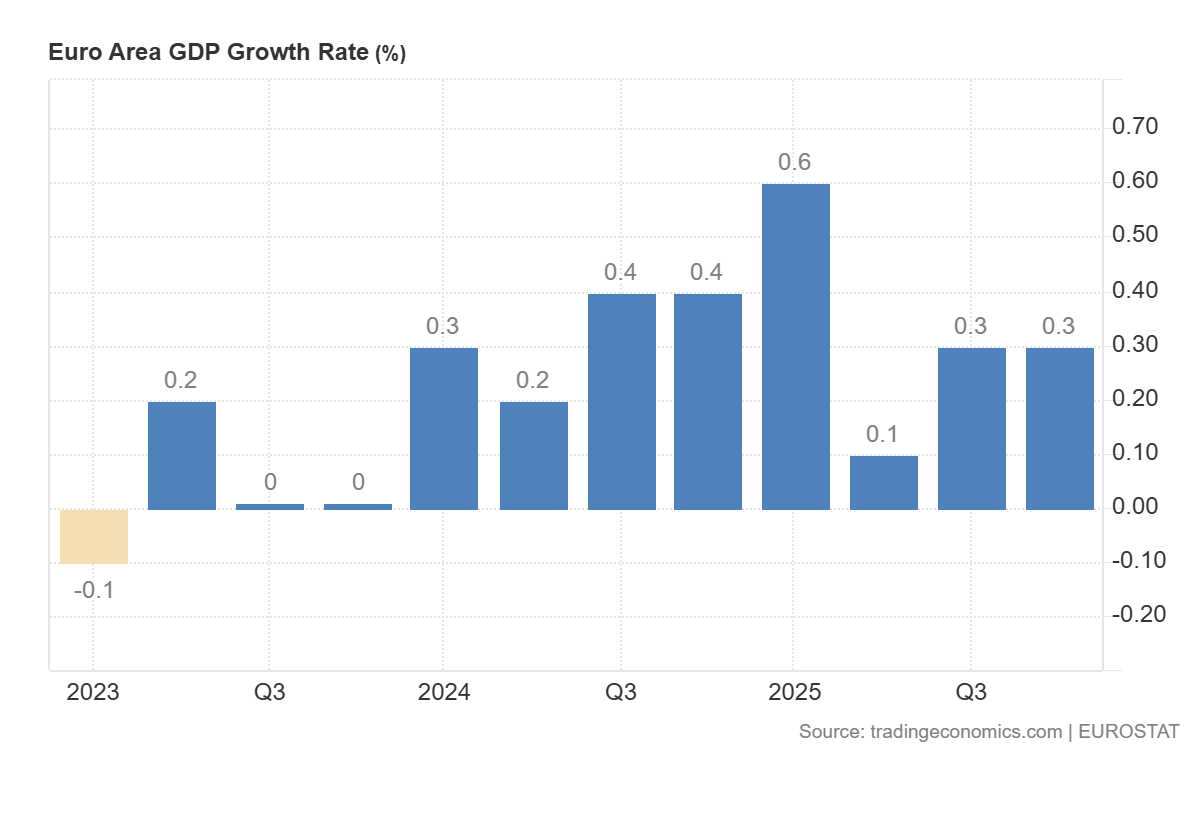
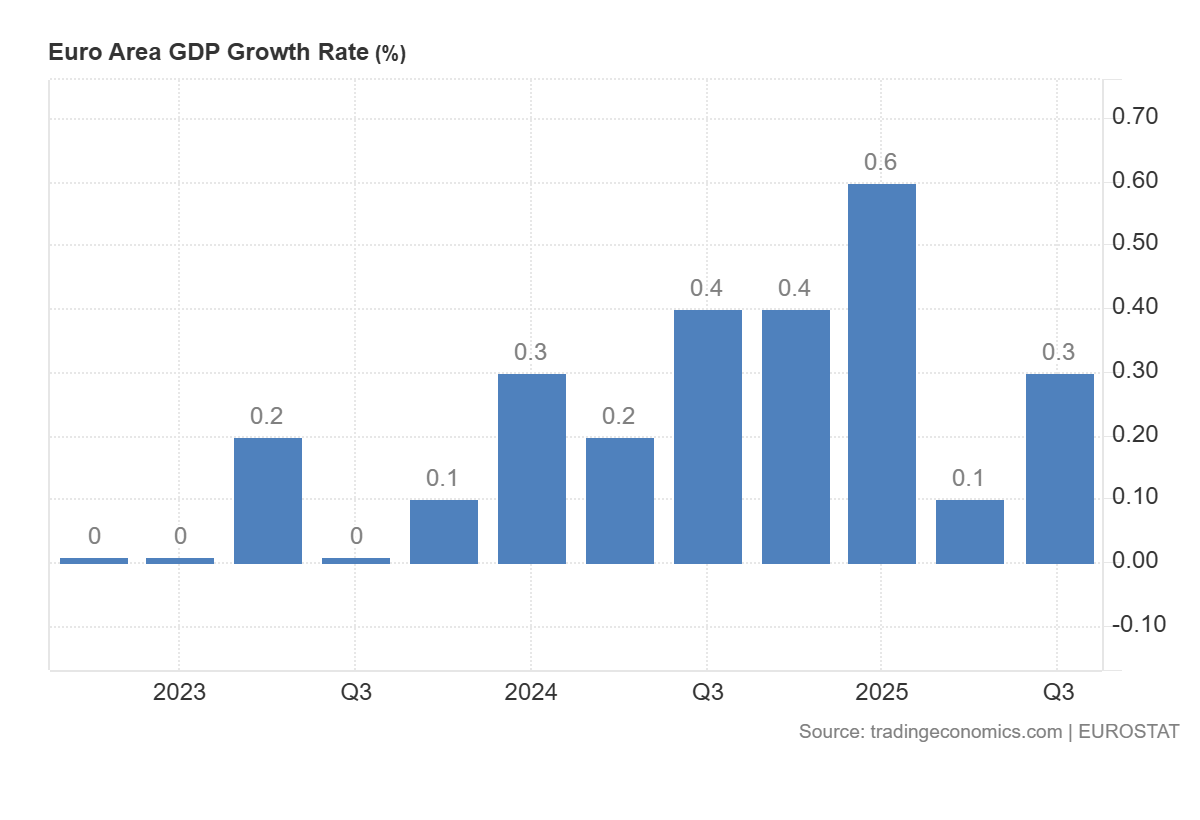
Euro area GDP increased +0.2% QoQ and +1.2% YoY in Q4 2025 while EU GDP rose +0.2% QoQ and +1.4% YoY, marking a slowdown from the stronger quarterly growth recorded in Q3 but continuing the modest expansion across the region.
- Euro area GDP growth in Q4 2025 was revised down from +0.3% QoQ and +1.3% YoY in the 1st and 2nd estimates to +0.2% QoQ and +1.2% YoY in the 3rd and final estimate.
- For the full year 2025, GDP increased +1.4% YoY in the euro area and +1.5% YoY in the EU, accelerating from +0.9% and +1.1% respectively in 2024, indicating stronger overall growth compared with the previous year.
- Compared with Q3 2025, quarterly GDP growth slowed from +0.3% QoQ in the euro area and +0.4% QoQ in the EU, suggesting a moderation in economic momentum toward the end of the year.
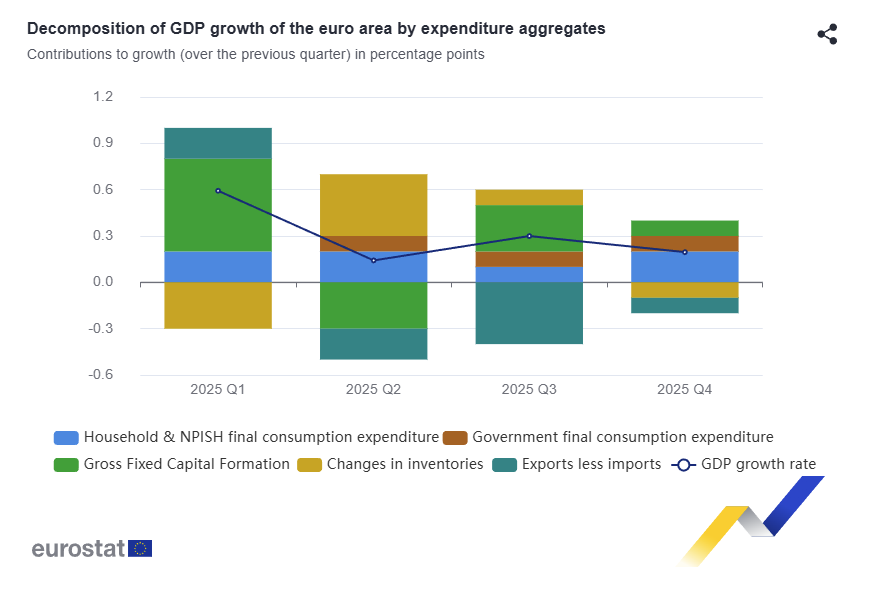
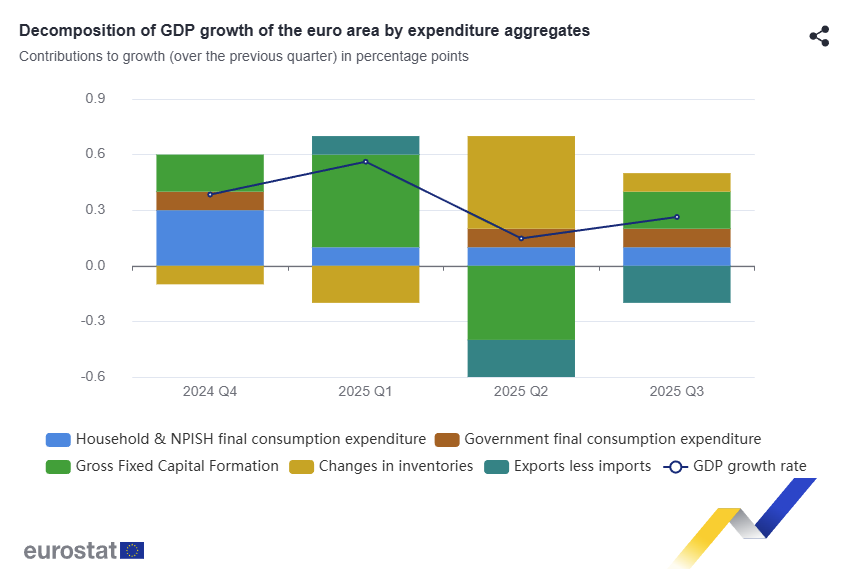
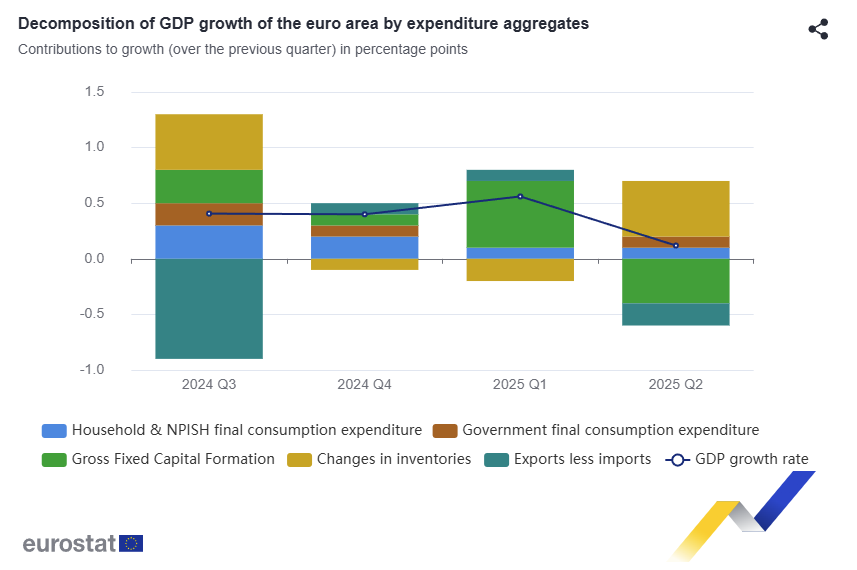
- Household consumption increased +0.4% QoQ in the euro area and +0.5% QoQ in the EU, contributing +0.2 pp and +0.3 pp to GDP growth respectively, showing that consumer spending remained the largest positive driver of output.
- Government consumption rose +0.5% QoQ in the euro area and +0.7% QoQ in the EU, contributing +0.1 pp and +0.2 pp to GDP growth, while gross fixed capital formation increased +0.6% QoQ in both regions and added +0.1 pp to growth.
- External trade weakened as exports declined -0.4% QoQ in the euro area and -0.3% QoQ in the EU, while imports fell -0.2% QoQ in the euro area and were flat in the EU, resulting in a -0.1 pp negative net trade contribution in both regions.
- Changes in inventories also weighed on growth, subtracting -0.1 pp from GDP in the euro area and -0.2 pp in the EU during the quarter.
- Among member states, Malta recorded the strongest quarterly GDP growth at +2.1% QoQ, followed by Lithuania (+1.7%) and Croatia and Cyprus (both +1.4%), while Ireland (-3.8%), Romania (-1.9%), and Estonia and Luxembourg (both -0.1%) registered declines.
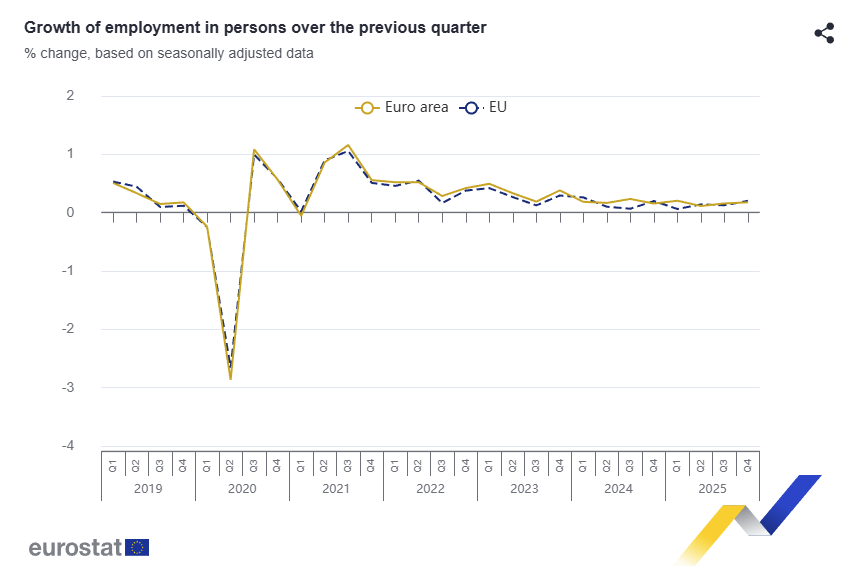
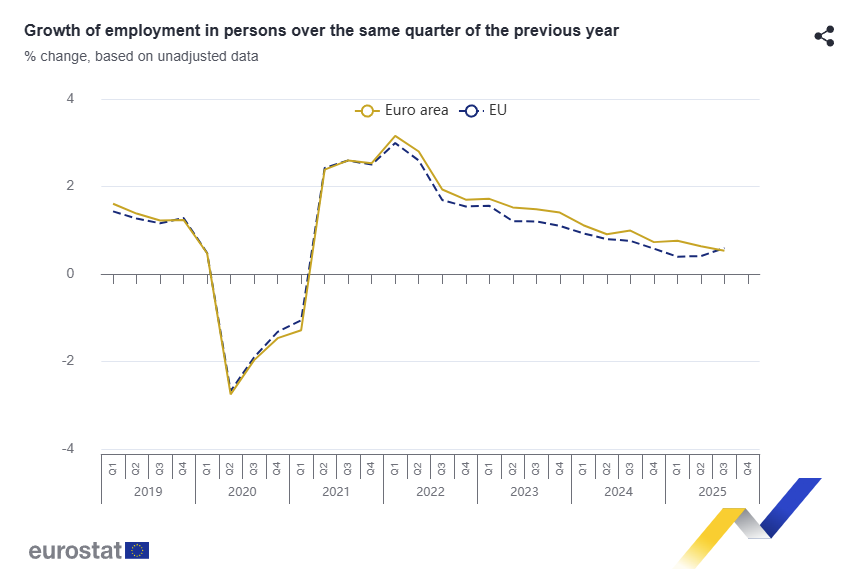
- Employment increased +0.2% QoQ in both the euro area and the EU in Q4 2025 and rose +0.7% YoY and +0.6% YoY respectively, while hours worked grew +0.6% QoQ in the euro area and +0.5% QoQ in the EU, indicating continued labor input growth alongside output expansion.
- Labour productivity increased +0.6% YoY in the euro area and +0.8% YoY in the EU on a per person basis, with hours-worked productivity rising +0.5% YoY and +0.7% YoY respectively, reflecting modest efficiency gains consistent with the moderate pace of economic growth.


-1.png)
-1.png)
-1.png)
-1.png)
-1.png)