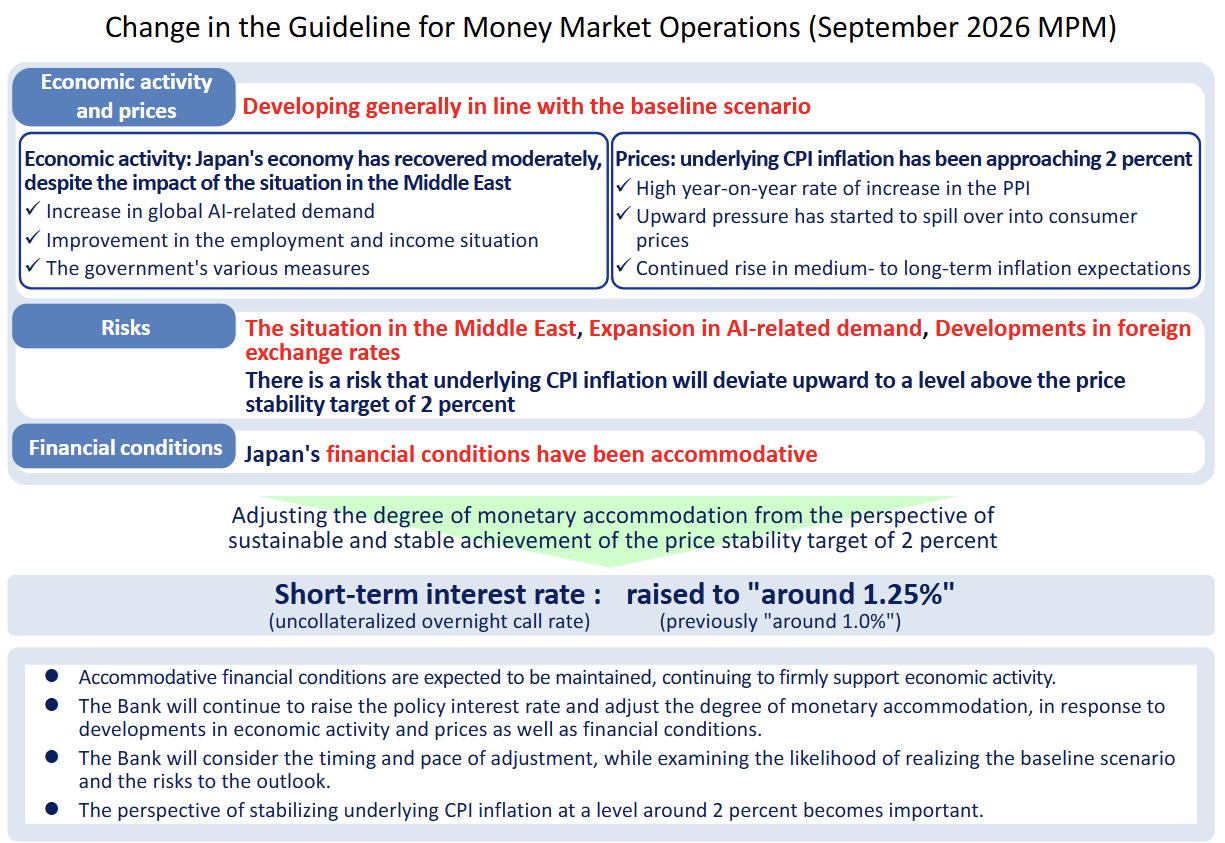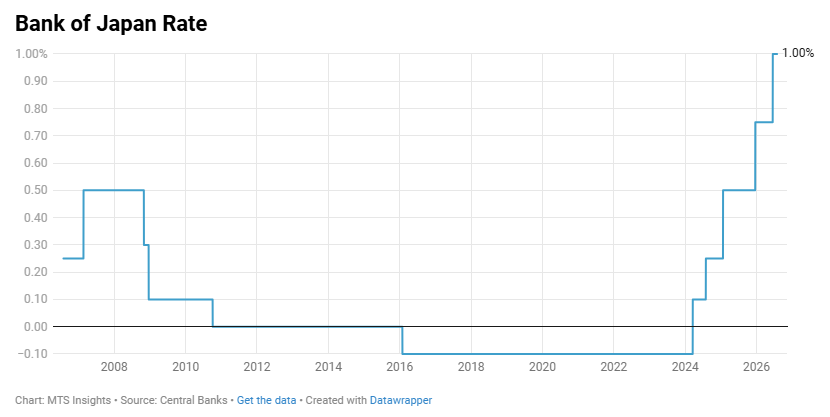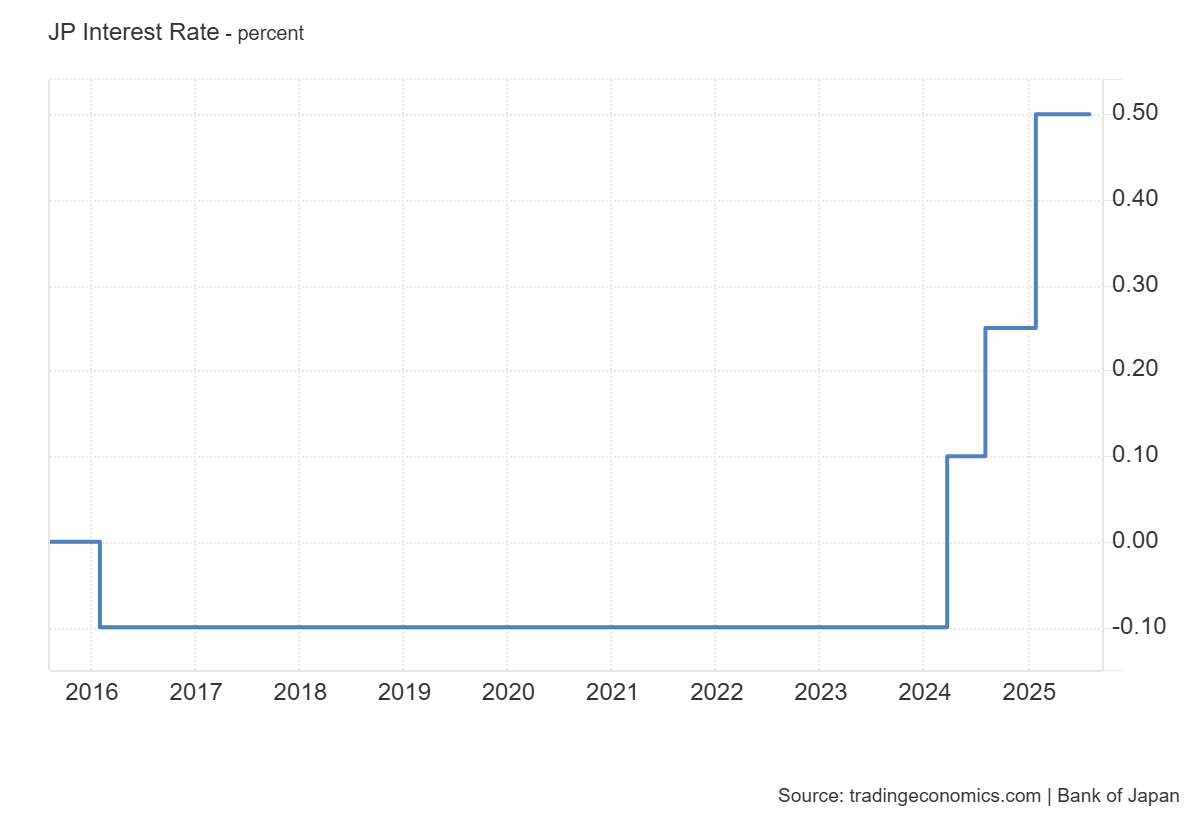


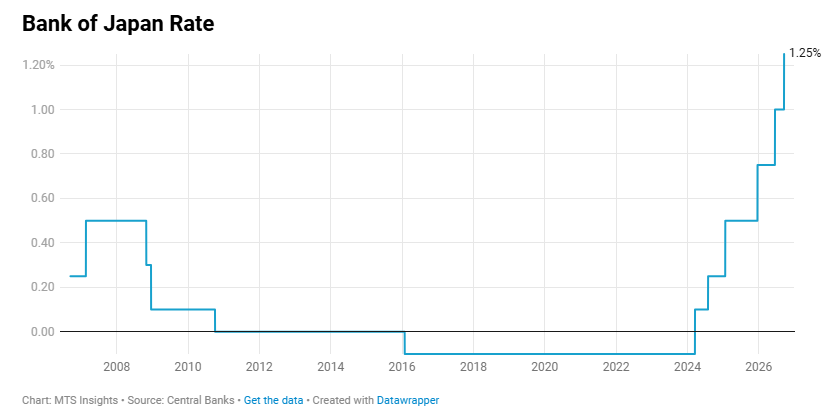
The Bank of Japan raised the overnight call rate by +25 bps to around 1.25% in a 7-2 vote, while maintaining that financial conditions will remain accommodative as underlying inflation approaches the 2% target and upside inflation risks persist.
-
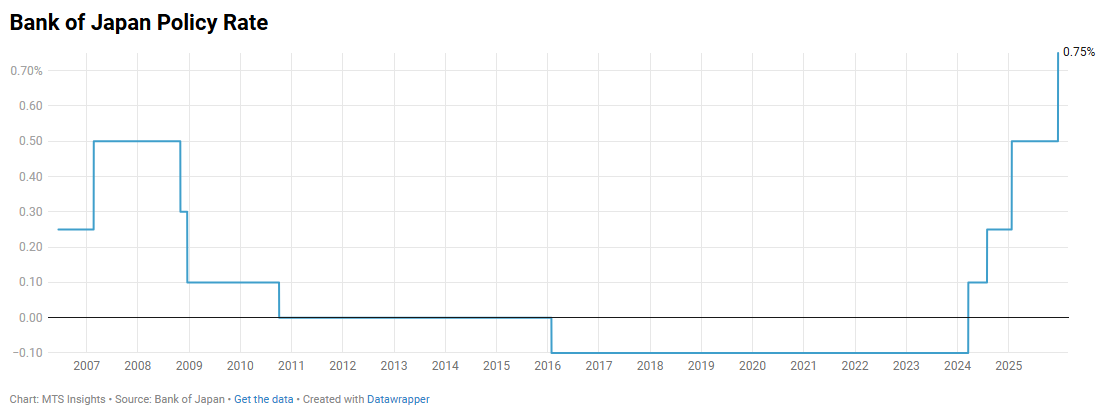
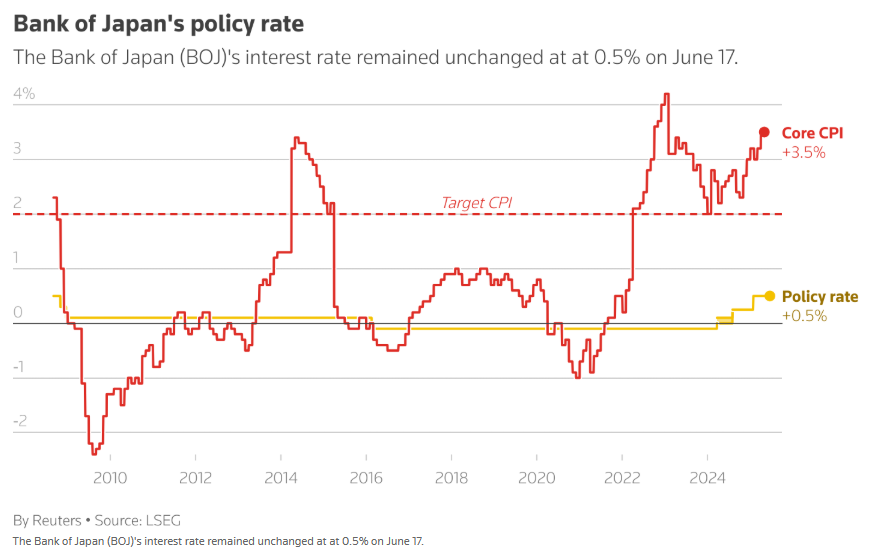
The Policy Board voted 7-2 to raise the uncollateralized overnight call rate to around 1.25%, effective September 24, while also raising the complementary deposit facility rate to 1.25% and the basic loan rate to 1.50%. The move represents a further reduction in the degree of monetary accommodation.
-
Two members dissented in favor of leaving policy unchanged. Asada argued that core CPI had recently been below 2% and economic conditions could not necessarily be characterized as strong, while Sato said economic and price developments had not substantially accelerated enough to warrant a hike.
-
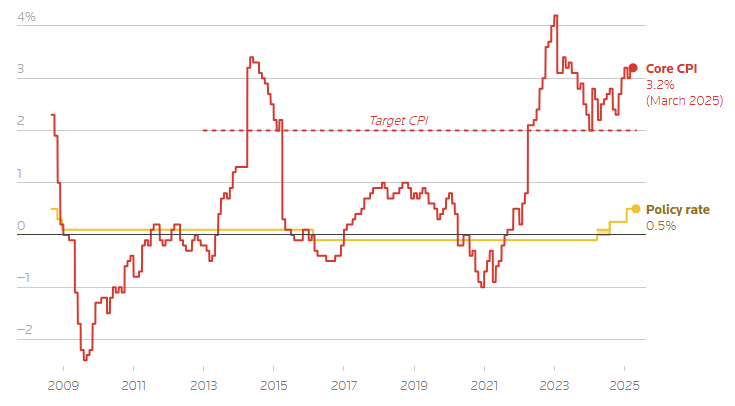
Core CPI excluding fresh food has recently been running between +1.5% and +2.0% YoY but has been rising moderately as higher import prices emerge and firms continue passing wage increases into selling prices. Medium- to long-term inflation expectations have also continued to rise, while the BOJ said underlying inflation is approaching 2%.
-
Japan's economy has continued to recover moderately despite some weakness related partly to the Middle East situation. Exports and industrial production have begun increasing moderately amid solid global AI-related demand, corporate profits remain high, business investment is trending higher, and private consumption has remained resilient, while housing investment has declined.
-
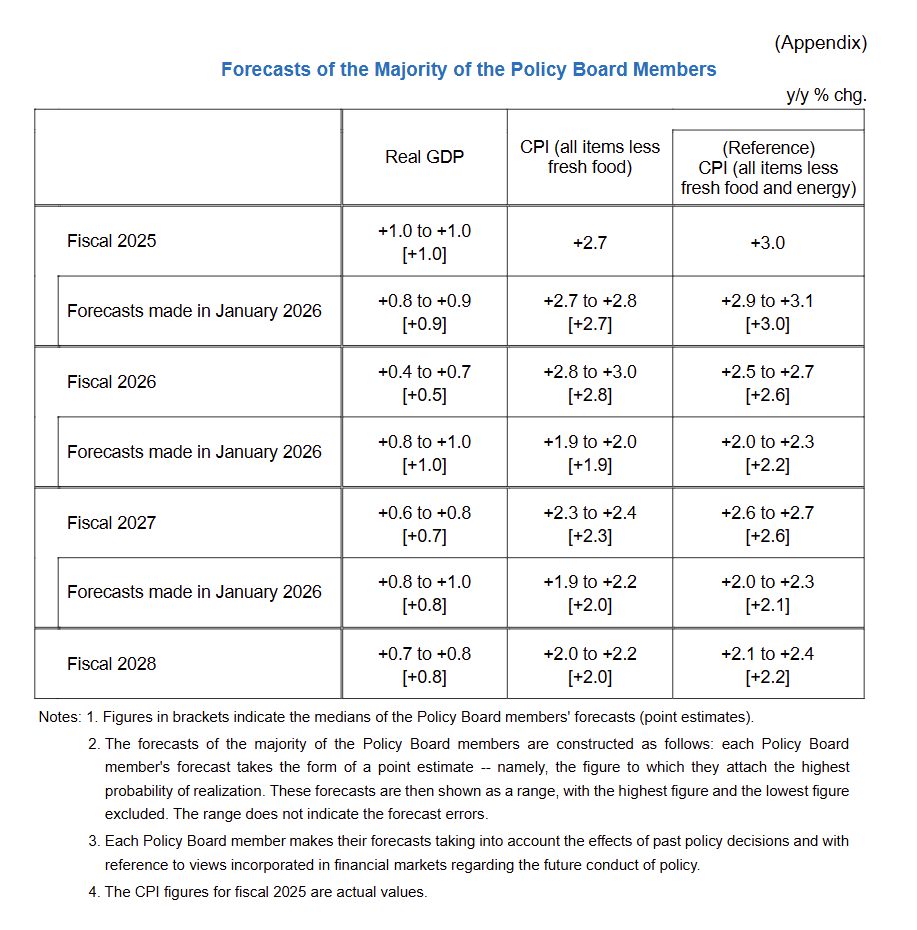
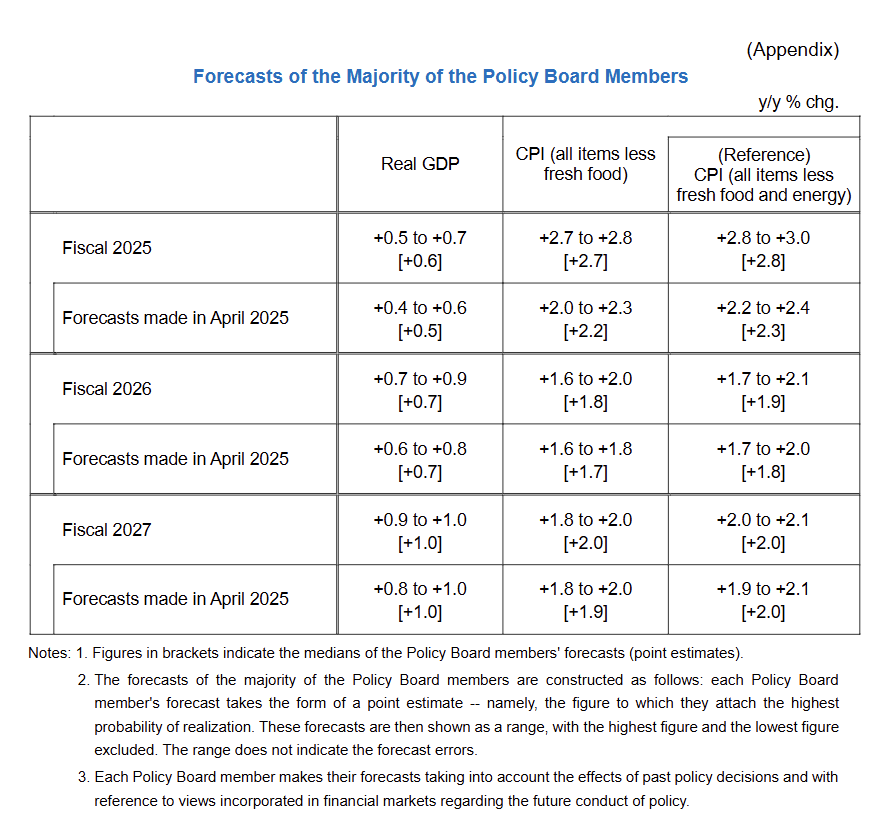
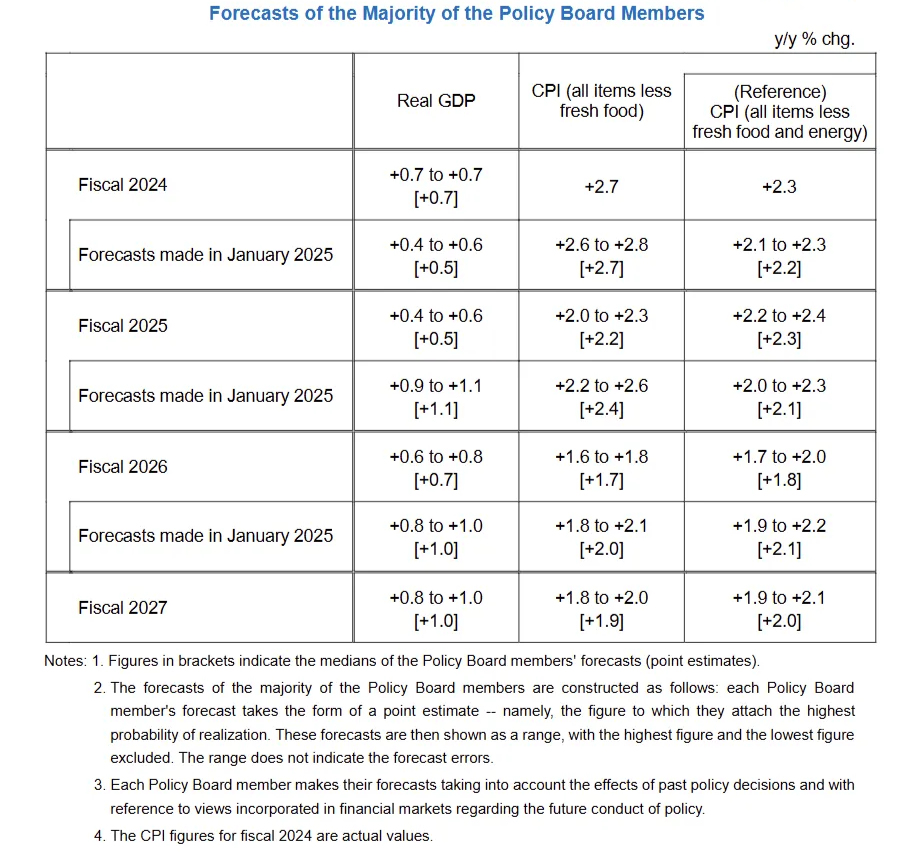
Economic growth is expected to continue at a moderate but decelerating pace as higher crude oil prices weigh on activity, with government measures, accommodative financial conditions, and stronger global AI-related demand providing support. Growth is then projected to strengthen moderately as the effects of high oil prices fade and the income-to-spending cycle intensifies.
-
Core CPI inflation is projected to accelerate clearly above +2% YoY from the second half of FY2026, reflecting higher crude oil prices, continued wage pass-through, rising semiconductor and other AI-related input prices, and recent yen depreciation. Inflation is subsequently expected to ease toward around +2% as the effects of elevated oil prices diminish.
-
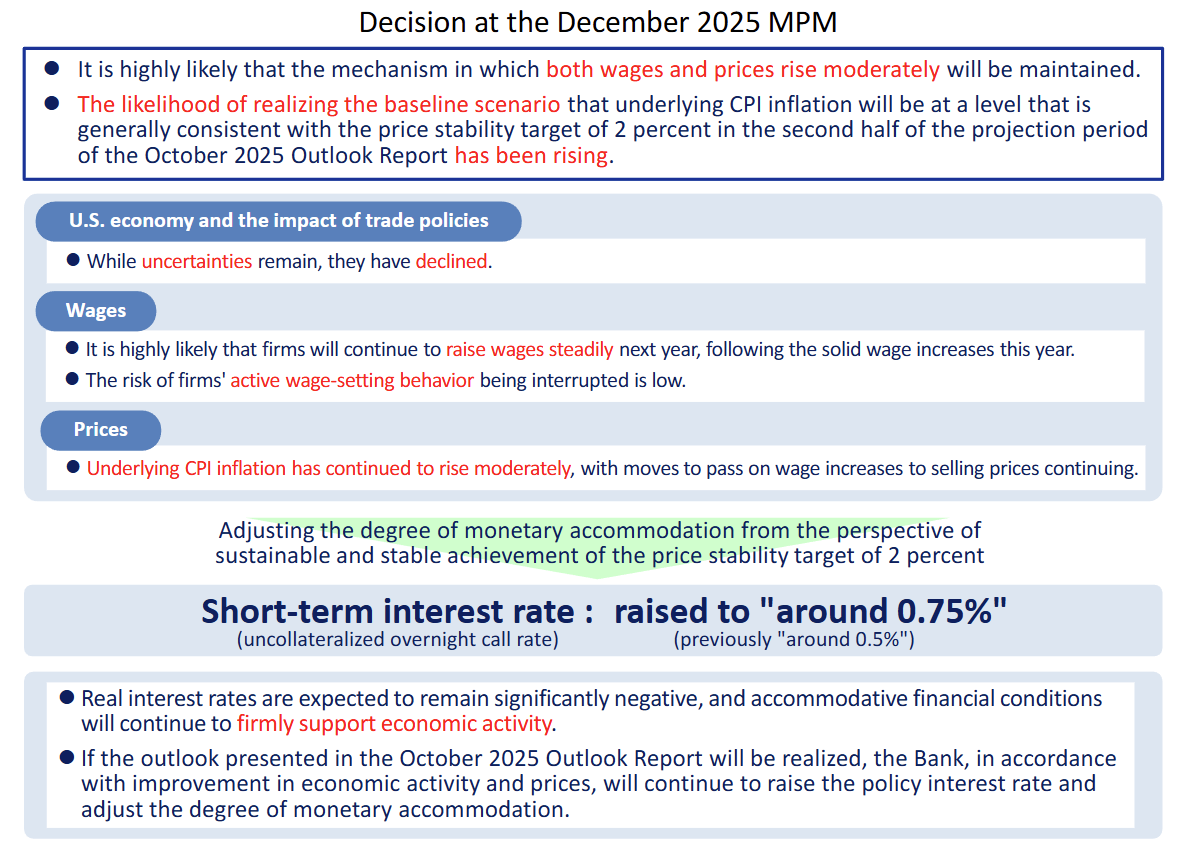
The BOJ said financial conditions remain accommodative, with low real interest rates, rising demand for funds, proactive bank lending attitudes, and favorable corporate financing conditions. The Bank expects accommodation to remain in place even after the rate increase, continuing to support economic activity.
-
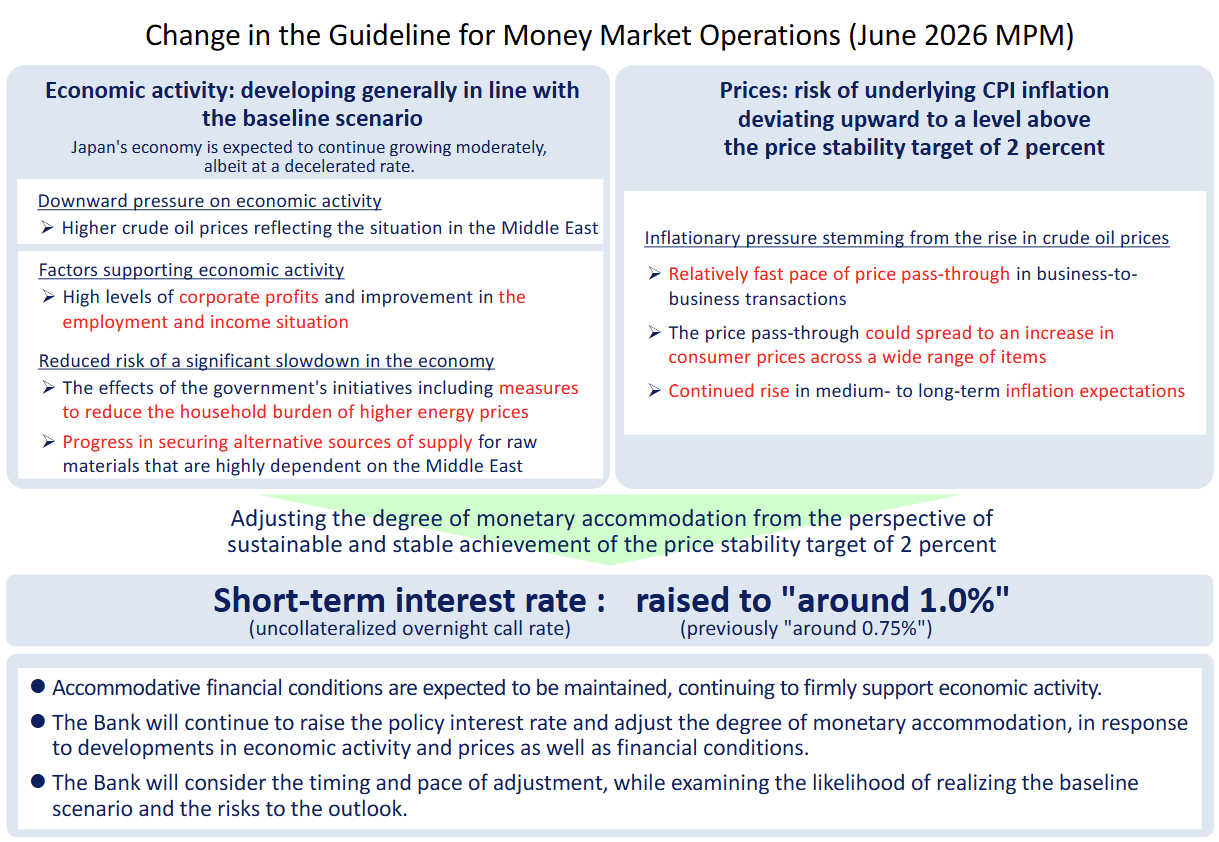
The BOJ said it will continue raising the policy rate and adjusting monetary accommodation in response to economic, inflation, and financial conditions, while determining the timing and pace based on the evolving outlook. Particular attention remains on Middle East developments, global AI-related demand, foreign exchange movements, and the risk that underlying inflation moves above the 2% target.